
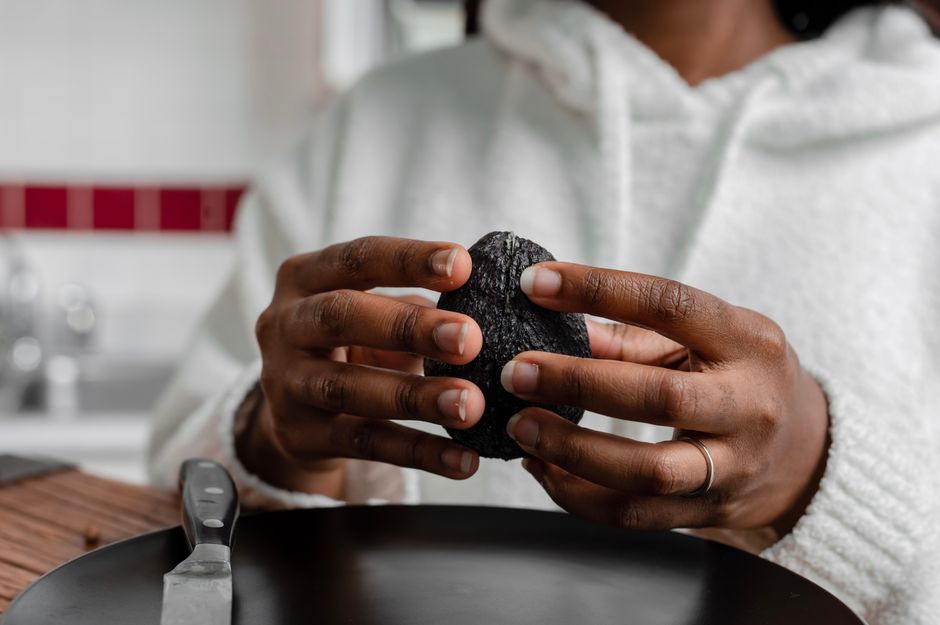
A brown avocado is not automatically a bad avocado. The brown color you see is caused by oxidation — a reaction between oxygen in the air and enzymes in the fruit. Whether that avocado is still safe to eat depends on how far the browning has gone and whether other signs of spoilage are present.
Here is the short answer: light browning on cut surfaces is normal and safe. Deep brown or black flesh with a bad smell, mushy texture, or mold is not safe. The color alone does not tell you everything. You need to check texture, smell, and how long the avocado has been sitting out.
Why Does an Avocado Turn Brown?
When you cut an avocado, you break open cells that contain an enzyme called polyphenol oxidase. That enzyme reacts with oxygen and with compounds called polyphenols naturally present in the fruit. The reaction creates brown pigments called melanins.
This is the same process that turns a sliced apple brown. It is a chemical reaction, not bacterial growth. The browning itself does not produce toxins. It does change flavor and texture, and it signals that the fruit’s cell structure is breaking down.
Temperature and time drive the process. A cut avocado left at room temperature browns faster than one stored in the refrigerator. The enzyme works more slowly in cold temperatures. Lemon juice or lime juice slows browning because the acid lowers the pH and reduces enzyme activity. Plastic wrap pressed directly against the surface limits oxygen contact.
One point worth clarifying: browning on a cut surface is different from internal browning in an uncut avocado. Internal browning can happen from cold damage during storage or from a condition called vascular browning. That is a quality issue, not a safety issue, in most cases.
How Do You Tell If a Brown Avocado Is Still Safe to Eat?
Color is only one signal. You need to check several things together.
Smell: A fresh avocado has a mild, slightly nutty scent. If it smells sour, fermented, or rancid, throw it out. A bad smell means microbial growth, not just oxidation.
Texture: A little softness is fine. Slimy, stringy, or unusually mushy flesh is a sign of decay. If the flesh has broken down into a liquid or paste, it is no longer safe.
Mold: Any visible mold — white, green, gray, or black fuzz — means the avocado should be discarded. Do not cut off the moldy part and eat the rest. Mold can produce mycotoxins that spread beyond what you can see.
Time: A cut avocado left at room temperature for more than two hours should be discarded. This is the same food safety guideline that applies to other perishable foods. Bacteria that cause foodborne illness grow rapidly at room temperature.
- Light brown surface with firm flesh underneath: safe to eat
- Brown throughout with soft but not slimy texture and normal smell: safe but flavor will be poor
- Brown with sour or off smell: discard
- Brown with slimy texture: discard
- Any visible mold: discard
- Left out over two hours: discard
Can You Eat Browning Avocado If It Tastes Bitter?
Browning changes the flavor. The melanin pigments themselves are mostly tasteless, but the breakdown of fats and other compounds can create bitter or off notes. If the avocado tastes noticeably bitter or unpleasant, there is no safety reason to force yourself to eat it.
Bitterness alone is not a sign of danger. But combined with other signs — soft texture, off smell — it supports the decision to throw it away. Your senses evolved to detect spoiled food. Trust them.
Some people notice that browned avocado has a slightly metallic or flat taste. That is from oxidation of fats and other compounds. It is not harmful, just unappealing.
Does Cooking Make a Brown Avocado Safe?
Heat kills bacteria and mold, but it does not destroy all mycotoxins. If mold has produced toxins in the flesh, cooking will not make it safe. This is a common misconception.
If the avocado is brown from oxidation only — no mold, no off smell, no slime — cooking it into a sauce, soup, or baked dish is fine. The heat will stop the browning enzyme, and the flavor will blend with other ingredients. Many traditional recipes use overripe avocados for exactly this reason.
But if you are cooking it specifically to “save” an avocado that has signs of spoilage, that is not a safe approach. When in doubt, throw it out.
How Do You Prevent an Avocado From Turning Brown?
You cannot stop oxidation completely once the fruit is cut. You can slow it down.
- Press plastic wrap directly onto the surface of the avocado flesh. Oxygen is the trigger, so removing air contact helps.
- Store cut avocado in an airtight container in the refrigerator. Cold slows the enzyme.
- Add an acid — lemon or lime juice — to the surface. The acid lowers pH and slows polyphenol oxidase.
- Keep the pit in? The pit does not prevent browning. The flesh under the pit browns just like the rest. This is a common myth.
- Use within one to two days for best quality. Safety window is shorter if left at room temperature.
Some commercial products contain ascorbic acid or citric acid. These are effective at slowing browning. They do not reverse browning that has already happened.
What About Brown Spots Inside an Uncut Avocado?
Brown streaks or spots inside an avocado that was never cut can come from several causes. Cold damage during shipping or storage is common. The fruit may have been kept below its ideal temperature, which damages cell walls and causes browning.
Vascular browning is another cause. It follows the vascular tissue — the “veins” of the fruit — and creates dark lines. This is a quality defect, not a safety issue. The avocado is still safe to eat if it smells and tastes normal.
Fungal infection can also cause internal browning. If the brown areas are accompanied by a musty or earthy smell, or if the texture is unusually soft or watery, discard the fruit. You cannot reliably tell the difference between cold damage and fungal infection by appearance alone. Smell and texture are your best guides.
Is Brown Avocado Less Nutritious?
Oxidation does reduce some nutrients. Vitamin C and certain polyphenols are sensitive to oxygen and decrease as browning progresses. The fat content and most minerals remain stable.
The overall nutritional loss from surface browning is modest. If you scrape off the brown layer and eat the green flesh underneath, you retain most of the nutritional value. If the entire avocado is brown, the nutrient content is lower but not zero.
Avocados are known for their monounsaturated fat content, potassium, and fiber. These are not significantly affected by oxidation. The main loss is in antioxidants and vitamin C.
Frequently Asked Questions
Can you eat an avocado that is brown inside?
Yes, if the browning is only from oxidation and there is no mold, slime, or bad smell. If the flesh is brown throughout with an off odor or slimy texture, discard it.
Is a brown avocado poisonous?
No. The brown color comes from oxidation, which is not toxic. However, mold can produce harmful mycotoxins, so any avocado with visible mold should be thrown away.
How long can cut avocado sit out?
Cut avocado should not be left at room temperature for more than two hours. After that, bacteria that cause foodborne illness can grow rapidly.
Does lemon juice stop avocado from browning?
Lemon or lime juice slows browning by lowering the pH and reducing enzyme activity. It does not stop browning completely, but it can extend freshness for a day or two in the refrigerator.
