
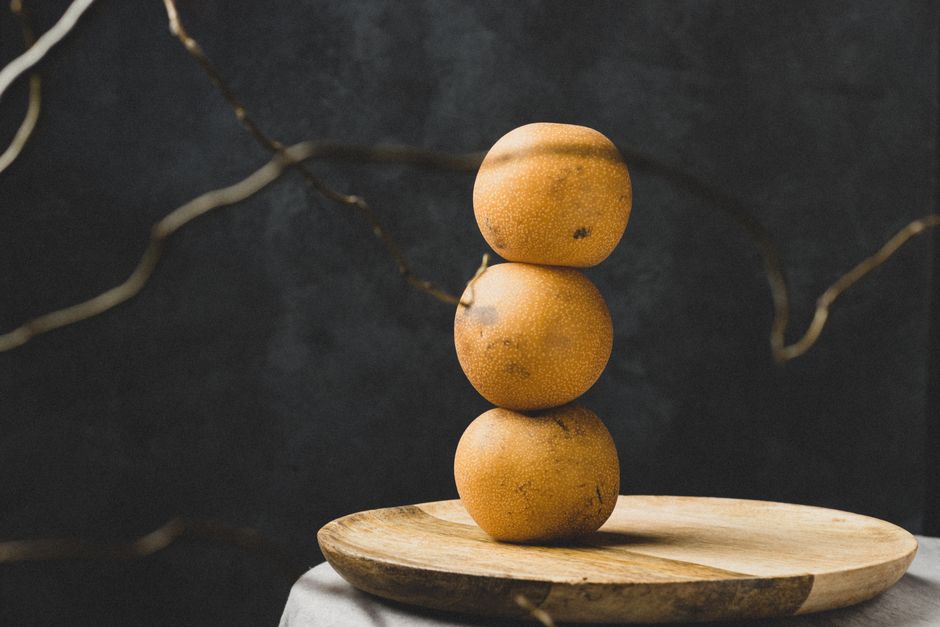
Yes, you can eat pear skin, and for most people it is the healthiest part of the fruit. The skin holds a large share of a pear’s fiber and polyphenols, and it is safe to eat whether the pear is green, red, or brown. The main reasons people peel pears are texture and pesticide residue, not safety. Both concerns have practical answers.
Can You Eat A Pears Skin?
Yes. Pear skin is edible and has been eaten as part of the fruit for as long as pears have been cultivated. There is nothing in the skin of a ripe pear that is toxic to humans.
The skin is simply the outer layer of the fruit, the same tissue that protects the flesh inside. In apples, peaches, and pears, that layer is thin and soft enough to chew and swallow. You do not need to peel a pear to eat it safely.
The one exception is the core and seeds. Pear seeds contain a compound that releases small amounts of cyanide when crushed or chewed. The amounts are tiny, and swallowing a few whole seeds is not considered dangerous. But you should not crush or chew large numbers of pear seeds. The skin itself carries no such concern.
What Is Actually in Pear Skin?
Pear skin is where much of the fruit’s fiber and plant compounds are concentrated. When you peel a pear, you remove a meaningful part of its nutritional value along with the peel.
Two things stand out:
- Fiber. A good portion of a pear’s fiber sits in the skin. Fiber supports digestion, feeds gut bacteria, and helps with feelings of fullness.
- Polyphenols. These are plant compounds with antioxidant activity. They are found in higher concentrations in the skin than in the flesh. Anthocyanins are the polyphenols responsible for red and purple coloring in some pear varieties.
Pears also provide vitamin C and potassium, though the skin’s contribution here is smaller than its contribution of fiber and polyphenols.
Here is a detail worth knowing: a pear’s gritty texture comes from stone cells, called sclereids, scattered through the flesh. These are not in the skin. So if you dislike the graininess of a pear, peeling it will not help. The texture you are reacting to is inside the fruit.
Is Pear Skin High in Nutrients Compared to the Flesh?
Gram for gram, the skin is more nutrient-dense than the flesh. That does not mean the flesh is worthless. It means peeling removes the most concentrated part.
USDA nutritional data shows that a medium raw pear with skin provides roughly 5.5 grams of fiber. Peeled, that number drops. The exact loss varies by variety and ripeness, but the direction is consistent: peeling reduces fiber and polyphenol content.
The table below compares the general picture, not exact values for every variety.
| Component | With skin | Peeled |
|---|---|---|
| Fiber | Higher | Lower |
| Polyphenols | Higher | Lower |
| Vitamin C | Slightly higher | Slightly lower |
| Potassium | Similar | Similar |
| Calories | Similar | Similar |
Calories barely change either way. A medium pear is roughly 100 calories whether you peel it or not. So peeling does not reduce calories in any meaningful way. It mainly reduces fiber and polyphenols.





Does Pear Skin Have Pesticide Residue?
Pears can carry pesticide residue on their skin, and this is the most common reason people peel them. The concern is real but manageable.
Washing a pear under running water and rubbing the surface removes a large share of residue. Some residue can remain because it sits in the waxy layer or just below the surface. Peeling removes nearly all of it.
If you want to eat the skin and reduce residue, these steps help:
- Rinse under running water rather than soaking.
- Rub the skin with your hands or a clean produce brush.
- Dry with a clean cloth.
Soap and commercial produce washes are not recommended for produce. Plain running water does the job. If pesticide exposure is a specific concern for you, buying organic pears reduces residue, though organic produce is not residue-free.
For most adults, the nutritional benefit of eating the skin is generally considered to outweigh the small residue exposure from a washed pear. That is a general direction, not a guarantee, and individual choices here are reasonable either way.
Can Pear Skin Cause Digestive Problems?
For some people, yes. Pear skin is higher in fiber than the flesh, and a sudden increase in fiber can cause bloating, gas, or loose stools.
Pears also contain sorbitol and fructose, two types of carbohydrate that some people absorb poorly. Both are present in the flesh as well as the skin, so peeling does not eliminate them. For people with irritable bowel syndrome, pears are often listed among foods that can trigger symptoms. This is because of the sugars and fiber, not the skin alone.
If pears upset your stomach, peeling may reduce symptoms somewhat, but it may not solve the problem entirely. Reducing portion size often helps more than peeling.
If you have a known allergy to pears or to related fruits like apples, cherries, or birch pollen, you should avoid pears. Oral allergy syndrome can cause itching or swelling in the mouth after eating raw fruit. This is uncommon but real, and it applies to the flesh as well as the skin.
Should You Peel Pears for Baking and Cooking?
It depends on the dish. In many cooked preparations, the skin softens and becomes part of the texture rather than a problem.
When skin works well:
- Roasted or baked pear halves, where the skin holds the shape together
- Poached pears, where the skin adds color and structure
- Sauces and chutneys, where everything breaks down anyway
When peeling makes sense:
- Smooth pear butter or purees where you want a uniform texture
- Delicate desserts where skin texture would be noticeable
- Recipes where the pear is grated or finely chopped raw
For a ripe pear eaten fresh, peeling is mostly a texture preference. For cooking, it is a recipe decision. Neither is wrong.
Are There Any Real Risks to Eating Pear Skin?
For most healthy adults, there is no established risk from eating washed pear skin. The main considerations are pesticide residue, digestive sensitivity, and rare fruit allergies.
One point worth separating from the rest: the seeds. Pear seeds contain amygdalin, a compound that releases cyanide when crushed. Swallowing a few whole seeds is not considered harmful because they pass through undigested. Chewing or blending large numbers of seeds could release meaningful amounts. This is a seed issue, not a skin issue, and it is easy to avoid.
The wax on some pears is another point people ask about. Some pears are coated with food-grade wax to protect them during shipping. This wax is edible and regulated. It is not the same as the natural waxy bloom you see on fresh-picked fruit. Neither is a health concern.
How to Wash and Prepare a Pear to Eat the Skin
Eating the skin is simple once the pear is clean. The goal is to remove surface dirt and residue without damaging the fruit.
- Rinse the whole pear under cool running water.
- Rub the surface with your hands or a produce brush.
- Dry it with a clean towel.
- Cut away the stem and core, and remove the seeds.
- Eat the rest, skin included.
A ripe pear gives slightly when pressed near the stem. That is the best sign it is ready to eat. Pears ripen from the inside out, so a pear that feels firm at the surface may already be soft at the core.
If you have been peeling pears out of habit, try eating one with the skin. Start with a ripe variety like Bartlett or Anjou, where the skin is thin and mild. The flavor difference is small, and the nutritional difference is real.
Frequently Asked Questions
Is it safe to eat pear skin?
Yes, pear skin is safe to eat for most people. Wash it under running water first to remove dirt and reduce pesticide residue.
Is pear skin healthier than the flesh?
Gram for gram, the skin contains more fiber and polyphenols than the flesh. Peeling a pear removes a meaningful share of both.
Can you eat the skin of a red pear?
Yes, red pear skin is edible and contains anthocyanins, the compounds behind the red color. Color does not change whether the skin is safe to eat.
Should you peel pears for babies?
Many parents peel pears for infants because the skin is harder to chew. There is no fixed rule, and guidance varies by age and feeding stage, so check with your pediatrician about what suits your child.
