
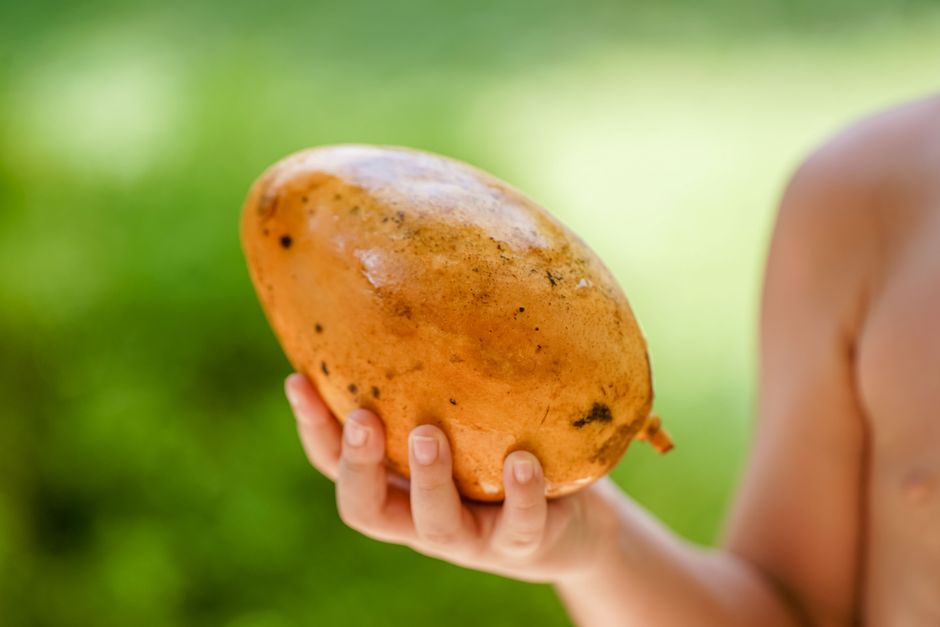
Yes, you can eat a mango with the skin, but most people do not because the texture is tough and the taste is bitter. The skin is not poisonous, and it contains fiber, vitamins, and plant compounds. However, there are real reasons to think twice before biting into one. Some people react to the chemical urushiol found in mango skin, which is the same substance in poison ivy. This guide covers what the evidence actually says about eating mango skin, who should avoid it, and how to prepare it if you want to try.
Is Mango Skin Safe to Eat?
Mango skin is safe to eat for most people. The skin contains no toxins that harm the average healthy adult. The flesh is the sweet part, but the peel holds a different set of nutrients.
Research published in the journal Food Research International found that mango skin contains higher levels of certain antioxidants than the flesh. These include mangiferin, quercetin, and gallic acid. These compounds have anti-inflammatory properties. The skin also has more fiber per gram than the fruit inside.
The real issue is not safety for everyone. It is tolerance. The skin is fibrous and chewy. It has a resinous, slightly pine-like taste that many find unpleasant. If you can handle the texture and flavor, the skin is technically edible.
What Are the Risks of Eating Mango Skin?
The main risk comes from a chemical called urushiol. This is the same oil in poison ivy, poison oak, and poison sumac that causes contact dermatitis. Mango skin contains urushiol in the sap layer just under the peel.
For most people, eating a small amount of mango skin will not cause a reaction. But for people with a history of poison ivy allergy, the risk is real. The American Academy of Dermatology notes that mango skin can cause a rash around the mouth in sensitive individuals. This is sometimes called “mango mouth.” Symptoms include itching, redness, and small blisters.
A second risk is pesticide residue. Mangoes are often sprayed with fungicides and insecticides during growing and after harvest. The skin is the part that gets the most direct contact. Washing helps but does not remove all residues. The Environmental Working Group lists mangoes among produce with moderate pesticide loads.
There is also a mechanical issue. Mango skin is tough. People with dental problems or difficulty chewing hard foods may find it uncomfortable or risky to eat.
Does Cooking Mango Skin Make It Safer or Easier to Eat?
Cooking changes the texture and may reduce some pesticide residues, but it does not eliminate urushiol. Urushiol is heat-stable. Boiling or baking mango skin will not break it down completely.
Some cultures use mango skin in pickles and chutneys. The acid from vinegar or lime juice can soften the tough fibers and mask the bitter taste. In South Asian cuisine, raw mango skin is sometimes pickled with salt and spices. This makes the texture more palatable.
If you want to try mango skin, cooking is the better option over eating it raw. Roasting a whole mango at 375°F for 15 minutes softens the skin significantly. The flesh also becomes more tender. You can then eat the skin along with the fruit. The heat may reduce surface bacteria but will not remove pesticides or urushiol.
One study in the Journal of Agricultural and Food Chemistry found that blanching mangoes in hot water for two minutes removed about 50 percent of surface pesticides. This is better than washing alone but still leaves a significant amount behind.





How Do You Prepare Mango Skin to Eat?
If you decide to eat mango skin, preparation matters. Here are steps based on available evidence and practical experience:
- Wash thoroughly under running water. Scrub the skin with a clean vegetable brush for at least 20 seconds. This removes dirt, bacteria, and some surface pesticides.
- Choose organic mangoes if possible. Organic certification does not mean zero pesticides, but levels are generally lower than conventionally grown fruit.
- Peel thin strips rather than eating the whole skin. The bitter taste is strongest in the outer layer. A vegetable peeler removes the roughest part.
- Slice into thin strips and add to salads or smoothies. Blending breaks the fibers and masks the taste.
- Pickle or ferment the skin. Fermentation changes the chemical structure and can reduce bitterness.
One non-obvious point: the riper the mango, the thinner and less bitter the skin becomes. A fully ripe mango has a softer peel that is easier to chew. An underripe mango has a thick, tough skin that is much harder to digest.
Who Should Avoid Eating Mango Skin?
Some people should skip mango skin entirely. The table below summarizes the groups and the reasons.
| Group | Reason to Avoid |
|---|---|
| People with poison ivy allergy | Urushiol in mango skin can cause contact dermatitis |
| People with sensitive digestion | Fiber and tannins may cause bloating or stomach upset |
| People with dental issues | Tough skin can damage fillings or irritate gums |
| People with known food allergies to cashews or pistachios | Mango is in the same plant family (Anacardiaceae) |
| Infants and young children | Choking hazard and higher sensitivity to urushiol |
The CDC has not issued specific guidance on mango skin, but the general principle applies: if you have a known sensitivity to poison ivy, you are at higher risk. A 2016 review in Dermatitis confirmed that mango skin is a common cause of perioral dermatitis in mango workers and consumers with prior sensitization.
If you have never had a reaction to poison ivy, your risk is lower but not zero. The first exposure to urushiol may not cause a reaction. Sensitivity develops after repeated contact. You could eat mango skin for years and then suddenly develop a rash.
What Does the Research Say About Mango Skin Nutrients?
Studies have found that mango skin contains several compounds not present in significant amounts in the flesh. The most notable is mangiferin, a polyphenol with antioxidant and anti-inflammatory effects. Animal studies suggest mangiferin may help regulate blood sugar and reduce oxidative stress. Human studies are limited.
The skin also has more fiber than the flesh. A 100-gram serving of mango skin provides about 3 to 4 grams of fiber, compared to about 1.6 grams in the same amount of flesh. Fiber supports digestion and helps with satiety.
Vitamin C is present in the skin, though the flesh contains more. The skin has higher levels of vitamin A precursors like beta-carotene. The exact amounts vary by mango variety, ripeness, and growing conditions.
One important clarification: the amounts of these nutrients are modest. You would need to eat a significant amount of mango skin to get a meaningful dose. The fiber benefit is real but not a reason to force yourself to eat something you find unpleasant. You can get similar fiber from oats, apples, or carrots with less risk of irritation.
Common Misconceptions About Mango Skin
A viral claim says mango skin is toxic and can cause death. This is false. There is no recorded case of death from eating mango skin in the medical literature. The worst outcome for most people is a mild rash or stomach discomfort.
Another misconception is that washing with soap removes urushiol. Soap and water remove some urushiol from the skin surface, but the oil penetrates quickly. If you have a reaction, washing within 15 minutes may help. After that, the oil has already bound to skin cells. The same applies to eating mango skin — washing the fruit does not remove urushiol from the peel.
Some people claim mango skin cures digestive issues. This is not supported by clinical evidence. While the fiber in the skin may help with regularity for some people, it can also cause bloating and gas for others. There is no evidence that mango skin treats any specific medical condition.
As of 2026, there is no clinical evidence that eating mango skin provides health benefits that outweigh the risks for the general population. The nutrients in the skin are available in other foods that are easier to eat and carry no risk of allergic reaction.
Frequently Asked Questions
Can you eat a mango like an apple with the skin on?
Yes, but the skin is tough and bitter. Most people prefer to peel mangoes because the texture is unpleasant and the taste is strong.
Does mango skin cause an allergic reaction?
It can. The skin contains urushiol, the same chemical in poison ivy. People with poison ivy sensitivity are most at risk for a rash.
Is it better to eat organic mango skin?
Organic mango skin has lower pesticide residues but still contains urushiol. Organic does not mean zero risk of allergic reaction.
Can you cook mango skin to make it safe?
Cooking softens the skin and may reduce pesticides but does not remove urushiol. The allergic compound is heat-stable.
