
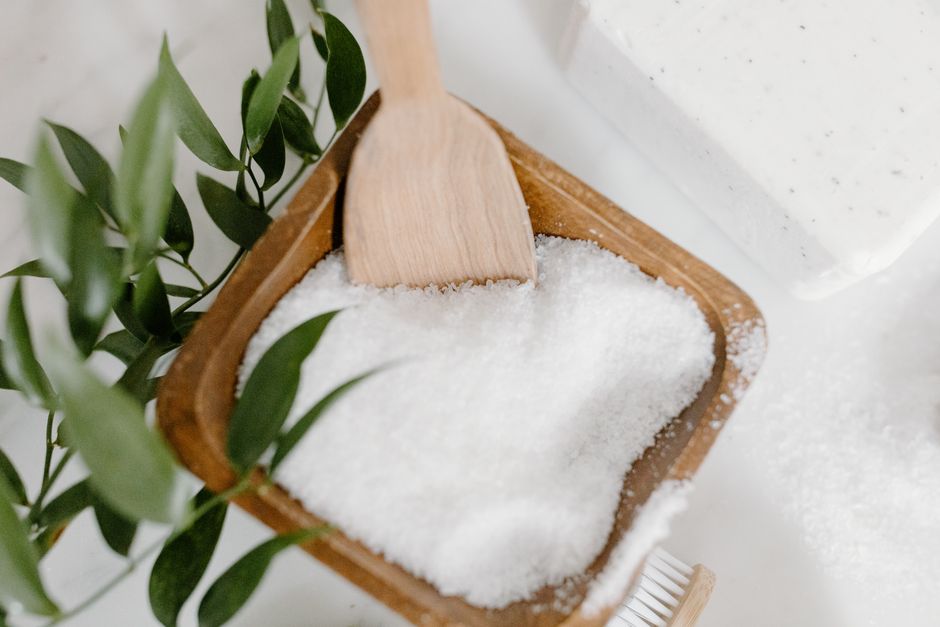
Drinking Epsom salt is not safe. Epsom salt is a laxative meant to be dissolved in water and swallowed only in very specific, small doses for constipation. It is not a tonic, a daily supplement, or a “detox” drink. In larger amounts, it can cause severe diarrhea, dehydration, and dangerous changes in your blood chemistry. Health experts do not recommend drinking it for any general health purpose, and the FDA has not approved it for internal use as a treatment for any condition.
What Is Epsom Salt Made Of?
Epsom salt looks like table salt, but it is not the same thing. It is a chemical compound called magnesium sulfate. Table salt is sodium chloride. The names sound similar, but the effects on the body are completely different.
Magnesium sulfate dissolves in water and breaks into magnesium and sulfate ions. When you swallow it, your body absorbs some of the magnesium. This is why Epsom salt has a laxative effect. The unabsorbed salt pulls water into your intestines, which softens stool and stimulates a bowel movement.
This mechanism is well understood. It is the basis for its use as an occasional constipation remedy. But that same mechanism becomes dangerous when the dose is too high or when it is used too often.
Why Do People Drink Epsom Salt?
Most people who drink Epsom salt are trying to relieve constipation. This is the only legitimate internal use that has a long history in medicine. Some doctors still recommend it for occasional constipation when other options have not worked.
Other people drink it for reasons that have no scientific support. Social media sometimes promotes Epsom salt drinks as a way to “detox” the body or to flush the colon. Some people use it as a magnesium supplement. None of these uses are supported by clinical evidence.
The idea of detoxing through a laxative is a misunderstanding of how the body works. Your liver and kidneys remove waste and toxins from your blood. A laxative only affects your colon. It does not cleanse your blood or remove toxins from your organs.
If you are low on magnesium, drinking Epsom salt is not a sensible way to fix it. Oral magnesium supplements in the form of magnesium citrate or magnesium glycinate are better studied and easier on the digestive system. Epsom salt is harsh and unpredictable when taken internally.
What Happens If You Drink Epsom Salt?
The effects depend on how much you drink and how your body reacts. In a small dose dissolved in water, the most common effect is a bowel movement within 30 minutes to six hours. Some people get cramps, nausea, or bloating before the laxative effect kicks in.
In larger doses, the risks increase quickly. Severe diarrhea can cause dehydration and loss of electrolytes. Your body needs a careful balance of sodium, potassium, and other minerals to keep your heart and muscles working normally. Losing too much fluid through diarrhea can disturb that balance.
The more serious risk is magnesium toxicity. When too much magnesium builds up in your blood, it can cause a drop in blood pressure, confusion, muscle weakness, and difficulty breathing. In severe cases, it can lead to coma or heart rhythm problems.
Magnesium toxicity is rare from food sources. It is a real risk when people take concentrated magnesium products, including Epsom salt, in large amounts. The line between a laxative dose and a dangerous dose is not wide.





How Much Epsom Salt Is Safe to Drink?
The standard laxative dose for adults is 2 to 6 teaspoons of Epsom salt dissolved in 8 ounces of water. This is the dose found in older medical references and on some product labels. It should not be repeated more than once a day.
If you have kidney disease, heart disease, or high blood pressure, you should not drink Epsom salt at all. Your kidneys filter magnesium out of your blood. If they are not working well, magnesium can build up to dangerous levels.
Pregnant women should not drink Epsom salt without a doctor’s approval. No clinical guidelines support its use during pregnancy for constipation. There are safer laxative options that are better studied in pregnancy.
Children should not drink Epsom salt unless a doctor specifically directs it. The dose is hard to adjust safely for a child’s body weight. Overdose in children is a medical emergency.
What Are the Symptoms of an Epsom Salt Overdose?
If someone drinks too much Epsom salt, symptoms can appear within an hour. Early signs include nausea, vomiting, and intense diarrhea. These can progress to dizziness, flushing, and a feeling of weakness.
More serious symptoms include blurred vision, confusion, a drop in blood pressure, and an irregular heartbeat. In severe cases, a person may stop breathing or lose consciousness. This is a medical emergency. Call poison control or seek emergency care immediately if someone has consumed a large amount of Epsom salt and shows any of these signs.
Do not try to treat an overdose at home. Do not induce vomiting. Do not wait to see if symptoms improve. Magnesium toxicity can escalate quickly and requires medical treatment, usually with intravenous fluids and medications that help the body remove excess magnesium.
Are Epsom Salt Baths Safer Than Drinking It?
Yes. Soaking in an Epsom salt bath is generally considered safe for most people. The skin does not absorb magnesium sulfate in significant amounts, so the risks of magnesium toxicity from a bath are very low.
Bath use is not a treatment for internal problems. It will not relieve constipation, detox your body, or raise your magnesium levels in a meaningful way. Some people find warm baths relaxing, and that is a reasonable reason to take one. But the benefits are about relaxation and muscle comfort, not internal health changes.
If you have open wounds, severe skin conditions, or heart problems, check with a doctor before soaking in Epsom salt. Otherwise, a bath is a much safer way to use the product than drinking it.
What Do Health Experts Recommend for Constipation?
For occasional constipation, the first steps are usually simple ones. Drink enough water. Eat foods with fiber, like fruits, vegetables, and whole grains. Get regular physical activity. These habits help many people avoid constipation without any laxative.
If you need a laxative, several options are better studied and safer than Epsom salt. Bulk-forming laxatives like psyllium are gentle and work by adding fiber to your stool. Stool softeners like docusate are mild and work by letting water into the stool. Osmotic laxatives like polyethylene glycol are well tolerated and commonly recommended by doctors.
Stimulant laxatives, which include some products with senna or bisacodyl, work by triggering muscle contractions in the intestines. They are effective but should only be used for short periods. Long-term use of any stimulant laxative can make your colon dependent on them.
If constipation lasts more than a few weeks or comes with severe pain, bleeding, or weight loss, see a doctor. Chronic constipation can be a sign of an underlying condition that needs proper diagnosis. Self-treating with Epsom salt or any laxative can mask a more serious problem.
Frequently Asked Questions
Can you drink Epsom salt for constipation?
Yes, but only in small, specific doses and only occasionally. The typical dose is 2 to 6 teaspoons dissolved in 8 ounces of water, and it should not be used more than once a day.
What happens if you drink too much Epsom salt?
Drinking too much can cause severe diarrhea, dehydration, and magnesium toxicity. Symptoms include nausea, dizziness, confusion, low blood pressure, and an irregular heartbeat, which requires emergency medical care.
Is drinking Epsom salt good for detoxing?
No. The body detoxifies itself through the liver and kidneys, and Epsom salt only acts on the colon. No clinical evidence supports Epsom salt drinks as a detox method.
Can Epsom salt be absorbed through the skin in a bath?
Some absorption happens, but not enough to affect magnesium levels in the body. Epsom salt baths are safe for most people but should not be used as a treatment for internal health problems.
