
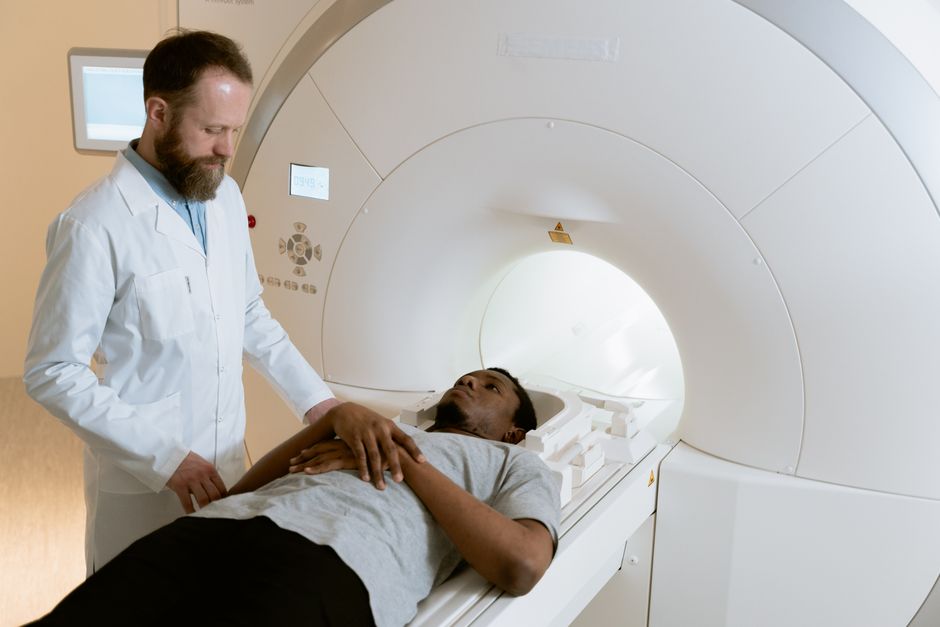
Yes, a CT scan can be done without contrast. In fact, many CT scans are performed without any contrast at all. Whether you need contrast depends entirely on what your doctor is looking for, which body part is being scanned, and what information the images need to show.
Contrast is a substance — usually iodine-based for CT — that is given by mouth, injected into a vein, or both. It changes how certain tissues appear on the scan. Some problems are invisible without it. Others show up perfectly well on a plain scan.
What Is the Difference Between a CT Scan With and Without Contrast?
A CT scan without contrast uses only X-rays to create cross-sectional images of your body. A scan with contrast adds a substance that makes certain structures stand out more clearly.
The contrast itself does not create the image. It changes how X-rays pass through specific tissues, which alters their appearance on the scan. Blood vessels, organs, and abnormal growths can look different depending on whether contrast is present.
There are three main ways contrast is given for CT:
- Intravenous (IV) contrast — injected into a vein. It travels through the bloodstream and highlights blood vessels and organs. This is the most common form for CT.
- Oral contrast — swallowed. It coats and fills the stomach and intestines so they show up more clearly.
- Rectal contrast — given as an enema. Used less often, mainly for certain pelvic or colon evaluations.
A scan can use one type, a combination, or none at all. The choice is not random. It follows from the clinical question being asked.
When Is a CT Scan Done Without Contrast?
Many common CT exams are done without contrast by default. These include:
- Kidney stones. A non-contrast CT of the abdomen and pelvis is the standard way to detect urinary stones. Stones are dense and show up clearly on their own. Adding contrast can actually make them harder to see.
- Head trauma and stroke evaluation. A non-contrast head CT is the first scan done for suspected bleeding in the brain. Fresh blood appears bright without any contrast. This is one of the most time-sensitive uses of CT.
- Bone fractures and bone detail. CT without contrast shows bone structure well. It is often used when X-rays are not detailed enough.
- Lung screening and lung nodules. Low-dose CT screening for lung cancer is done without contrast.
- Follow-up scans. If a previous scan without contrast showed a problem clearly, repeat imaging may not need contrast.
In these situations, contrast would not add useful information. It would only add cost, time, and potential risk.
When Is Contrast Actually Needed?
Contrast is needed when the thing being looked for does not stand out on its own. This is common in several situations.
Certain tumors and infections look similar to normal tissue on a plain scan. Contrast can make them more visible because abnormal tissue often takes up contrast differently than healthy tissue. CT angiography — imaging of blood vessels — requires IV contrast to show the vessels at all. Evaluating the liver, pancreas, and kidneys for masses or inflammation often benefits from contrast.
Abscesses, some cancers, and inflammatory conditions may only become clear once contrast is given. In these cases, skipping contrast could mean missing a diagnosis.




Can You Refuse Contrast or Ask for a Scan Without It?
You can decline contrast, but it may limit what the scan can show. This is a decision to make with your doctor, not on your own.
If you have a history of allergic reactions to contrast, kidney problems, or certain thyroid conditions, tell your doctor before the scan. These are real reasons to avoid or adjust contrast use. Your doctor may choose a different imaging test, a different type of contrast, or premedication.
Sometimes a non-contrast scan is enough to answer the question. Other times it is not, and a limited scan could lead to a missed finding or a repeat test later. The right choice depends on what is being investigated.
It helps to ask directly: “What are you looking for, and will the scan work without contrast?” That question usually gets a clear answer.
What Are the Risks of Contrast?
Contrast is generally well tolerated, but it is not risk-free. The main concerns are allergic reactions and effects on kidney function.
Most reactions are mild — a warm feeling, a metallic taste, or hives. Serious reactions are uncommon. Because reactions can happen, contrast is usually given in a setting where staff can respond quickly.
Iodine-based contrast can affect kidney function, especially in people who already have kidney disease, diabetes, or dehydration. This is why blood tests for kidney function are sometimes done before a contrast scan. The risk is higher in some patients than others, and your doctor weighs that risk against the benefit of the scan.
People with certain thyroid conditions or a history of reaction to contrast should always tell their care team beforehand. Pregnancy is another situation where CT — with or without contrast — is used only when clearly necessary, because CT involves radiation. If you are pregnant or think you might be, say so before the scan.
Non-contrast CT avoids the contrast-related risks entirely. It still involves a small amount of radiation, which is a separate consideration.
Does a CT Without Contrast Still Show Problems?
Yes. A non-contrast CT is not a lesser scan. It is a different tool, and for some problems it is the better one.
Bleeding, fractures, kidney stones, and many lung findings are detected without contrast — and in some cases detected better without it. The scan is not “incomplete” just because no contrast was used. It is complete for the question it was ordered to answer.
What a non-contrast scan cannot do is show certain soft-tissue details, blood vessel anatomy, or subtle masses that only appear with contrast. That is a limitation of the technique, not a flaw in how it was performed.
How Do You Prepare for a CT Scan Without Contrast?
Preparation for a non-contrast CT is usually simple. In many cases, no special preparation is needed at all.
You may be asked to remove metal objects, jewelry, or clothing with zippers and snaps, since metal can distort the images. You may need to avoid eating for a few hours beforehand, depending on the body part being scanned. For some exams, you may be asked to drink water to fill the bladder.
Because no contrast is used, you will not need the kidney function blood test that is sometimes required before a contrast scan. You also will not need to wait afterward for contrast to clear, and there is no contrast-related reaction to watch for.
The scan itself is quick. You lie still on a table that slides into a ring-shaped machine. You may be asked to hold your breath briefly. Most non-contrast CT exams take only a few minutes.
How to Know Which Type of CT You Are Getting
The order your doctor writes specifies whether contrast is included. If you are unsure, ask before the appointment.
Useful questions to ask:
- Is this scan with or without contrast?
- What is the scan looking for?
- Would the result change if contrast were added or left out?
- Are there reasons I should avoid contrast?
Getting a clear answer before the scan prevents surprises and helps you understand what the results can and cannot tell you.
Frequently Asked Questions
Can a CT scan be done without contrast?
Yes. Many CT scans are performed without any contrast, including scans for kidney stones, head trauma, and bone injuries. Whether contrast is needed depends on what your doctor is looking for.
Is a CT scan without contrast as good as one with contrast?
Neither is universally better — they answer different questions. A non-contrast scan is often the standard for stones, bleeding, and bone detail, while contrast is needed to show blood vessels and certain soft-tissue problems.
Why would a doctor order a CT scan without contrast?
Doctors order non-contrast scans when the target finding shows up clearly on its own or when contrast carries unnecessary risk. Common examples include kidney stone detection and emergency head scans for bleeding.
Can I ask for a CT scan without contrast?
You can discuss it with your doctor, but the decision should be based on what the scan needs to show. Declining contrast may limit the results or require a repeat scan later.
