
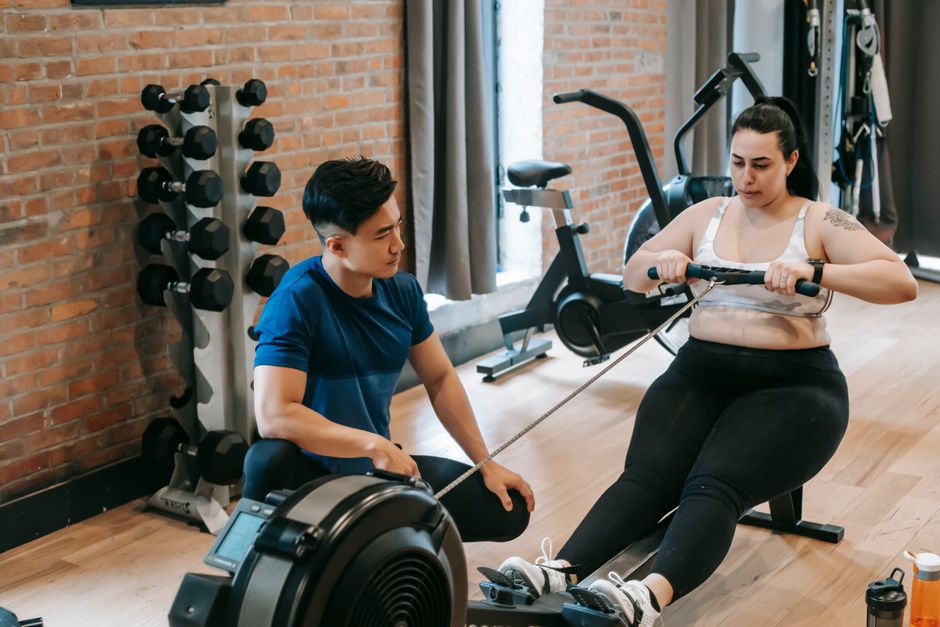
Yes, you can burn fat while gaining muscle — but the two goals pull in opposite directions, and that tension is why it rarely happens fast. Losing fat requires eating fewer calories than you burn. Building muscle generally requires eating enough calories and protein to fuel tissue growth. Doing both at once is possible, especially if you are new to strength training or carrying extra body fat, but the results tend to be slower and less dramatic than either goal pursued alone.
This process is often called body recomposition. It is real, it is documented in research, and it is also oversold online. Understanding when it works, who it works for, and what it actually looks like is the difference between a reasonable plan and months of frustration.
What Does “Body Recomposition” Actually Mean?
Body recomposition means changing your body’s composition — the ratio of fat to lean tissue — without a big shift in total body weight. The scale might barely move while your waist shrinks and your arms get firmer.
This is different from a traditional “bulk and cut” cycle. In a bulk, you eat a surplus of calories to add muscle, accepting some fat gain along the way. In a cut, you eat a deficit to strip fat, accepting some muscle loss. Recomposition tries to do both at once, which is why progress is measured in months, not weeks.
The physiology is well established. Muscle tissue is built from amino acids, and building it requires three things: mechanical tension from resistance training, adequate protein, and enough total energy. Fat loss requires an energy deficit. When you create a deficit, your body looks for fuel — and it can pull from stored fat, from muscle, or both. Resistance training and high protein intake are what tip the balance toward preserving and building muscle while fat is used for fuel.
Who Can Actually Burn Fat While Gaining Muscle?
Some people recompose far more easily than others. The evidence points to a few groups who see the clearest results.
- Beginners to strength training. People new to lifting often gain muscle rapidly while in a slight calorie deficit. This “newbie” response is one of the most reliable findings in exercise science.
- People carrying more body fat. Stored fat provides the energy needed to build muscle, so a larger energy reserve makes simultaneous progress more feasible.
- People returning after a long break. Muscle that was previously built is easier to rebuild, even in a deficit.
- People using anabolic medications. These drugs substantially change what is possible, but they are prescription medications with real risks and are not a general recommendation.
Lean, experienced lifters have the hardest time. The leaner and more trained you are, the more your body defends its remaining fat and the less room there is to build muscle without a surplus. For this group, recomposition is possible but slow, and separating the two phases is often more efficient.
Why Is It So Hard to Do Both at Once?
Your body does not have a single switch for “build” or “burn.” It manages energy through competing hormonal and metabolic signals, and a calorie deficit works against muscle growth in several ways.
When you eat fewer calories than you burn, your body ramps up breakdown of stored energy. Some of that breakdown comes from muscle protein. At the same time, the hormone environment shifts — insulin and other growth signals tend to drop, while stress hormones rise. That combination favors preserving energy over building new tissue.
Protein intake and resistance training counteract this. Training tells your body the muscle is needed. Protein supplies the raw material. Together they reduce muscle breakdown and support new growth even when calories are limited. Without both, a deficit usually costs you muscle along with fat.
This is why recomposition is not simply “eat less and lift.” It is a narrow path that requires enough protein, hard training, and a deficit small enough to still allow growth.



How Much Protein Do You Need to Burn Fat While Gaining Muscle?
Protein is the single most important dietary lever for recomposition. Higher protein intake helps preserve muscle during a deficit and supports new muscle growth.
General sports nutrition guidance for people doing resistance training often falls in the range of roughly 1.6 to 2.2 grams of protein per kilogram of body weight per day, which is about 0.7 to 1 gram per pound. This range is widely cited in sports nutrition literature and is considered adequate for most trained individuals. Higher intakes have not been shown to add further muscle-building benefit in most studies.
Two practical points matter more than hitting an exact number:
- Spread protein across the day. Eating protein in several meals rather than one large dose appears to support muscle building better over a full day.
- Do not cut calories too aggressively. A very large deficit makes it much harder to hold onto muscle, no matter how much protein you eat.
No clinical guidelines exist for exact protein targets in every population, and needs vary with body size, training load, and health status. People with kidney disease or other conditions should get individualized guidance from a clinician rather than applying general sports nutrition numbers.
What Kind of Training Supports Recomposition?
Resistance training is non-negotiable. Without it, a calorie deficit mostly costs you muscle. With it, the deficit can pull more from fat while muscle is preserved or built.
The key features that research supports:
- Progressive overload. Gradually increasing weight, reps, or difficulty over time is what signals muscle to grow.
- Training each major muscle group regularly. Hitting a muscle roughly twice a week is a common and well-supported approach.
- Enough total volume. Multiple sets per muscle group per week are generally needed for growth.
- Consistency over intensity gimmicks. Showing up week after week matters more than any single workout style.
Cardio has a role, mainly for heart health and for creating a larger energy deficit. But excessive cardio can interfere with muscle growth and recovery, and it burns fewer calories than most people assume. Strength training should stay the priority.
How Long Does Body Recomposition Take?
Recomposition is slow. That is the honest answer, and it is the part most marketing leaves out.
Muscle gain itself is a gradual process even under ideal conditions, and a calorie deficit slows it further. Visible fat loss and measurable muscle change typically take months of consistent training and eating, not weeks. People who expect a transformation in a few weeks usually quit before the process has had time to work.
Tracking matters because the scale can mislead you. If you lose fat and gain muscle at similar rates, your weight may barely change while your body looks and performs differently. Progress photos, how clothes fit, tape measurements, and strength gains in the gym often tell a clearer story than the scale.
Should you track anything specific?
Waist measurement, strength on key lifts, and monthly photos are practical and low-cost ways to see change the scale hides. None of these require special equipment.
When Should You Focus on One Goal Instead?
For many people, splitting fat loss and muscle gain into separate phases is more effective than chasing both at once.
If you are lean and have been training for years, a dedicated muscle-building phase followed by a fat-loss phase often produces better results than trying to recompose. If you have a lot of fat to lose, a fat-loss phase with strength training to preserve muscle may be the smarter first step.
Recomposition works best as a middle path — for beginners, for people with fat to lose, and for anyone willing to be patient. It is not a shortcut, and it is not right for every goal. The honest position is that it works, it is slow, and how well it works depends heavily on where you are starting from.
Frequently Asked Questions
Can you really lose fat and gain muscle at the same time?
Yes, it is possible, and it is best documented in beginners, people with more body fat to lose, and those returning to training after a break. It happens slowly and is harder for lean, experienced lifters.
How much protein do you need to build muscle while losing fat?
General sports nutrition guidance often falls around 1.6 to 2.2 grams of protein per kilogram of body weight per day, or roughly 0.7 to 1 gram per pound. Individual needs vary, and people with kidney disease should get personalized guidance from a clinician.
Why is the scale not moving even though my body is changing?
If you lose fat and gain muscle at similar rates, total weight can stay nearly the same while your shape and strength change. Measurements, photos, and gym performance often show progress the scale cannot.
Is cardio bad for building muscle?
Cardio is not bad, but excessive amounts can interfere with muscle growth and recovery. Keep strength training as the priority and use cardio mainly for heart health and modest calorie burn.
