
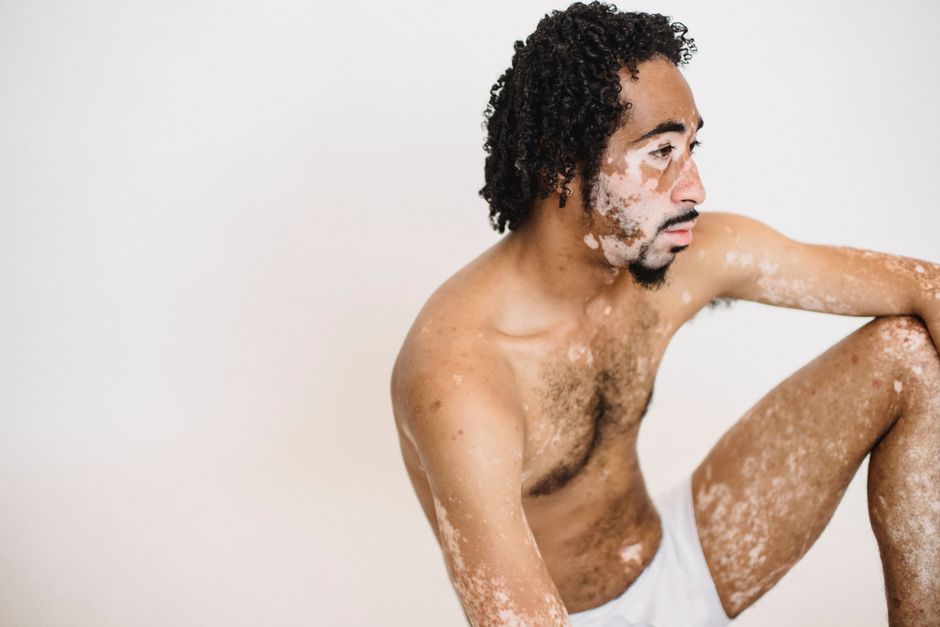
Yes. Vitiligo affects people of every skin color, including white people. It is not a “Black skin disease” or a condition limited to any one group. In fact, vitiligo is seen worldwide, and it occurs in people with light skin, dark skin, and everything in between.
What changes with skin color is not who gets vitiligo, but how visible it is. On white skin, the pale patches can be subtle and easy to miss, especially in fair-skinned people. That is one reason vitiligo may be diagnosed later, or mistaken for something else, in people with lighter skin.
What Is Vitiligo, Exactly?
Vitiligo is a condition in which the skin loses its pigment cells. Those cells are called melanocytes, and they produce melanin, the substance that gives skin, hair, and eyes their color.
In vitiligo, melanocytes in affected areas are destroyed. When they are gone, the skin in that spot can no longer make melanin. The result is a patch of skin that is lighter than the surrounding skin, sometimes stark white.
This is not a surface problem. It is not dry skin, a stain, or a sign of poor hygiene. The color loss comes from the loss of pigment-producing cells themselves. That is why creams and moisturizers do not bring the color back.
Vitiligo can appear on any part of the body, but it most often shows up on areas that get sun exposure, around body openings, and in skin folds. It can also affect hair, turning patches of it white, and in some people it affects the inside of the mouth or the eyes.
Can White People Get Vitiligo?
White people get vitiligo at rates similar to other groups. The condition is not tied to race or ethnicity. It affects an estimated 0.5% to 2% of people worldwide, and that range holds across populations.
The confusion comes from visibility. On dark skin, white patches stand out sharply, so the condition is more obvious and more often talked about. On light skin, the same patches blend in. A fair-skinned person may have vitiligo for years without anyone noticing, including themselves.
This matters for diagnosis. When vitiligo is subtle, it can be mistaken for sun damage, scarring, or a minor skin infection. A doctor examining the skin under special light, or with a tool called a Wood’s lamp, can often see the difference more clearly than the naked eye.
There is a detail worth knowing here. In people with very light skin, the contrast between normal skin and vitiligo patches can be so slight that the condition is described as “clinically silent.” The person has vitiligo. It simply does not announce itself.
Why Does Skin Color Affect How Vitiligo Looks?
Vitiligo removes pigment. How much that shows depends on how much pigment was there to begin with.
On skin with more melanin, the loss creates a strong contrast. The affected areas look white against brown or dark brown skin. On skin with less melanin, the affected areas may look only slightly paler than the rest.
The underlying process is the same in both cases. The difference is contrast, not cause. This is also why the emotional impact can differ. Someone with dark skin may face more visible changes and more social attention, while someone with light skin may feel the condition is being dismissed or overlooked.
Neither experience is more valid. Both are real, and both deserve a proper diagnosis and honest information.
What Causes Vitiligo?
Vitiligo is generally understood as an autoimmune condition. The immune system, which normally defends the body against infection, mistakenly attacks the pigment cells in the skin.
Researchers do not fully understand why this happens. The evidence points to a mix of genetic and environmental factors. Vitiligo can run in families, though many people with vitiligo have no family history of it.
It is not caused by diet, stress, or poor hygiene, though stress and skin injury can sometimes trigger new patches in people who already have the condition. It is not contagious. You cannot catch vitiligo from someone, and you cannot spread it to another part of your own body by touching a patch.
Some cases are linked to other autoimmune conditions, such as thyroid disease. This is why a doctor may check thyroid function when vitiligo is diagnosed. That does not mean everyone with vitiligo has a thyroid problem. It means the association exists and is worth ruling out.
How Is Vitiligo Diagnosed in Light-Skinned People?
Diagnosis starts with a physical exam. A doctor looks at the pattern, location, and borders of the pale patches. Vitiligo patches tend to have clear, well-defined edges, which helps distinguish them from other causes of light spots.
Under a Wood’s lamp, vitiligo shows up with a distinct appearance that differs from other pigment disorders. This tool is especially useful on light skin, where patches are harder to see in ordinary light.
In some cases, a doctor may take a small skin sample to confirm the diagnosis or rule out other conditions. Blood tests may be ordered to check for thyroid disease or other autoimmune conditions.
Getting a clear diagnosis matters. Light spots on white skin can have several causes, including a condition called pityriasis alba, which is common in children and usually resolves on its own, and post-inflammatory hypopigmentation, which follows skin injury or inflammation. These are not vitiligo, and they are managed differently.
Does Vitiligo Affect White People Differently?
The condition itself does not behave differently based on skin color. The biology is the same. What differs is how it is noticed, how it is diagnosed, and how it affects daily life.
People with light skin may face a different set of concerns. Sun protection becomes important because vitiligo patches lack melanin, which is the skin’s natural defense against ultraviolet light. Patches without melanin burn more easily than the surrounding skin.
This is true for everyone with vitiligo, but it deserves emphasis for light-skinned people, who may already be prone to sunburn. Sunscreen on affected areas is not optional. It protects skin that has lost its natural shield.
There is also a practical point about treatment. Some vitiligo treatments aim to restore pigment, and results can vary. The evidence for how well these treatments work is mixed, and outcomes differ from person to person. No treatment is guaranteed to bring color back, and some take months to show any change. A doctor can explain realistic expectations.
What Should You Do If You Notice Pale Patches?
See a doctor, ideally a dermatologist, if you notice new pale patches that do not go away. This is especially true if the patches have clear edges, are spreading, or appear on both sides of the body in a similar pattern.
Do not assume it is nothing because your skin is light. Do not assume it is vitiligo either. Several conditions cause light spots, and only an exam can tell them apart.
A few things are worth doing in the meantime:
- Protect affected skin from the sun with sunscreen and clothing.
- Take note of when the patches appeared and whether they are changing.
- Mention any family history of vitiligo or autoimmune conditions.
- Avoid self-treating with unproven creams or lightening products.
Vitiligo is not dangerous to physical health in most cases. It does not cause pain, and it is not life-threatening. But it can affect self-image and mental health, and that deserves attention too. If the condition is causing distress, say so to your doctor. Support is available.
Frequently Asked Questions
Can white people get vitiligo?
Yes. Vitiligo affects people of all skin colors, including white people, at similar rates worldwide. On light skin, the patches can be harder to see, which is why the condition is sometimes overlooked.
What does vitiligo look like on white skin?
On white skin, vitiligo appears as patches that are paler than the surrounding skin, sometimes only slightly so. Because the contrast is low, the patches can be subtle and easy to miss.
Is vitiligo caused by poor hygiene or diet?
No. Vitiligo is generally understood as an autoimmune condition in which the immune system attacks pigment cells. It is not caused by hygiene, diet, or contact with someone who has it.
Can vitiligo be cured?
There is no known cure for vitiligo. Some treatments can help restore pigment or slow its spread, but results vary, and no treatment works for everyone.
