
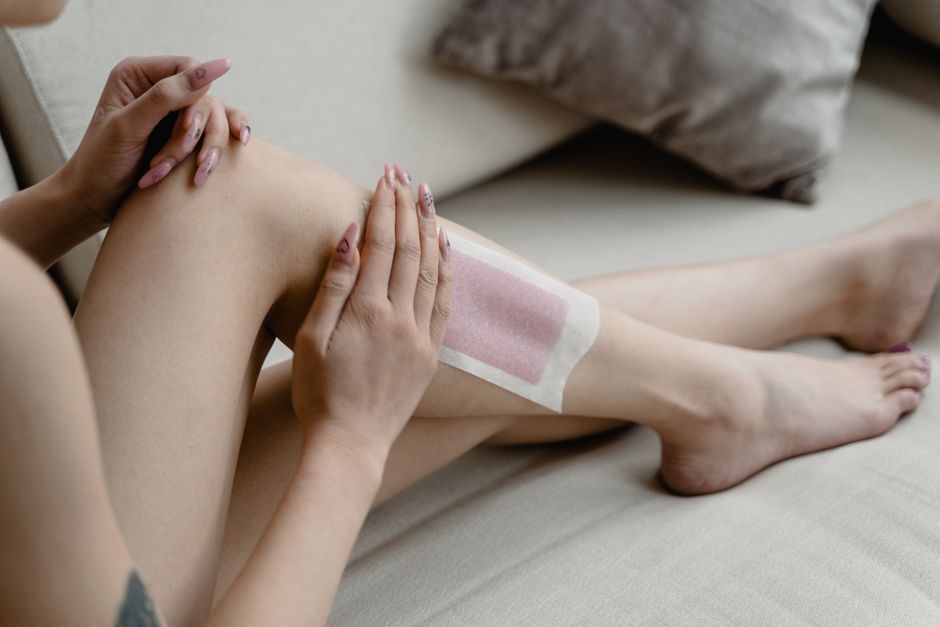
Yes, waxing can cause ingrown hairs. When hair is pulled out at the root, the new hair growing back sometimes curls sideways or backward and re-enters the skin instead of pushing up through the surface. This is a well-documented reaction to hair removal, not a sign that you did something wrong.
Waxing is actually one of the more common triggers because it removes hair from deep in the follicle. That same deep removal is why results last longer than shaving, but it also sets up the conditions for a new hair to take a wrong turn on its way out.
Can Waxing Cause Ingrown Hairs?
Yes, and it is one of the most frequent side effects of waxing. An ingrown hair forms when a regrowing hair fails to break through the skin surface and instead grows back into the skin or curls along just beneath it.
The medical term for this is pseudofolliculitis. It is not an infection at first. It is a mechanical problem — a hair in the wrong place. The skin responds with redness, a small bump, and sometimes itching or tenderness.
Waxing raises the risk for a specific reason. When wax grips the hair and pulls, it removes the entire shaft from the follicle, often including the bulb at the base. The follicle is left empty and slightly traumatized. As the new hair regenerates, it has to find its way back out through a follicle that may be swollen, narrowed, or partially blocked by debris and inflammation. That is when it can go sideways.
People with naturally curly hair are more prone to ingrown hairs after any hair removal method, including waxing. The curl of the hair itself makes it more likely to bend back toward the skin rather than exit straight through the opening.
Why Does Waxing Cause Ingrown Hairs More Than Shaving?
Waxing removes hair from the root. Shaving cuts hair at the surface. That difference matters for ingrown hairs.
When you shave, the hair that grows back is a blunt-tipped shaft emerging from a follicle that was never pulled. The follicle opening is undisturbed. When you wax, the follicle has been yanked. The new hair has to push through a channel that may be inflamed or partially closed.
There is another factor. Waxing can break hairs instead of removing them cleanly, especially if the wax is applied too thick, pulled at the wrong angle, or if hair is too short to grip properly. A broken hair left below the surface can grow inward from that point.
Some clinicians note that repeated waxing over time may lead to finer, sparser regrowth in some people, which could reduce ingrown hairs eventually. That is a common clinical observation, but it is not strongly supported by large controlled trials, and results vary widely between individuals.
What Does an Ingrown Hair Look Like?
An ingrown hair typically appears as a small, raised bump near a recently waxed area. The bump may be red, pink, or darker than surrounding skin. Sometimes you can see a faint dark line or loop under the surface where the hair is trapped.
Common signs include:
- Small red or dark bumps in clusters
- Itching or mild tenderness
- A visible hair loop just under the skin
- Pus-filled bumps if inflammation increases
- Darkened skin patches that persist after bumps fade
These bumps can look similar to acne, folliculitis (an infection of the follicle), or a condition called keratosis pilaris. That overlap matters. A red bump after waxing is not automatically an ingrown hair. If bumps spread, become painful, or drain pus, that suggests infection rather than a simple ingrown hair, and it needs medical evaluation.
Post-inflammatory hyperpigmentation — the dark marks left behind — is more common in people with darker skin tones. These marks are not dangerous, but they can take months to fade.
How Do You Treat an Ingrown Hair?
Most ingrown hairs resolve on their own within days to a few weeks without treatment. The hair eventually grows out or the body clears the trapped hair and the inflammation settles.
General measures that are widely recommended include:
- Stop waxing or tweezing the area until it heals
- Apply a warm compress to encourage the hair to surface
- Gently exfoliate the skin surface once inflammation has calmed
- Avoid picking, squeezing, or digging at the bump
Picking at an ingrown hair is the most common way a minor bump becomes an infection. It introduces bacteria and creates a wound.
For persistent or inflamed ingrown hairs, some clinicians recommend over-the-counter hydrocortisone cream to reduce inflammation. Topical retinoids are sometimes prescribed to help normalize how the follicle sheds skin cells. These are clinical decisions, not universal recommendations, and they should be discussed with a doctor or dermatologist.
If an ingrown hair becomes infected — spreading redness, increasing pain, pus, or fever — it needs medical attention. Antibiotics may be necessary. Do not try to manage an infected follicle at home.
How Can You Prevent Ingrown Hairs From Waxing?
You cannot eliminate the risk entirely, but you can lower it. Prevention focuses on technique, timing, and aftercare.
Before waxing:
- Let hair grow to roughly a quarter inch so the wax can grip it
- Cleanse the skin gently to remove oil and dead cells
- Avoid waxing over irritated, sunburned, or broken skin
During and after:
- Use a clean technique with fresh wax and clean tools
- Pull wax in the direction of hair growth with firm, even pressure
- Avoid tight clothing over the area for a day or two
- Exfoliate gently a few days after waxing, not immediately
- Moisturize to keep the skin surface supple
Some people find that regular gentle exfoliation between waxing sessions helps reduce trapped hairs. The evidence for how well this works is limited and mostly based on clinical experience rather than controlled trials.
Does Hair Type Affect Ingrown Hair Risk?
Yes. Hair texture and curl pattern are among the strongest predictors of ingrown hairs after waxing.
Coarse, curly hair is more likely to bend back and re-enter the skin. Fine, straight hair tends to grow straight out and is less likely to loop back. This is why ingrown hairs are more common in the pubic area, underarms, and beard region — areas where hair tends to be coarser and more curved.
Skin type also matters. People with darker skin tones are more likely to develop post-inflammatory hyperpigmentation after an ingrown hair, even when the bump itself is minor.
Is Waxing the Only Cause?
No. Waxing is one cause among several. Any method that removes hair below the surface or disrupts the follicle can lead to ingrown hairs.
- Shaving — cutting hair too close can cause it to re-enter the skin as it grows
- Tweezing — pulling hair can leave a follicle that regrows sideways
- Epilators — mechanical pulling has the same root-removal effect as waxing
- Tight clothing — friction can push hair back into the skin
- Dead skin buildup — can block the follicle opening
Waxing is not uniquely dangerous. It is simply one of the more effective ways to remove hair from the root, and that effectiveness is exactly what raises the ingrown hair risk compared with surface-level methods.
When Should You See a Doctor?
See a doctor if ingrown hairs are frequent, widespread, or not improving. Also seek care if you notice signs of infection.
Warning signs that need medical attention:
- Spreading redness or warmth around the area
- Increasing pain or swelling
- Pus or drainage
- Fever or feeling unwell
- Bumps that keep returning in the same spot
In some cases, what looks like recurring ingrown hairs is actually a different condition, such as folliculitis or hidradenitis suppurativa, which requires specific treatment. A doctor can tell the difference.
Frequently Asked Questions
Can waxing cause ingrown hairs?
Yes, waxing is a common cause of ingrown hairs because it removes hair from the root, and the regrowing hair can curl back into the skin. People with coarse or curly hair are at higher risk.
How long do ingrown hairs last after waxing?
Most ingrown hairs clear on their own within days to a few weeks as the hair grows out or the body resolves the trapped hair. Persistent or infected bumps need medical evaluation.
Should you pop an ingrown hair?
No, you should not pop or dig at an ingrown hair, because it can introduce bacteria and turn a minor bump into an infection. Warm compresses and gentle exfoliation are safer approaches.
Does shaving cause fewer ingrown hairs than waxing?
Shaving generally causes fewer ingrown hairs than waxing because it cuts hair at the surface rather than pulling it from the root. However, shaving too close can still cause ingrown hairs, especially with curly hair.
