
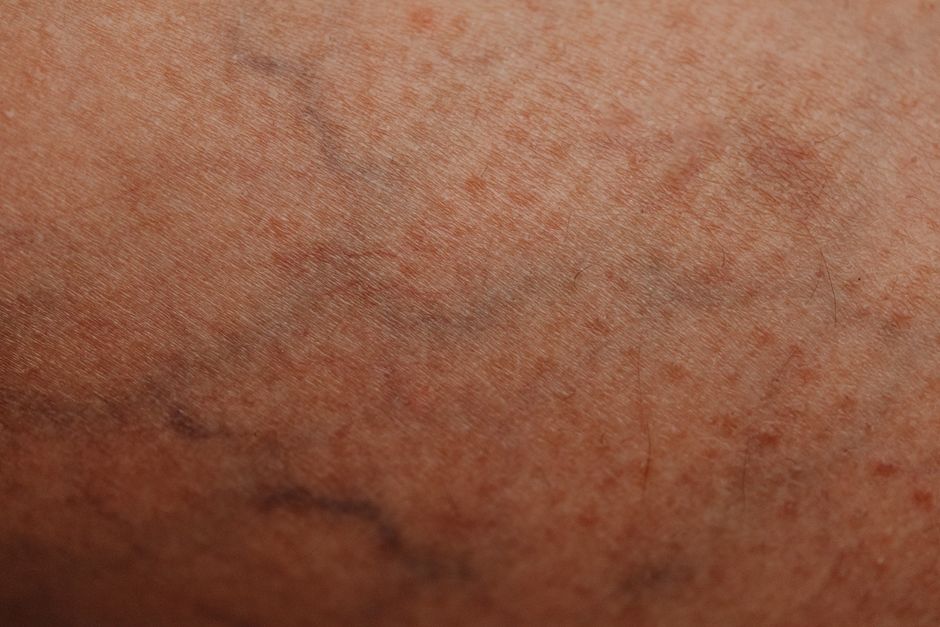
Yes, varicose veins can hurt. The aching, heaviness, and burning people feel in their legs is real, not imagined, and it comes from blood pooling in veins that have lost the ability to push it back up toward the heart.
That said, the pain is usually a dull discomfort rather than a sharp emergency. It tends to build through the day and ease when you lie down and put your feet up. Sharp, sudden, or one-sided leg pain is a different situation and needs medical attention right away.
Here is what is actually happening in those veins, why some people feel pain and others do not, and what the evidence says about relieving it.
What Do Varicose Veins Feel Like?
Most people describe a heavy, tired, or aching feeling in the legs, often worse by evening. The discomfort usually sits in the calf or thigh, in the same area as the visible veins.
Other common sensations include:
- Burning or throbbing along the vein
- A feeling of fullness or pressure in the leg
- Mild swelling around the ankles, worse after standing
- Itching over the vein itself
- Nighttime leg cramps
- Restless, uncomfortable legs when sitting still
Not everyone with visible varicose veins has pain. Some people have large, twisted veins and no discomfort at all. Others have relatively small veins and significant aching. The size of the vein does not reliably predict how much it hurts.
One detail worth knowing: the pain is usually worse in warm weather and after long periods of standing. Both cause veins to widen, which lets more blood pool.
Why Do Varicose Veins Hurt?
The pain comes from pressure and stretch, not from the vein being “damaged” in a dangerous way.
Veins in your legs carry blood upward against gravity. They rely on two things to do it: one-way valves inside the vein, and the calf muscles squeezing the vein with every step. When those valves weaken, blood falls back down and collects in the lower vein. The vein wall stretches. Surrounding tissue gets swollen with fluid. That combination produces the ache.
There is a second factor that gets less attention. Blood pooling in the leg is not just sitting there — it triggers an inflammatory response in and around the vein wall. Researchers have found elevated markers of inflammation in people with chronic venous disease. This helps explain why the discomfort can feel like a burning or throbbing rather than simple heaviness, and why it can persist even when the vein is not visibly bulging.
This is also why the pain follows a pattern. It builds during the day as blood keeps pooling. It improves overnight when your legs are level with your heart and gravity stops working against you.
When Is Leg Pain From Varicose Veins an Emergency?
Some leg symptoms are not routine varicose vein discomfort and need urgent care.
Get medical help immediately if you have:
- Sudden, severe pain in one leg, especially with swelling, warmth, or redness
- A vein that becomes hard, red, hot, and very tender — this can signal superficial thrombophlebitis, which sometimes involves a clot
- Shortness of breath or chest pain alongside leg swelling
- Skin that turns pale, cold, or blue
- An open sore or wound on the leg that is not healing
Sudden one-sided leg swelling with pain is the classic warning for a deep vein clot. That is a medical emergency, not a varicose vein flare. The distinction matters because the two can feel similar at the start.
Chronic venous insufficiency can also, over years, lead to skin changes near the ankle — brownish discoloration, thickening, and eventually ulcers. These are not emergencies, but they do mean the condition is advanced and should be evaluated.




Does the Pain Mean Something Worse Is Happening?
Usually not. For most people, varicose vein pain reflects a mechanical and inflammatory problem in the superficial veins, not a threat to circulation.
There is one important exception. Varicose veins and deep vein problems can coexist, and having superficial vein disease does not rule out deeper issues. That is one reason a proper evaluation matters if symptoms are significant or changing.
Another point worth being honest about: the evidence linking varicose veins to a higher long-term risk of clots is mixed and depends heavily on the specific situation. Some studies suggest an association between varicose veins and a modestly increased risk of certain clotting events. Others are less clear. What is well established is that superficial thrombophlebitis — inflammation with a clot in a surface vein — can sometimes extend into the deep system. That is why a hard, hot, tender vein is taken seriously rather than dismissed.
What Actually Helps the Pain?
Compression stockings have the strongest evidence for reducing symptoms. They work by applying graded pressure that helps the calf muscles move blood upward and reduces pooling.
Other measures that are widely used and reasonable:
- Elevating the legs above heart level when resting
- Moving regularly rather than standing still for long periods
- Walking, which activates the calf muscle pump
- Avoiding prolonged sitting with legs down
Be cautious about the evidence for some popular remedies. Horse chestnut seed extract has been studied for chronic venous insufficiency and shows some symptom benefit in several trials, but product quality varies widely and it carries real risks for people with kidney or liver disease or those on blood thinners. It should not be started without medical guidance.
Things marketed for vein pain — topical creams, “vein support” supplements, massage devices — generally have little to no clinical evidence behind them. No study has confirmed that these reverse or cure varicose veins.
For persistent or worsening pain, procedures that close or remove the affected veins are an option. Endovenous ablation, sclerotherapy, and surgery are established treatments, and the choice depends on which veins are involved and your overall health. These are decisions to make with a clinician who has examined your legs, not from a general article.
Can Varicose Veins Hurt Even Without Visible Bulging Veins?
Yes. This is more common than many people realize.
Vein disease does not always show up as a bulging surface vein. The problem can sit in deeper or smaller veins that are not visible, while still producing the same pooling, pressure, and aching. Someone can have significant leg heaviness and no obvious varicose veins at all.
This is why the diagnosis should not rest on appearance alone. A clinician can use ultrasound to map blood flow and identify which veins are incompetent. If you have persistent leg aching, swelling, or heaviness without visible veins, that evaluation is reasonable to ask about.
Does Everyone With Varicose Veins Eventually Get Pain?
No. Varicose veins often progress slowly, and some people never develop significant discomfort.
When pain does appear, it usually follows a gradual pattern — mild heaviness first, then aching that builds through the day, then swelling and skin changes in more advanced cases. The timeline varies widely between individuals, and there is no reliable way to predict whose veins will stay quiet and whose will worsen.
What is clear is that symptoms tend to track with how much time you spend upright and still. A job that keeps you on your feet all day tends to make things feel worse than a day spent moving around.
Frequently Asked Questions
Can varicose veins hurt all the time?
They can cause daily discomfort, but the pain usually fluctuates — worse after standing and better with rest and elevation. Constant, unchanging pain in one leg should be evaluated.
Is varicose vein pain dangerous?
Ordinary varicose vein aching is not dangerous. Sudden severe pain with swelling, warmth, or redness in one leg can signal a clot and needs urgent care.
Do compression stockings really help varicose vein pain?
Yes, compression has the strongest evidence for reducing aching and heaviness. The right pressure and fit matter, so a clinician or fitter should guide the choice.
Can varicose veins hurt without being visible?
Yes, symptoms can come from veins that are not visible on the surface. Ultrasound can identify which veins are causing the problem.
