
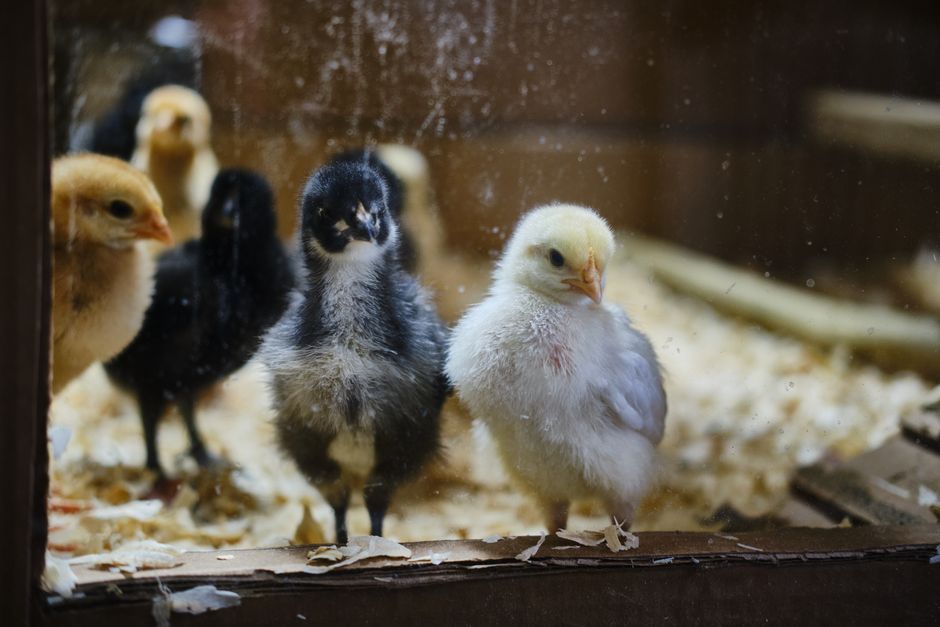
Two chicks can hatch from one egg, but it is rare. It requires a fertilized egg that contains two separate embryos, and both must survive to hatch. Most double-yolk eggs never produce even one chick, and the odds of two live chicks emerging are very low.
The question comes up because double-yolk eggs are common enough that almost anyone who keeps or buys farm eggs has seen one. Finding two yolks in a shell feels like a small miracle. It is tempting to assume two yolks means two chicks. Biology is more complicated than that.
Can Two Chicks Hatch From One Egg?
Yes, it is possible, and it has been documented. The result is sometimes called twins. It happens when a single egg contains two fertilized yolks, and each yolk develops its own embryo.
A double-yolk egg starts with a quirk in the hen’s reproductive system. Normally a hen releases one yolk (the ovum) roughly every 24 to 26 hours, and the oviduct wraps albumen, membranes, and shell around it. Sometimes two yolks are released close together and get enclosed in the same shell. This happens more often in young hens just starting to lay, and in certain heavy breeds.
For two chicks to hatch, several things must line up. Both yolks must be fertilized. Both embryos must develop normally. The egg must be incubated at the right temperature and humidity. And both chicks must be able to pip (break) through the shell and get out. In practice, most double-yolk eggs fail at one of these steps.
Why Is It So Rare for Two Chicks to Hatch From One Egg?
The main reason is space and air. A double-yolk egg is not much bigger than a single-yolk egg. Two embryos are competing for the same limited oxygen supply and the same small air cell, which is the pocket of air at the wide end of the egg that the chick breathes before hatching.
As embryos grow, they need more oxygen and produce more carbon dioxide and heat. In a normal egg, one chick fits. In a double-yolk egg, two growing chicks crowd each other. They can run short of oxygen, overheat, or simply run out of room to position themselves for hatching.
Hatching itself is physically demanding. A chick has to turn inside the egg, break through the inner membrane, and then chip a ring around the shell. Two chicks trying to do this in a shared space often interfere with each other. One may break into the other’s area, or neither may get the leverage to complete the hatch.
There is also a nutrition problem. The yolk is the chick’s food supply. Two embryos drawing on the same two yolks can deplete the nutrients before either is ready to hatch. Many double-yolk embryos die partway through incubation.
What Happens to Double-Yolk Eggs in an Incubator?
Most double-yolk eggs do not hatch at all. When people incubate them out of curiosity, the usual outcome is that both embryos stop developing at some point, or one dies and the other fails to hatch alone.
Some hatcheries and breeders candle double-yolk eggs (shine a light through them) early in incubation and remove them. The reasoning is practical: a double-yolk egg is unlikely to produce a healthy chick, and leaving it in the incubator can create problems. A failed egg can spoil, and a spoiled egg can release bacteria or burst, which risks the other eggs around it.
This is why commercial hatcheries generally do not set double-yolk eggs. It is not that hatching twins is impossible. It is that the odds are poor and the risk to the rest of the batch is real.
For someone incubating a small batch at home, the decision is a judgment call. Some people try anyway because the outcome is interesting. The honest expectation is that a double-yolk egg is much more likely to fail than a single-yolk egg.
What Do Twin Chicks From One Egg Look Like?
When two chicks do hatch from one egg, they are usually smaller than a chick from a single-yolk egg. They shared a confined space and a limited food supply, so they tend to be underweight at hatch.
They may also be weak. Hatching takes energy, and twin chicks often arrive exhausted. Some need extra warmth and time before they can stand and feed. Survival in the first days can be harder than for a normal chick.
Beyond size, there is nothing magical about them. They are ordinary chicks that happened to share a shell. They are not a special breed, and the trait is not reliably passed on. A hen that lays a double-yolk egg is not guaranteed to lay another, and her chicks are not more likely to produce twins themselves.
One clarification worth making: twins from one egg are not the same as identical twins. Each yolk is fertilized by a separate sperm, so the two chicks are no more genetically similar than ordinary siblings. They are not clones of each other.
Does a Double Yolk Always Mean Two Embryos?
No. A double-yolk egg can be fertile or infertile, and even a fertile double-yolk egg does not always develop two embryos. Fertilization happens before the egg is laid, in the hen’s oviduct. Whether both yolks get fertilized depends on the same factors that affect any egg.
Many double-yolk eggs are simply eaten. If you crack one open and see two yolks, that is a normal, safe egg for cooking. The double yolk does not make it unsafe to eat, and it does not mean a chick was developing. An unincubated egg does not develop an embryo regardless of whether it was fertilized, because development requires steady warmth.
This is a common point of confusion. People sometimes worry that a fertilized egg from a farm is “a baby chick” and should not be eaten. A fertilized egg that has not been kept warm will not develop. It is safe to eat, and this is standard food safety guidance.
How Common Are Double-Yolk Eggs?
Double-yolk eggs are uncommon but not rare. They show up often enough that egg producers and backyard keepers see them regularly. They are most frequent in young hens that have just begun laying, when the timing of yolk release is less synchronized.
They also appear more often in certain heavy breeds and in hens during the early part of a laying cycle. As a hen’s reproductive system settles into a rhythm, double yolks become less frequent.
The rate of actual twin hatches is far lower than the rate of double-yolk eggs. Most double-yolk eggs are laid, collected, and eaten. Only a small fraction are ever incubated, and of those, only a small fraction produce two live chicks. The two numbers are not close.
Is It Safe to Eat a Double-Yolk Egg?
Yes. A double-yolk egg is a normal egg with an extra yolk, and it is safe to cook and eat like any other egg. Food safety guidance for eggs is the same whether there is one yolk or two: cook eggs thoroughly, and handle and store them properly.
The extra yolk adds fat and calories, but it does not change how the egg should be handled. If you are watching cholesterol or fat intake, a double-yolk egg simply counts as roughly two yolks’ worth. That is the only practical difference for most people.
There is no health reason to avoid a double-yolk egg. The idea that double yolks signal something wrong with the hen or the egg is not supported. It is a normal variation in how eggs form.
Frequently Asked Questions
Can two chicks hatch from one egg naturally?
Yes, but it is rare. It requires a double-yolk egg where both yolks are fertilized and both embryos survive to hatch, which most double-yolk eggs do not achieve.
What are the chances of two chicks hatching from a double-yolk egg?
The odds are low, though no single reliable figure applies to all eggs. Most double-yolk eggs fail to produce even one chick, and two live chicks is rarer still.
Are twin chicks from one egg identical?
No. Each yolk is fertilized by a separate sperm, so the two chicks are ordinary siblings, not identical twins.
Should you incubate a double-yolk egg?
Most breeders do not, because the odds of a healthy hatch are poor and a failed egg can spoil and threaten the others. Some people try anyway out of curiosity.
