
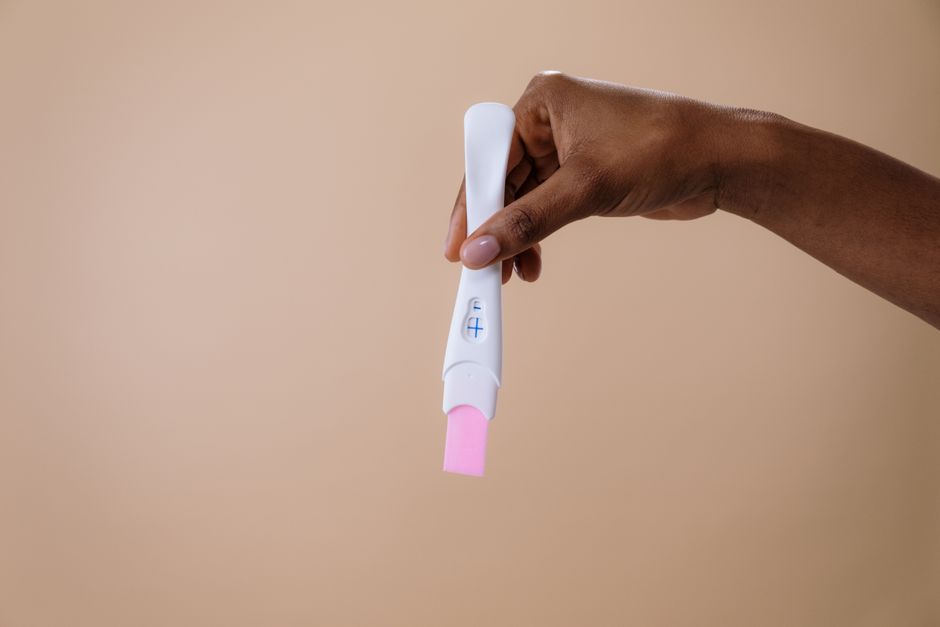
Yes, you can take a pregnancy test at night. For most home pregnancy tests, the time of day matters far less than how concentrated your urine is. First-morning urine has the highest concentration of hCG, the hormone tests detect, but many modern tests are sensitive enough to work reliably at any time of day after a missed period. The real question is not whether you can take it at night — it is whether you can trust a negative result from night testing before your period is due.
Does Urine Concentration Matter for Night Testing?
Home pregnancy tests work by detecting human chorionic gonadotropin (hCG) in your urine. This hormone rises rapidly after a fertilized egg implants in the uterus. The more hCG in your urine, the easier it is for the test to detect it.
First-morning urine is more concentrated because you have not been drinking fluids overnight. This concentration can make a difference in the earliest days after implantation. By the time you have missed your period, hCG levels are usually high enough that concentration matters less.
Drinking a lot of water during the day dilutes your urine. If you test at night after drinking fluids all day, diluted urine might lower the hCG concentration below the test’s detection threshold. This is more likely to cause a false negative than a false positive.
Research published in the journal Fertility and Sterility has shown that many modern pregnancy tests can detect hCG levels as low as 10 to 25 milli-international units per milliliter. For comparison, hCG levels typically reach 25 mIU/mL around the time of a missed period. At that point, even diluted urine usually contains enough hormone for a positive result.
How Early Can You Test at Night?
The timing of testing depends on when implantation happened. Implantation typically occurs 6 to 12 days after ovulation. After implantation, hCG levels double roughly every 48 to 72 hours.
If you test at night before your missed period, you are testing earlier than the test manufacturer recommends. Most pregnancy tests claim they can detect pregnancy up to five days before a missed period. This claim is based on testing with first-morning urine. Testing at night on that same day means your urine is more diluted and your hCG levels are lower than they will be the next morning.
A study published in the American Journal of Obstetrics and Gynecology found that testing four days before a missed period detected only about 50 percent of pregnancies. By the day of the missed period, detection rates climbed above 90 percent. Testing at night before the missed period would likely produce even lower detection rates.
If you are testing early, wait for first-morning urine. If you have already missed your period, night testing is generally reliable.
Can Diluted Urine Cause a False Negative?
Yes, diluted urine can cause a false negative result. This is the main risk of testing at night. A false negative means the test says you are not pregnant when you actually are.
The mechanism is straightforward. Your kidneys filter hCG from your blood into your urine. When you drink fluids, your kidneys produce more urine, which dilutes the concentration of hCG. If the concentration falls below the test’s sensitivity threshold, the test will show negative even though hCG is present.
This does not happen often after a missed period because hCG levels are usually high enough by then. But it can happen in early pregnancy, especially if you have been drinking a lot of water throughout the day.
To reduce this risk, avoid drinking large amounts of fluid for two to three hours before testing. This allows your urine to concentrate naturally. Also, read the instructions on your specific test. Some tests are more sensitive than others and may be less affected by dilution.




What Do the Instructions Say About Timing?
Every home pregnancy test comes with manufacturer instructions. These instructions are based on clinical testing done by the company. They are not just suggestions — they reflect the conditions under which the test was validated.
Most pregnancy test instructions say you can test at any time of day. Many add that first-morning urine is best because it has the highest concentration of hCG. Some specific brands, particularly early-detection tests, explicitly recommend using first-morning urine for the most accurate result.
The Food and Drug Administration (FDA) regulates home pregnancy tests as medical devices in the United States. Manufacturers must provide evidence that their tests work as claimed under the conditions specified in the instructions. If the instructions say first-morning urine is preferred, the test was likely validated under those conditions.
Ignoring the instructions does not mean the test will fail. It means you are using the test outside its validated conditions. The risk is on the side of false negatives, not false positives. False positives are extremely rare with proper use and are almost never caused by testing at night.
How to Get the Most Accurate Result at Night
If you need to test at night and want the most reliable result, follow a few simple steps. The goal is to increase the concentration of hCG in your urine as much as possible.
- Avoid drinking fluids for at least two hours before testing. This allows your urine to become more concentrated.
- Do not empty your bladder right before testing. Wait until you have a full bladder. The urine that has been sitting in your bladder longer is more concentrated.
- Use a test with high sensitivity. Look for tests that detect hCG at 10 mIU/mL or lower. These are often labeled as “early detection” or “ultra-sensitive.”
- Read the specific instructions for your test. Some tests have different hold times or urine collection methods.
- If the test is negative but your period does not start within a few days, test again with first-morning urine.
Following these steps will not make a night test as accurate as a first-morning urine test before a missed period. But they will improve your chances of getting a correct result.
Does a Positive Test at Night Mean You Are Pregnant?
Yes. A positive result at any time of day is almost certainly correct. False positives are extremely rare with home pregnancy tests when used correctly.
The hormone hCG is only produced during pregnancy and by certain rare medical conditions. These conditions include some types of ovarian tumors, testicular cancer in men, and very rarely, certain pituitary gland issues. The odds of a false positive from these causes are vanishingly small in the general population.
More common causes of false positives include using an expired test, reading the test after the recommended time window, or having a chemical pregnancy — a very early miscarriage that happens shortly after implantation. A chemical pregnancy means you were pregnant, but the pregnancy did not continue. The test was technically correct at the time you took it.
If you get a positive result at night, you are pregnant. You do not need to repeat the test with first-morning urine to confirm. A positive is a positive.
Comparison of Testing Times and Reliability
| Testing Time | Before Missed Period | Day of Missed Period | After Missed Period |
|---|---|---|---|
| First-morning urine | Most reliable early testing option | Highly reliable | Nearly 100% accurate |
| Afternoon urine | Less reliable; risk of false negative | Generally reliable | Nearly 100% accurate |
| Evening urine | Least reliable; highest false negative risk | Reliable for most women | Nearly 100% accurate |
The table shows that time of day matters most when testing early. Once you have missed your period, the time of day has little practical impact on accuracy. After a missed period, hCG levels are high enough that even diluted urine usually produces a correct result.
Common Misconceptions About Night Testing
One widespread myth is that testing at night can cause a false positive. This is not true. False positives are caused by the test detecting hCG when it should not. Diluted urine cannot create a false positive — it can only mask a real positive by making the hCG concentration too low to detect.
Another misconception is that all pregnancy tests are the same. They are not. Tests vary in sensitivity, and this variation matters for early testing. A test with a sensitivity of 10 mIU/mL will detect lower levels of hCG than a test with a sensitivity of 25 mIU/mL. If you test at night, a more sensitive test gives you a better chance of getting an accurate result.
Some people believe that drinking certain beverages like coffee or soda affects the test. There is no evidence that caffeine or other common drink ingredients interfere with pregnancy test results. The only factor that matters is the concentration of hCG in your urine. Dilution from any fluid can affect this, but the type of fluid does not.
A final myth is that you need to wait a specific number of hours after urinating to test again. This is not necessary. You can test as often as you want. Each test is independent. If you get a negative result at night and a positive result the next morning, the morning result is more likely to be correct because your urine was more concentrated.
Frequently Asked Questions
Can I take a pregnancy test at night before my missed period?
You can, but the risk of a false negative is higher than with first-morning urine. Testing with first-morning urine gives you the best chance of an accurate early result.
Will drinking water before a night test affect the result?
Yes, drinking water dilutes your urine and can lower hCG concentration. This increases the chance of a false negative, especially in early pregnancy.
Is a positive pregnancy test at night reliable?
Yes. A positive result at any time of day is almost certainly correct. False positives are extremely rare with home pregnancy tests.
Should I repeat a negative night test in the morning?
If your period does not start within a few days, testing again with first-morning urine is a good idea. A negative at night does not rule out pregnancy.
