
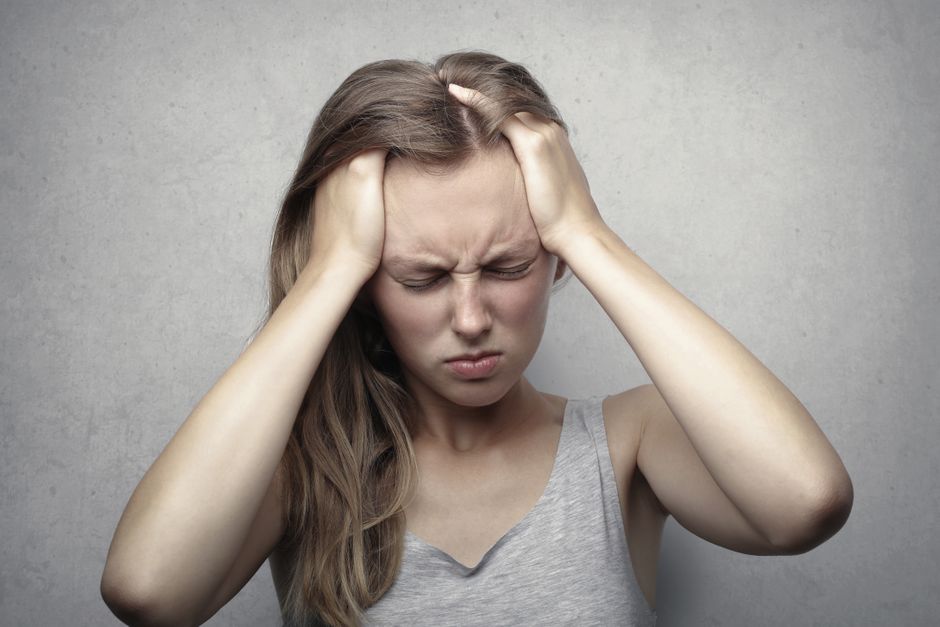
Yes, stress can contribute to pimples. The relationship is well documented in dermatology, though it works indirectly. Stress does not deposit oil into your pores or create a pimple out of nothing. What it does is shift the conditions in your skin and body in ways that make breakouts more likely, especially if you are already prone to acne.
That distinction matters. If you have clear skin and a stressful week, you probably will not suddenly develop cystic acne. But if you are already dealing with breakouts, stress can make them worse, and it can make them last longer.
How Does Stress Actually Lead to Pimples?
The pathway runs through hormones. When you are under stress, your body releases cortisol and other stress hormones. Cortisol signals your sebaceous glands, the tiny glands attached to hair follicles, to produce more oil, called sebum.
Sebum itself is not the problem. It is supposed to lubricate and protect your skin. The problem is what happens when excess sebum combines with dead skin cells inside a pore. That mixture can plug the follicle. Once plugged, the bacterium Cutibacterium acnes, which normally lives on everyone’s skin, can multiply in the blocked pore and trigger inflammation. That inflammation is what you see and feel as a red, swollen pimple.
So the chain looks like this: stress raises cortisol, cortisol increases oil production, excess oil plus dead skin cells block a pore, and the blocked pore becomes inflamed. Each step is well established in the dermatology literature. What varies is how strongly each person responds.
Stress also slows wound healing. Research has shown that psychological stress can delay the skin’s ability to repair itself, which means a pimple that might have faded in a few days can linger longer when you are under pressure.
Can Stress Cause Pimples Even If You Never Had Acne Before?
This is where the picture gets more nuanced. Stress can influence the skin of people who have never had significant acne, but it rarely creates a full breakout pattern on its own. Acne has multiple causes, and stress is one contributor among several.
The main drivers of acne include:
- Hormonal changes, especially androgens that increase oil production
- Genetics, which shape how your follicles behave and how your immune system responds
- Certain medications, including some steroids and lithium
- Cosmetics and skincare products that clog pores
- Friction or pressure on the skin from helmets, straps, or phones
If none of these are present and your skin is generally clear, a stressful period is unlikely to produce a sudden crop of pimples. But stress can nudge the system. Someone with mildly clogged pores who would normally stay clear might tip into a few visible pimples during a high-stress stretch.
There is also a feedback loop worth knowing about. Acne itself causes stress. Visible breakouts affect self-image and can raise anxiety, which raises cortisol, which can worsen the acne. Breaking that loop is part of why treatment often includes both skin care and stress management.
Why Do Breakouts Show Up Days After the Stressful Event?
Pimples do not form overnight. A clogged pore takes time to become inflamed and visible. The process from a blocked follicle to a red, raised pimple typically takes several days to a couple of weeks.
That delay explains a common experience. You get through a difficult week, the pressure lifts, and then your skin breaks out. The breakout is not caused by relaxing. It is the result of hormonal shifts that happened days earlier, finally reaching the surface.
This lag also means you cannot judge a stress-reduction strategy by what your skin does tomorrow. You are always looking at the skin’s response to conditions from one to two weeks ago.
Does Everyone Respond to Stress the Same Way?
No. Individual responses vary widely, and researchers have not fully mapped out why. Some people clearly break out during exams, job interviews, or periods of grief. Others show no skin change at all under the same pressure.
Part of the difference is genetic. Part is hormonal. Part may relate to how your particular immune system reacts to C. acnes and how much inflammation it generates.
There is also the question of what people do when stressed, which can matter as much as the stress itself. During difficult periods, many people:
- Sleep less, which may affect skin recovery
- Eat differently, sometimes more sugar and processed foods
- Touch their face more often without realizing it
- Skip their usual skincare routine
- Pick at existing blemishes
These behaviors can worsen acne independently of cortisol. Untangling how much is direct hormonal effect and how much is behavior change is genuinely difficult, and the research does not give a clean answer.
What Can You Do About Stress-Related Breakouts?
The most reliable approach is to treat the acne directly while also addressing stress where you can. Waiting for a calmer season of life to fix your skin rarely works, because there is always another stressful season.
For the skin itself, standard acne care applies regardless of what triggered the flare. Gentle cleansing, non-comedogenic products, and evidence-based treatments such as benzoyl peroxide or topical retinoids are the mainstays. If over-the-counter options are not working after a reasonable trial, a dermatologist can assess whether prescription treatment is appropriate.
For stress, the evidence is strongest for approaches that are well studied in general health:
- Regular physical activity, which has consistent evidence for reducing stress symptoms
- Adequate sleep, since sleep deprivation affects both stress hormones and skin recovery
- Mindfulness or relaxation practices, which some studies suggest can reduce perceived stress
- Talking with a mental health professional if stress is persistent or overwhelming
It is worth being honest about the limits here. No large trial has shown that a specific stress-reduction technique clears acne. The evidence supports stress reduction for stress itself. Whether that translates into fewer pimples for any given person is not firmly established, though the biological reasoning is sound.
One practical point: do not use stress as an explanation that stops you from getting acne treated. Acne is a medical condition with effective treatments. If your breakouts are persistent, painful, or leaving scars, that is a reason to see a dermatologist, not a reason to wait until life calms down.
Does Stress Cause Acne or Just Make It Worse?
The more accurate framing is that stress worsens acne rather than causing it from scratch. Acne requires specific conditions in the follicle, and those conditions are shaped mainly by hormones and genetics. Stress can amplify the process, but it is not the root cause for most people.
This distinction has real implications. If you have an underlying acne condition, managing stress may help reduce flares, but it will not replace treatment. If your skin is generally clear, stress alone is unlikely to be the reason for a breakout.
What the evidence does support is that stress is a legitimate factor in acne for many people, not a myth. It is one thread in a larger picture that includes hormones, genetics, bacteria, and inflammation.
Frequently Asked Questions
Can stress cause pimples on the face?
Yes, stress can contribute to pimples on the face and elsewhere by raising cortisol, which increases oil production and can worsen pore blockage. It typically worsens existing acne rather than creating it from nothing.
How long after stress do pimples appear?
Pimples usually appear several days to about two weeks after a stressful period, because a clogged pore takes time to become inflamed and visible. This delay is why breakouts often show up after the stress has passed.
Does stress cause acne in people who never had it?
Stress alone rarely causes significant acne in someone with no underlying tendency. It is more likely to trigger a few pimples in people who already have mildly clogged pores or a genetic predisposition.
Can reducing stress clear up acne?
Reducing stress may help lessen flares for some people, but no large trial has shown that stress reduction alone clears acne. Acne treatment with proven products or prescription care is still the main approach.
