
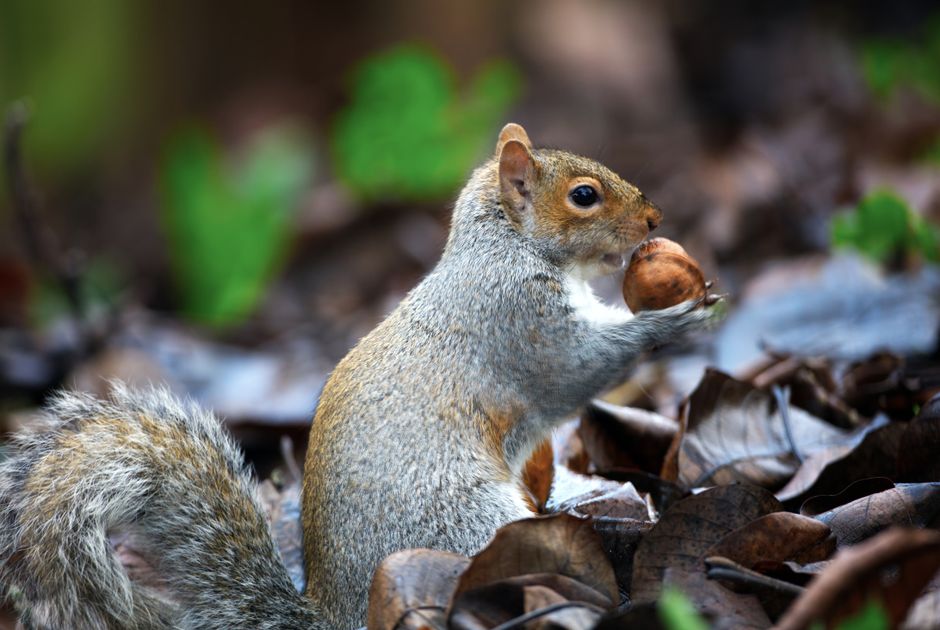
Yes, squirrels can eat acorns, and acorns are one of the most important foods in a squirrel’s diet. For many squirrel species, acorns are a primary calorie source in fall and winter. They eat them raw, shell and all, and they bury far more than they eat.
That short answer hides a lot of interesting biology. Squirrels have evolved alongside oak trees for millions of years. Acorns feed them, and the squirrels accidentally plant new oak trees by forgetting where they buried some. It is one of the better examples of animals and plants shaping each other over time.
Why Are Acorns So Important to Squirrels?
Acorns are dense in fat and carbohydrates, which makes them close to an ideal wild food for a small mammal that cannot store much body fat. A single acorn provides a concentrated package of energy wrapped in a shell that squirrels can open in seconds.
Oak trees do not produce the same number of acorns every year. Some autumns bring a huge crop, others almost none. These boom-and-bust cycles are called mast years. In a heavy mast year, squirrels have more food than they can possibly eat. In a poor year, they struggle.
That cycle drives squirrel behavior in ways you can see. In a big mast year, squirrels bury acorns frantically and often have leftover stores when spring arrives. In a lean year, they travel farther, compete harder for each acorn, and sometimes fail to build enough reserves to survive a harsh winter. Wildlife biologists track these patterns because acorn crops also affect deer, mice, and the predators that eat them.
How Do Squirrels Handle the Tannins in Acorns?
Acorns contain tannins, the same class of compounds that makes unripe fruit taste bitter and dry. Tannins bind to proteins and can reduce how well an animal absorbs nutrients. In high enough amounts, they can be genuinely harmful.
Squirrels manage this in a few ways. They often prefer white oak acorns, which generally contain lower tannin levels than red oak acorns. When they do eat red oak acorns, they frequently bite out the embryo first. The embryo is the part that would sprout, and it is also where tannins concentrate most heavily in some species. Eating just the embryo and discarding the rest is a real behavior documented in squirrel feeding studies.
Squirrels also cache red oak acorns differently than white oak acorns, and this connects to how quickly each type germinates.
Why Do Squirrels Bury Some Acorns and Eat Others?
White oak acorns germinate quickly, often within days or weeks of falling. Red oak acorns typically stay dormant through winter and sprout in spring. Squirrels appear to respond to this difference.
Field observations suggest squirrels often eat white oak acorns on the spot and bury red oak acorns for later. Burying a fast-germinating acorn is a bad investment because the seed will sprout before the squirrel needs it. Burying a dormant one makes sense.
Some squirrels also bite the tip off an acorn before burying it. Removing the embryo stops it from sprouting and preserves the food value. This is not a universal behavior across all squirrel species, and researchers still debate how much is instinct versus learning. What is clear is that squirrels are not burying acorns randomly.
Here is the part most people miss. Squirrels recover only a fraction of what they bury. Estimates vary, but a large share of cached acorns are never found. Those forgotten acorns are how oak forests spread. Squirrels are, in a real sense, unpaid foresters.





Do All Squirrels Eat Acorns?
Most tree squirrels do, but the picture varies by species and region.
Eastern gray squirrels rely heavily on acorns where oaks are common. Fox squirrels also eat acorns and tend to favor more open woodlands with scattered oaks. Red squirrels eat acorns but are better known for caching conifer cones. Ground squirrels and chipmunks eat acorns too, though they often store them in burrows rather than burying them individually.
Where oaks do not grow, squirrels eat other things. Their diet is flexible and includes:
- Nuts such as hickory, walnut, and beech
- Seeds, including sunflower and pine seeds
- Tree buds and young shoots
- Fungi, including mushrooms and truffles
- Fruit and berries in season
- Insects, bird eggs, and occasionally small animals
- Tree sap and bark
Squirrels are opportunistic omnivores, not strict nut-eaters. Acorns are a major food where they are available, not a requirement everywhere.
Are Acorns Safe for Squirrels to Eat?
Yes. Acorns are a natural, long-established food for squirrels, and eating them is not a health risk for the animal in normal wild conditions.
The tannin content is the main concern, and squirrels are adapted to it. They select lower-tannin acorns, discard high-tannin parts, and eat a varied diet that limits how much tannin they take in at once. There is no evidence that acorns harm healthy wild squirrels in any routine way.
One caveat applies to pets and captive animals, not wild squirrels. Acorns are not a safe treat for dogs, cats, or other pets. Tannins and other compounds in acorns can cause digestive upset in animals not adapted to them, and the hard shell poses a choking and blockage risk. If a pet eats acorns, contact a veterinarian.
Should You Feed Acorns to Squirrels?
You do not need to. Squirrels find acorns on their own wherever oaks grow, and they are efficient at it. Putting out acorns is unlikely to help a wild squirrel and may draw more animals than intended.
If you want to feed backyard squirrels, unsalted nuts in the shell are a common choice. Avoid salted or roasted nuts, which add sodium and remove natural moisture. Never offer moldy acorns or nuts, since mold can produce toxins that harm wildlife.
Feeding wildlife is a personal choice, not a necessity. Squirrels in most suburban and rural areas do not depend on handouts. A bird feeder left unsecured will usually attract them anyway.
What Happens When Acorn Crops Fail?
Squirrel populations rise and fall with acorn production. In years after a heavy mast, more young squirrels survive because food is abundant. In years after a poor crop, fewer make it through winter.
This ripples outward. Squirrels are prey for hawks, owls, foxes, and snakes. When squirrel numbers drop, those predators face leaner conditions too. Deer, wild turkeys, and mice also depend on acorns, so a bad acorn year affects a whole community of animals, not just squirrels.
This is why the acorn crop is not just a curiosity. It is a measurable driver of forest wildlife populations, and biologists monitor it for exactly that reason.
Can Squirrels Eat Acorns From Any Oak?
They can eat acorns from both white and red oak groups, but they show clear preferences. White oak acorns generally have lower tannin levels and sprout quickly. Red oak acorns tend to be higher in tannins and stay dormant longer.
Squirrels handle each type differently, which is why you may see them eat one kind immediately and bury another. The preference is not about taste alone. It reflects a trade-off between nutrition, tannin load, and how long the food will keep.
Frequently Asked Questions
Can squirrels eat acorns safely?
Yes. Acorns are a natural staple food for squirrels and are safe for them to eat. Squirrels are adapted to handle the tannins that make acorns bitter to other animals.
Do squirrels eat the whole acorn or just part of it?
Squirrels often eat the whole acorn, shell included, but sometimes bite out just the embryo of red oak acorns. This behavior appears linked to tannin content and how quickly the acorn would sprout.
Why do squirrels bury so many acorns?
Squirrels cache acorns to eat later when food is scarce. They recover only a portion of what they bury, and the forgotten acorns grow into new oak trees.
Are acorns bad for squirrels in large amounts?
No evidence indicates that acorns harm healthy wild squirrels, even when eaten in large amounts. Squirrels naturally limit tannin intake by choosing lower-tannin acorns and eating a varied diet.
