
Yes, spinal stenosis can cause neuropathy. When the spinal canal or the small openings where nerve roots exit narrow, they can press on nerves. That pressure can damage nerve tissue or interfere with its blood supply, and the result is neuropathy — numbness, tingling, burning, or weakness in the areas those nerves serve. This is especially true when stenosis happens in the lower back (lumbar) or the neck (cervical).
It helps to be precise about one thing from the start. The word “neuropathy” gets used loosely. Spinal stenosis does not cause the same kind of neuropathy as diabetes or chemotherapy. It causes a compressive or radicular neuropathy — a problem tied to a specific nerve root or roots being squeezed. That distinction matters for symptoms, testing, and treatment.
How does spinal stenosis cause neuropathy?
Nerves need space, and they need blood flow. Stenosis reduces both.
Your spinal cord and the nerve roots branching off it travel through a bony canal and exit through side openings called foramina. As discs age and settle, ligaments thicken, and joints enlarge, that space can shrink. When a nerve root is compressed, the myelin sheath that insulates it can be damaged, and the small blood vessels feeding the nerve can be squeezed. Both interfere with how the nerve carries signals.
Nerves that lose their blood supply or their insulation start firing abnormally. That is what produces the burning, tingling, and electric-shock sensations people describe. Over time, prolonged compression can also cause the nerve to function less well, which shows up as numbness or muscle weakness.
This is why the symptoms follow a nerve pattern rather than a joint pattern. The problem is at the nerve, even though the cause is in the spine.
What does spinal stenosis neuropathy feel like?
The symptoms depend on which nerve roots are affected and where the narrowing sits.
With lumbar stenosis — narrowing in the lower back — the compressed nerves supply the legs. People often report tingling or numbness in the feet, calves, or thighs. Some describe a heavy, tired feeling in the legs that worsens with standing or walking and eases when they sit or lean forward. That pattern of relief with forward bending is a classic sign clinicians look for.
With cervical stenosis — narrowing in the neck — the affected nerves supply the arms and hands. Symptoms can include numbness in the fingers, clumsiness, or weakness in the hands.
A few features are worth knowing:
- Pain that travels down one leg or arm in a line, rather than a broad ache
- Numbness or tingling that follows a specific nerve territory
- Weakness in a muscle group the nerve supplies
- Reflex changes that a clinician can detect on exam
One clarification that surprises many people: the leg heaviness and cramping that comes on with walking in lumbar stenosis is often called neurogenic claudication. It is a nerve-driven symptom, not a circulation problem in the arteries, though the two can feel similar and sometimes occur together. A clinician can usually tell them apart through history and exam.
How is it different from other types of neuropathy?
Most neuropathy people hear about is peripheral and length-dependent — the kind caused by diabetes, for example. It typically starts in the toes and feet and moves upward in a stocking-like pattern, affecting both sides fairly evenly.
Neuropathy from spinal stenosis is different in important ways:
- It is tied to a specific nerve root, so symptoms can be one-sided or uneven
- It follows a nerve’s territory rather than a stocking-glove pattern
- It often changes with posture — better when sitting or leaning forward, worse when walking upright
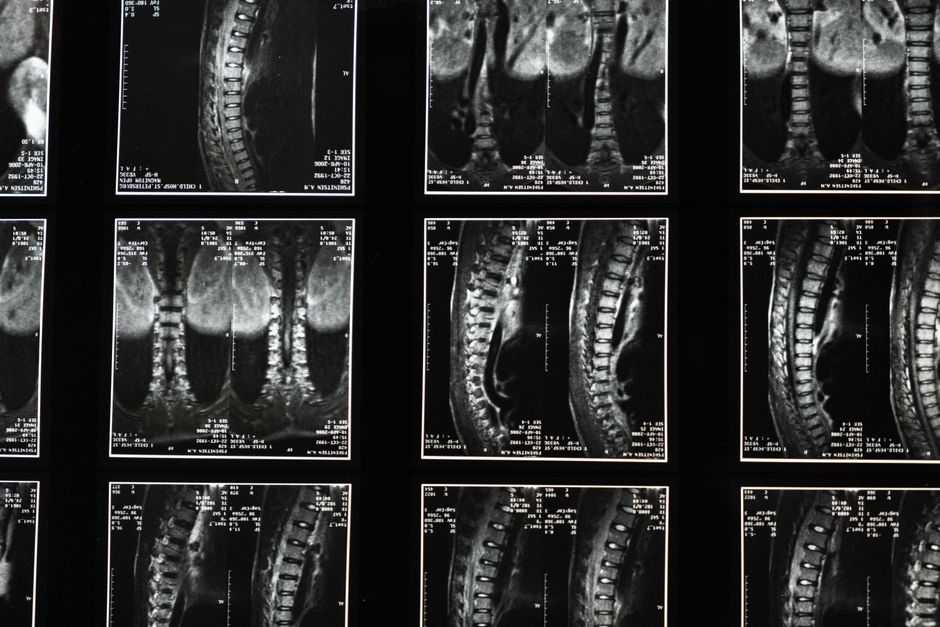
This distinction shapes testing. A nerve conduction study or electromyogram (EMG) can help identify whether a nerve root is involved and rule out other causes. Imaging like MRI shows the structural narrowing. Clinicians often use both together, because imaging alone can show stenosis in people who have no symptoms at all.
That last point deserves emphasis. Many adults have some degree of spinal narrowing on an MRI and feel nothing. So a scan that shows stenosis is not proof that stenosis is causing the neuropathy. The symptoms and the exam have to match.
Can spinal stenosis neuropathy be treated?
Yes, and most people improve without surgery. Conservative treatment is usually the first step, though the quality of evidence varies across options.
Physical therapy is commonly recommended to strengthen the muscles that support the spine and improve posture and mobility. Some clinicians also use targeted exercise programs for the legs. The evidence for physical therapy in lumbar stenosis is generally positive but not overwhelming.
Medications may be used for nerve pain. Some clinicians prescribe gabapentinoids or certain antidepressants for neuropathic symptoms. It is worth being honest here: these drugs are well established for some forms of neuropathy, but the evidence for their benefit specifically in stenosis-related nerve pain is more limited. They are widely used in practice, which is not the same as being strongly proven for this exact situation.
Epidural steroid injections are frequently offered to reduce inflammation around a compressed nerve. They can help some people for a period of time, but studies suggest the benefit tends to be modest and temporary rather than a lasting fix.
Surgery — typically a decompression procedure to widen the canal or the nerve opening — is considered when symptoms are severe, progressive, or not responding to other care. For carefully selected patients with clear nerve compression, decompression can relieve symptoms. It is not a guaranteed cure, and it carries the usual risks of spine surgery. The decision is individual and should rest on a real conversation with a spine specialist.
No treatment reliably reverses nerve damage that has already occurred. The realistic goal is to relieve pressure, reduce symptoms, and protect function. Anyone promising a guaranteed reversal should be viewed with caution.
What else can cause similar symptoms?
Because neuropathy has many causes, stenosis is one possibility among several. Ruling out other causes is part of good care.
Other causes of neuropathy include diabetes, vitamin B12 deficiency, thyroid disease, kidney disease, certain medications, and alcohol use. Sometimes more than one cause is present at once — a person with diabetes and spinal stenosis may have neuropathy from both.
This is why a careful workup matters. A clinician will typically take a history, do a physical and neurological exam, and order tests as needed. If the pattern fits a compressed nerve root, the spine is the focus. If it looks length-dependent and affects both feet evenly, other causes get more attention.
If you have new weakness, loss of balance, or changes in bowel or bladder control, seek medical care promptly. Those symptoms can signal a more serious problem and should not wait.
What should you do if you suspect spinal stenosis is causing your neuropathy?
Start with a clinician who can examine you and take a real history. Bring specifics: when symptoms started, what makes them better or worse, whether they are one-sided, and how they affect walking and daily activity.
Be cautious with anyone selling a supplement, device, or program that claims to reverse nerve damage from stenosis. No clinical evidence currently confirms that such products restore compressed nerves. The established approaches — accurate diagnosis, conservative care, and surgery when appropriate — are less dramatic but far better supported.
Your symptoms are real, and they are worth taking seriously. The path forward is usually about accurate diagnosis and steady, evidence-based care rather than a single fix.
Frequently Asked Questions
Can spinal stenosis cause neuropathy in the feet?
Yes. Narrowing in the lower back can compress nerve roots that supply the legs and feet, causing numbness, tingling, or burning there. Symptoms often worsen with standing or walking and ease when sitting or leaning forward.
Is spinal stenosis neuropathy the same as peripheral neuropathy?
No. Stenosis causes a compressive, nerve-root pattern that may be one-sided and posture-dependent, while typical peripheral neuropathy is length-dependent and usually affects both feet evenly. The two can also occur together.
Can spinal stenosis nerve damage be reversed?
There is no reliable way to reverse nerve damage that has already occurred. Treatment aims to relieve pressure, ease symptoms, and protect function, and many people improve with conservative care or, when appropriate, surgery.
When should I see a doctor for spinal stenosis symptoms?
See a clinician if you have numbness, weakness, or pain that limits walking or daily activity. Seek care promptly for new weakness, balance problems, or changes in bowel or bladder control.
