
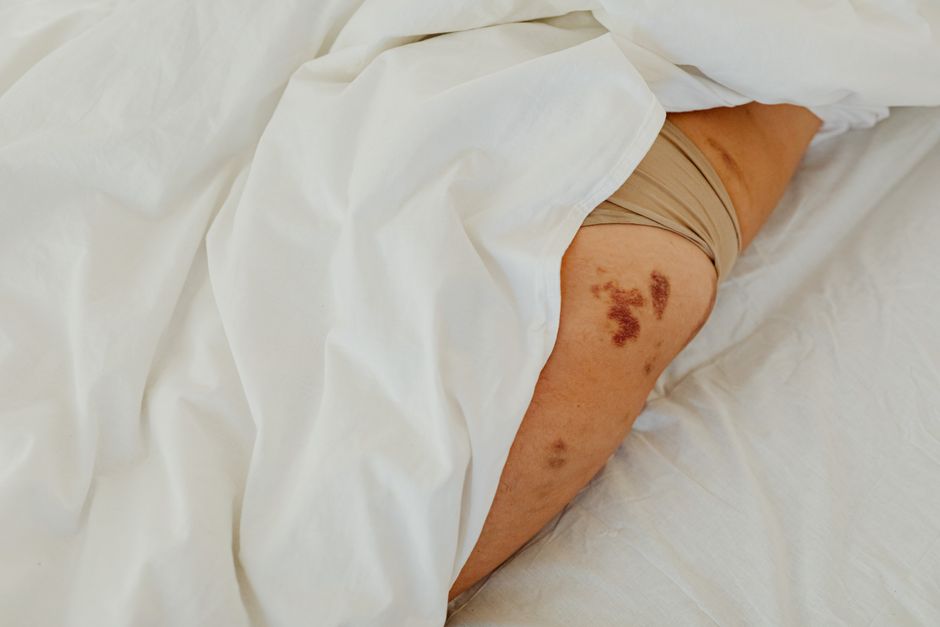
Shingles almost always affects one side of the body. The rash and pain of shingles follow a single sensory nerve pathway, and because those pathways run down one side of the spine, the outbreak stays on that side. A rash that appears on both sides at the same time is not typical shingles, and it deserves prompt medical attention.
That said, there are a few situations where people report symptoms on both sides. Some are real, some are misunderstandings of what shingles actually does, and a small number point to a different or more serious problem. Knowing the difference matters, because the treatment and the urgency are not the same.
Why Does Shingles Stay On One Side?
Shingles is caused by the varicella-zoster virus, the same virus that causes chickenpox. After chickenpox, the virus does not leave the body. It settles into nerve cell clusters along the spinal cord and near the brain, called dorsal root ganglia, and stays there quietly for years or decades.
Each of those nerve clusters serves a specific strip of skin on one side of the body. That strip is called a dermatome. There is a left-sided version and a right-sided version of every dermatome, and they do not cross the midline of the body.
When the virus reactivates, it travels down the nerve fibers from one ganglion. The result is a rash and often sharp pain confined to that single dermatome on that single side. This is the defining pattern of shingles, and it is why clinicians look for a band of rash that stops at the center line.
The most common location is a strip on one side of the chest or back. The second most common is one side of the face, which can involve the eye and requires urgent care.
Can Shingles Be On Both Sides Of The Body?
True shingles affecting both sides at once is rare, but it does happen. When it does, it usually means one of a few specific things.
- Two separate dermatomes reactivating at once. This is uncommon but documented. It is more likely in people with a weakened immune system.
- Disseminated shingles. Here the virus spreads beyond the original nerve pathway and produces a more widespread rash. This is a serious form and is far more likely in people who are immunocompromised.
- Something that is not shingles at all. Several other conditions can produce a blistering or painful rash on both sides, and they need different treatment.
The key distinction is whether the rash respects the midline. Classic shingles does. A rash that crosses the center of the body, or appears in scattered patches on both sides, is a signal to get evaluated rather than wait it out.
What Does Bilateral Shingles Mean For Your Health?
When shingles appears on both sides, the first question a clinician asks is why. The immune system normally keeps the virus in check. When it appears in more than one place at once, that control may be weaker than usual.
Conditions and treatments that can suppress immune function include certain cancers, HIV, organ transplant medications, and some drugs used for autoimmune diseases. Age itself matters too, because immune function tends to decline over time, which is part of why shingles becomes more common after age 50.
This does not mean bilateral shingles always signals a serious underlying illness. Many people who develop it have no identifiable immune problem. But because the connection exists, a doctor will often want to look into it rather than assume it is nothing.
If you are being treated with medication that suppresses your immune system and you develop a rash on both sides, treat it as urgent. Call your doctor the same day.





What Else Can Look Like Shingles On Both Sides?
Several conditions produce a blistering, painful, or itchy rash that can appear on both sides of the body. Mistaking one of these for shingles can delay the right treatment.
- Herpes simplex. This virus can cause recurring blisters, sometimes in clusters, and can appear in more than one area.
- Contact dermatitis. An allergic reaction to a substance can produce a rash on both sides if the skin was exposed symmetrically.
- Poison ivy or similar plant reactions. These often appear in streaks or patches and can affect multiple areas.
- Other viral rashes. Some viral infections cause widespread blistering or bumpy rashes on both sides of the body.
- Autoimmune blistering diseases. Conditions such as pemphigus and bullous pemphigoid cause blisters, often on both sides, and require different care.
Because the treatments differ, the pattern of the rash matters. A doctor can usually tell the difference by examining the skin and asking about timing, location, and other symptoms.
When Should You See A Doctor?
See a doctor within a few days of noticing a suspected shingles rash. Antiviral treatment works best when started early, ideally within 72 hours of the rash appearing. Starting later may still help in some cases, especially if new blisters are still forming or if you are at higher risk of complications.
Get care the same day if any of these apply:
- The rash is near your eye, nose, or ear
- The rash appears on both sides of your body
- You have a weakened immune system
- You have severe pain, confusion, or a high fever
- The rash is widespread rather than in one band
Shingles near the eye can threaten vision if not treated promptly. Shingles near the ear can affect hearing and balance. These are not situations to monitor at home.
How Is Shingles Treated?
Antiviral medications are the mainstay of treatment. They reduce how long the rash lasts and how severe it becomes, and they lower the risk of some complications. They are most effective when started within 72 hours of the rash appearing.
Pain management matters too. Shingles pain can be significant, and in some people it lingers after the rash clears. That lingering pain is called postherpetic neuralgia. It is more common in older adults and can last for weeks, months, or longer.
For postherpetic neuralgia, clinicians may use topical treatments, certain antidepressants or anti-seizure medications that help with nerve pain, or other approaches. Response varies, and what works for one person may not work for another.
If you have shingles, keep the rash covered and avoid contact with people who have never had chickenpox or who have not been vaccinated against it, especially pregnant women, newborns, and anyone with a weakened immune system. The virus spreads through direct contact with the fluid from the blisters.
Can You Prevent Shingles?
A vaccine is available to reduce the risk of shingles and its complications. The current recommendation in the United States is for adults aged 50 and older to receive the recombinant zoster vaccine, given as two doses. Adults 19 and older with weakened immune systems may also be candidates.
Vaccination does not guarantee you will never get shingles, but it lowers the chance and tends to reduce severity if it does occur. Talk with your doctor about whether it is right for you and about timing, especially if you have a condition or take a medication that affects your immune system.
If you have never had chickenpox and have not been vaccinated against it, avoiding contact with active shingles blisters reduces your risk of catching the virus.
Frequently Asked Questions
Can shingles appear on both sides of the body?
It can, but it is rare. Classic shingles stays on one side because it follows a single nerve pathway, so a rash on both sides is unusual and should be evaluated by a doctor.
What does it mean if shingles is on both sides?
It may mean two nerve pathways reactivated at once, or that the virus has spread more widely, which is more likely in people with a weakened immune system. A doctor can help determine the cause.
Is bilateral shingles more dangerous?
It can be more serious, particularly if it is the disseminated form or occurs in someone with a weakened immune system. Prompt medical evaluation is important in these cases.
How fast should I see a doctor for a shingles rash on both sides?
Contact a doctor the same day. Antiviral treatment works best when started within 72 hours of the rash appearing, and a rash on both sides needs evaluation to rule out other causes.
