
Yes, it is generally considered safe to dye your hair while pregnant. Most research shows that the amount of chemicals absorbed through your scalp during a typical hair coloring session is very small and is unlikely to harm a developing baby. However, many doctors still suggest waiting until after the first trimester, mainly as a precaution while your baby’s organs are forming.
What Does the Research Say About Hair Dye and Pregnancy?
The main worry about hair dye has always been the chemicals it contains. Some of these chemicals were linked to cancer in animal studies decades ago. That led to concerns about any exposure, including during pregnancy.
Modern research has not found a clear link between personal hair dye use and serious pregnancy problems. Studies have looked at large groups of women who dyed their hair during pregnancy. They have not found higher rates of birth defects or pregnancy loss in those groups.
The key reason is simple math. Your scalp absorbs only a tiny fraction of the dye you apply. The amount that actually enters your bloodstream is minuscule. It is far below the level that would be needed to cause harm.
Why Do Doctors Still Recommend Waiting Until the Second Trimester?
This is more about caution than proven risk. The first trimester is when your baby’s major organs are forming. During this time, the developing baby is most sensitive to any outside influence.
No solid evidence shows that hair dye causes problems during this window. But because the risk is not zero and the benefit is purely cosmetic, many healthcare providers take a conservative approach. They suggest waiting until after week 12 or 13. This is a practical compromise rather than a strict medical rule.
Some women choose to wait simply for peace of mind. If you are anxious about it, waiting a few weeks is an easy way to reduce stress. Stress during pregnancy is not good for you or your baby either.
Are Some Hair Dye Products Safer Than Others?
Not exactly. All FDA-approved hair dyes sold in the United States are considered safe to use as directed during pregnancy. The FDA does not specifically restrict hair dye use during pregnancy because the evidence does not support a need for it.
That said, certain product types involve less exposure. Here is a quick breakdown:
- Highlights or lowlights — These involve applying dye only to strands of hair, not the scalp. Very little product touches your skin, so absorption is even lower.
- Semi-permanent dyes — These contain smaller molecules than permanent dyes, but they still do not penetrate the scalp deeply. They are generally considered low risk.
- Permanent dyes — These contain ammonia and hydrogen peroxide. They are the most studied and have not been linked to pregnancy harm.
- Henna — Natural plant-based henna is generally safe. But be careful with “black henna,” which often contains a chemical called PPD that can cause allergic reactions.
No specific brand is officially recommended over another during pregnancy. The active ingredients are similar across most commercial products.




What About Bleach or Chemical Straighteners?
Bleach works by opening the hair shaft and removing color. It contains stronger chemicals than typical dye. Still, the same absorption math applies. The amount that reaches your bloodstream is very small.
Chemical straighteners and relaxers are a different story. These products are applied directly to the scalp and left on for longer periods. Some research has suggested a possible link between frequent use of chemical straighteners and certain health issues in women generally, not specifically during pregnancy.
The evidence is not strong enough to say these products are dangerous during pregnancy. But because they involve more scalp contact and longer exposure, some doctors recommend avoiding them or using them less often. If you do use them, make sure the room is well ventilated.
Safe Ways to Dye Your Hair While Pregnant
If you decide to color your hair, there are practical steps to lower your exposure even further. These are not required, but they are reasonable precautions.
- Wait until after the first trimester if you can.
- Use highlights or balayage instead of full color.
- Apply the dye in a well-ventilated room.
- Wear gloves when applying the dye yourself.
- Leave the dye on only for the minimum time listed in the instructions.
- Rinse your scalp thoroughly afterward.
- Do not leave the dye on longer than the package directs.
You should also consider a patch test before any full application. Pregnancy hormones can change how your skin reacts to products. A dye that never bothered you before might cause a rash now. This is not dangerous to your baby, but it can be very uncomfortable.
Can You Get Your Hair Done at a Salon While Pregnant?
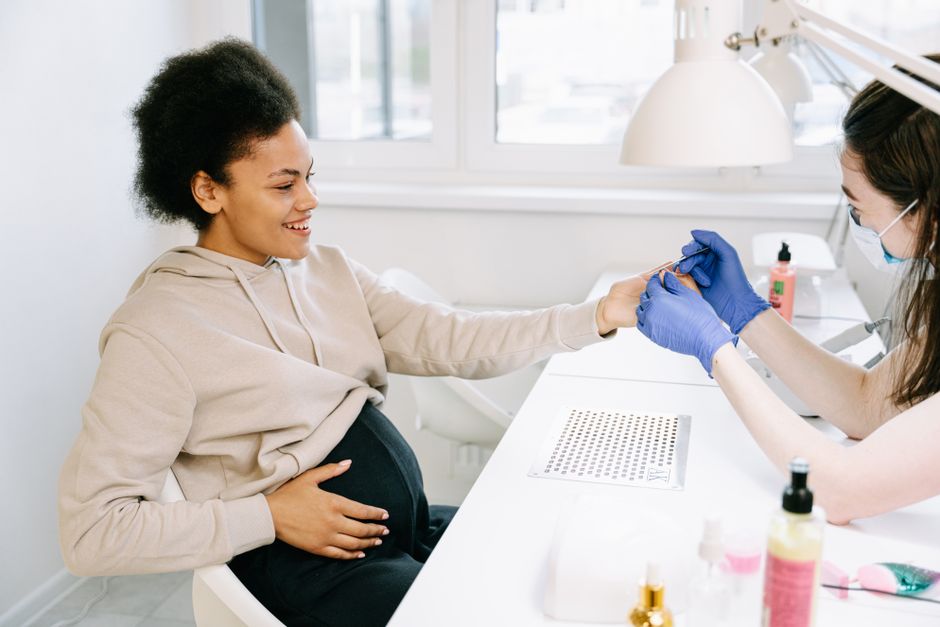
Yes. Salon visits are generally safe during pregnancy. Many stylists have colored the hair of pregnant clients for years without issues.
Tell your stylist you are pregnant. They can adjust the application method if needed. For example, they can use foils to keep dye off your scalp. They can also make sure the salon is well ventilated.
Sitting for a long time can be uncomfortable in late pregnancy. Consider scheduling your appointment earlier in the day when you have more energy. Ask for a cushion or lumbar support if needed. Stand up and stretch during processing time if the salon allows it.
Are There Any Risks to Breathing in Fumes?
Inhaling fumes from hair dye is a common concern. The smell comes from ammonia and other chemicals. Breathing them in small amounts is unlikely to cause harm.
In a professional salon, ventilation systems usually keep fumes at low levels. At home, open a window or use a fan. If the smell makes you nauseous — which pregnancy hormones can make worse — take breaks or ask someone else to apply the dye for you.
There is no evidence that brief exposure to hair dye fumes causes pregnancy complications. The concern is mostly about comfort and nausea, not safety.
What About Natural or Organic Hair Dyes?
Natural and organic hair dyes are marketed as safer alternatives. The truth is more complicated. These products still contain chemicals that make the color stick to your hair. “Organic” refers to some of the plant-based ingredients, not the entire formula.
Some natural dyes are gentler and have fewer harsh chemicals. But being natural does not automatically make them safer during pregnancy. There is no research showing that organic dyes are safer for pregnant women than regular dyes.
Henna is the one exception worth noting. Pure henna is made from a plant and has been used for centuries. It is generally considered safe. Just avoid black henna, which often contains PPD and can cause serious allergic reactions.
Frequently Asked Questions
Can I dye my hair in the first trimester?
Most doctors suggest waiting until after the first trimester as a precaution, though no strong evidence shows harm from early dyeing.
Is it safe to get highlights while pregnant?
Yes, highlights are considered very safe because the dye is applied to hair strands and does not touch the scalp.
Can hair dye cause a miscarriage?
No research has shown a clear link between hair dye use and miscarriage.
Should I tell my hairdresser I am pregnant?
Yes, telling your stylist is a good idea so they can ensure good ventilation and adjust the application method if needed.
