
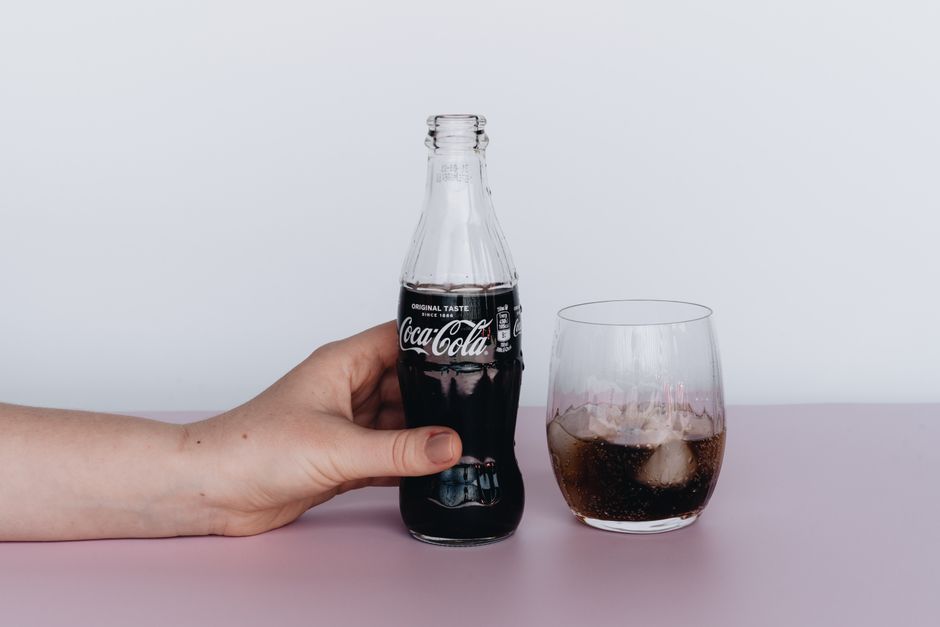
A standard 12-ounce can of Coca-Cola contains 39 grams of sugar. That equals about 9.75 teaspoons of sugar. For most people, this single serving exceeds the American Heart Association’s recommended daily limit for added sugar, which is 36 grams for men and 25 grams for women.
What Does 39 Grams of Sugar Actually Look Like?
Visualizing 39 grams helps make the number real. It is roughly the amount of sugar in three medium apples, but those apples come with fiber, water, and nutrients that slow sugar absorption. The sugar in Coke is pure added sugar with no nutritional benefit.
In teaspoons, 39 grams is about 9.75. If you lined up sugar packets at a coffee shop, that would be nearly ten packets in one can. The American Heart Association’s added sugar limit for women is 25 grams per day, so one can of Coke already exceeds it.
The sugar in Coke is high fructose corn syrup in the United States. Sucrose, or table sugar, is used in some other countries. Both are roughly half glucose and half fructose. The body processes them similarly, and both contribute the same calories.
How Much Sugar Is in Different Coke Sizes?
Portion size changes the sugar number dramatically. A 7.5-ounce mini can has about 25 grams of sugar. A 12-ounce standard can has 39 grams. A 16-ounce bottle contains 52 grams. A 20-ounce bottle, common in convenience stores, has 65 grams of sugar.
Many people do not realize how quickly these add up. A 20-ounce bottle of Coke delivers more than two and a half times the American Heart Association’s recommended daily limit for women in a single drink. The calories follow the same pattern — a 20-ounce bottle has about 240 calories, nearly all from sugar.
Diet Coke and Coke Zero contain zero sugar. They use artificial sweeteners instead. These are not the same as regular Coke nutritionally, though they may carry their own health considerations.
What Happens in Your Body After Drinking a Coke?
When you drink a can of Coke, the sugar hits your bloodstream quickly. Glucose enters the blood within minutes, and the pancreas releases insulin to move that glucose into cells. Blood sugar rises and then falls as insulin does its job.
Fructose follows a different path. It goes to the liver, where it can be converted to fat. This is normal metabolism, not a disease process. The concern is repeated consumption of large fructose loads over time, which contributes to fatty liver changes in some people.
The caffeine in a 12-ounce Coke is about 34 milligrams. That is less than a typical cup of coffee, which runs 80 to 100 milligrams. Caffeine is not the main health concern in regular Coke — sugar is.
One can of Coke contains about 140 calories. For a person who burns roughly 2,000 calories a day, that single drink is 7 percent of daily calories with zero nutritional value. Liquid calories do not trigger the same fullness signals as solid food, so most people do not eat less to compensate.





Is One Can of Coke a Day Bad for You?
Research consistently links regular consumption of sugary drinks to weight gain, type 2 diabetes, and heart disease. The evidence is strong enough that major health organizations, including the World Health Organization and the American Heart Association, recommend limiting added sugar intake.
One can a day is not an acute poison. Your body can handle it occasionally. The problem is the pattern. Daily consumption of 39 grams of added sugar from a single drink leaves little room for other added sugars in your diet, which are virtually everywhere.
Bread, pasta sauce, yogurt, granola bars, and salad dressing all contain added sugar. If you drink a Coke daily and eat a normal diet, you will almost certainly exceed recommended added sugar limits every single day.
Some research suggests that sugary drinks are particularly problematic compared to other sugar sources. This may be because liquid sugar is absorbed faster and does not trigger satiety signals the way solid food does. The evidence is not fully settled on whether sugary drinks are uniquely harmful or just one source among many.
How Does Coke Compare to Other Sugary Drinks?
Coke is not unusual among sodas. Most regular sodas contain similar amounts of sugar. A 12-ounce can of Pepsi has 41 grams. Mountain Dew has 46 grams. Dr Pepper has 40 grams. Root beers and fruit-flavored sodas are often in the same range.
Fruit juice is not a free pass. A 12-ounce glass of orange juice has about 33 grams of sugar, close to a Coke. The difference is that orange juice contains vitamins and some fiber, but the sugar is still largely free sugar absorbed quickly.
Sweetened tea and coffee drinks can be worse. A 16-ounce sweetened latte can contain 45 to 60 grams of sugar. A bottle of sweetened iced tea often contains 30 to 45 grams. These drinks do not look like dessert, which makes them easy to overlook.
Sports drinks and energy drinks also pack sugar. A 12-ounce can of a typical energy drink has about 30 to 40 grams. These are not healthier alternatives to soda for everyday hydration.
Are Artificial Sweeteners a Better Choice?
Diet Coke and Coke Zero use aspartame or other artificial sweeteners. These provide sweetness without calories or blood sugar spikes. For weight management, they are generally considered better than regular soda.
The evidence on artificial sweeteners is mixed. Some studies suggest they may alter gut bacteria or increase cravings for sweet foods. Other research finds no significant harm at typical consumption levels. Regulatory agencies, including the FDA, consider approved artificial sweeteners safe at levels people actually consume.
If you are choosing between regular Coke and Diet Coke for weight control, the evidence favors Diet Coke. If you are concerned about the long-term effects of artificial sweeteners, the honest answer is that the evidence is not fully settled. Water remains the clearest choice with zero uncertainty.
How to Cut Back Without Going Cold Turkey
If you drink Coke daily, you do not need to quit overnight. Gradual reduction works better for most people. Switch from a 20-ounce bottle to a 12-ounce can. Then try a mini can. Then replace some days with sparkling water.
Read labels on everything you drink. You may be surprised where sugar hides. A bottle of iced tea can have more sugar than a can of Coke. A flavored coffee drink can pack more than two cans’ worth.
If you are cutting back, expect some withdrawal symptoms. Caffeine withdrawal can cause headaches, fatigue, and irritability for a few days. These pass. Sugar cravings may also spike initially and then fade over one to two weeks.
Sparkling water with a squeeze of lemon or lime is a practical replacement. It gives you the carbonation and the ritual of opening a can without sugar. Unsweetened tea is another option. These are not magic solutions — they are simply beverages without added sugar.
Frequently Asked Questions
How many teaspoons of sugar are in a can of Coke?
A 12-ounce can of Coke contains 39 grams of sugar, which equals about 9.75 teaspoons. This is more than the American Heart Association’s recommended daily limit for added sugar for women.
Is Coke or Pepsi worse for you?
Coke has 39 grams of sugar per 12-ounce can, while Pepsi has 41 grams. The difference is negligible — both are heavily sweetened sodas with similar health effects.
Does Diet Coke have sugar?
No, Diet Coke contains zero sugar and zero calories. It uses artificial sweeteners instead, which do not raise blood sugar but carry their own mixed evidence on long-term health effects.
How much sugar is in a 20-ounce bottle of Coke?
A 20-ounce bottle of Coke contains 65 grams of sugar, about 16 teaspoons. That single bottle exceeds the daily added sugar recommendation for both men and women.
