
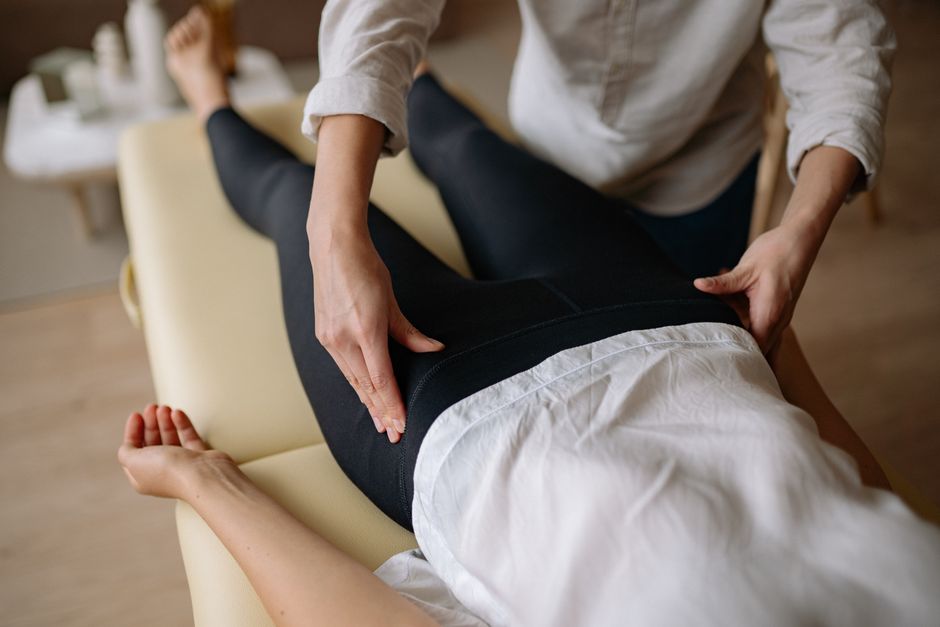
Massage can help relieve sciatica pain for many people, but it does not treat the underlying cause. Research suggests that massage therapy may reduce pain and improve movement in the short term by relaxing muscles that press on the sciatic nerve. Your results will depend on what is causing your sciatica and the type of massage you receive.
What Is Sciatica?
Sciatica is a symptom, not a diagnosis. It refers to pain that travels along the path of the sciatic nerve, from your lower back through your hip and buttock and down one leg. The pain is often described as sharp, burning, or like an electric shock. It can also cause numbness, tingling, or weakness in the leg or foot.
Most cases of sciatica are caused by a herniated disc in the lower spine that presses on a nerve root. Other causes include spinal stenosis (narrowing of the spinal canal), a bone spur, or piriformis syndrome—where the piriformis muscle in the buttock irritates the sciatic nerve. Less common causes include injury, infection, or a tumor. Treatment depends on the specific cause.
How Does Massage Affect Sciatic Nerve Pain?
Massage addresses the muscle tension that often accompanies sciatica. When a disc or bone spur irritates a nerve, the surrounding muscles—especially in the lower back, buttock, and hip—may tighten in response. This protective muscle spasm can worsen the pain and keep the nerve trapped.
Massage helps by relaxing those muscles. Deep pressure can release trigger points (knots) in the piriformis, gluteal, and paraspinal muscles. Improved blood flow from massage also helps remove inflammatory waste products and delivers oxygen to strained tissues. However, massage does not fix the underlying problem, such as a herniated disc. It relieves the secondary muscle tension that can amplify nerve pain.
For piriformis syndrome, where the muscle directly compresses the sciatic nerve, massage can be especially effective. Direct pressure on the piriformis muscle can reduce its spasm and take pressure off the nerve.
Can Massage Help Sciatica?
Massage can help reduce sciatica pain, especially when tight muscles are contributing to nerve compression. Some clinical studies show that people with low back pain and sciatica report less pain and better function after a series of massage sessions. The relief is often short-term, lasting from a few hours to a few days, but regular massage may help manage chronic symptoms.
The evidence is not strong enough to say that massage cures sciatica or replaces other treatments like physical therapy or medication. Most experts view massage as a complementary therapy—useful alongside stretching, strengthening exercises, and anti-inflammatory measures. A qualified massage therapist can tailor pressure and technique to your tolerance. Always tell your therapist about your sciatica symptoms so they avoid pressing directly on the most painful nerve area.





What Types of Massage Are Best for Sciatica?
No single type of massage has been proven best for sciatica. The choice depends on the cause of your pain and how sensitive the area is. Here are common approaches:
- Deep tissue massage uses slow, firm pressure to reach deeper muscle layers. It can help release chronic muscle tightness but may be too intense if you are in acute pain.
- Trigger point therapy focuses on specific knots in muscles that refer pain elsewhere. For sciatica, therapists often work on the piriformis, gluteal, and lower back muscles.
- Swedish massage uses lighter strokes and is a safer starting point if your pain is severe. It promotes relaxation and improves circulation without aggravating the nerve.
- Sports massage targets muscles used in movement and can be helpful for athletes with sciatica, but should be done with caution during a flare-up.
A good therapist will ask about your symptoms and adjust pressure. If you feel sharp or shooting pain during massage, tell them immediately—that is a sign the nerve is being overstimulated.
When Should You Avoid Massage for Sciatica?
Massage is not safe for everyone with sciatica. You should avoid massage if you have any of the following conditions:
- Cauda equina syndrome – a medical emergency. Symptoms include sudden loss of bladder or bowel control, numbness in the groin area, and progressive weakness in both legs. If you have these, go to an emergency room immediately. Massage will not help and could delay treatment.
- Severe nerve compression with significant leg weakness or progressive numbness. Massage may worsen symptoms if the nerve is already badly pinched.
- Infection, fracture, or tumor in the spine or pelvis. Massage could spread infection or aggravate the injury.
- Blood clot (deep vein thrombosis) in the leg. Massaging over a clot can dislodge it and cause a pulmonary embolism.
If you are unsure about the cause of your sciatica, see a doctor before booking a massage. Massage is generally safe for common causes like disc herniation or piriformis syndrome, but it is still wise to confirm your diagnosis first.
What Else Can Help Sciatica?
Massage works best as part of a broader plan. Physical therapy with specific stretches and strengthening exercises can address muscle imbalances and improve spinal support. Over-the-counter anti-inflammatory medications like ibuprofen or naproxen may help reduce nerve inflammation, but use them as directed and check with your doctor if you have medical conditions.
Heat and ice can also provide short-term relief. Ice packs reduce inflammation in the first few days of a flare-up; heat relaxes tight muscles after the acute phase. For persistent pain that does not respond to conservative care, some people benefit from epidural steroid injections or, in severe cases, surgery to remove the disc fragment pressing on the nerve.
The most effective approach combines treatments that target both the muscle tension and the underlying nerve compression. Massage addresses the muscle side. If you are not also working on the root cause—such as a herniated disc—pain may return quickly after each session.
Frequently Asked Questions
Can massage make sciatica worse?
Yes, if too much pressure is applied directly on the nerve or if you have an acute disc herniation with inflammation. Always tell your therapist about your pain level during the session.
How often should I get massage for sciatica?
There is no standard frequency. Many people start with once a week for 4–6 weeks and then taper to maintenance sessions as symptoms improve.
Is it safe to massage the painful leg during a sciatica flare-up?
Light massage on the leg muscles can be safe, but avoid deep pressure on the buttock and lower back if pain is sharp. Stop if symptoms increase.
Should I see a doctor before getting massage for sciatica?
Yes, especially if you have new or worsening numbness, weakness, or bowel/bladder changes. A diagnosis ensures massage is appropriate and not delaying needed treatment.
