
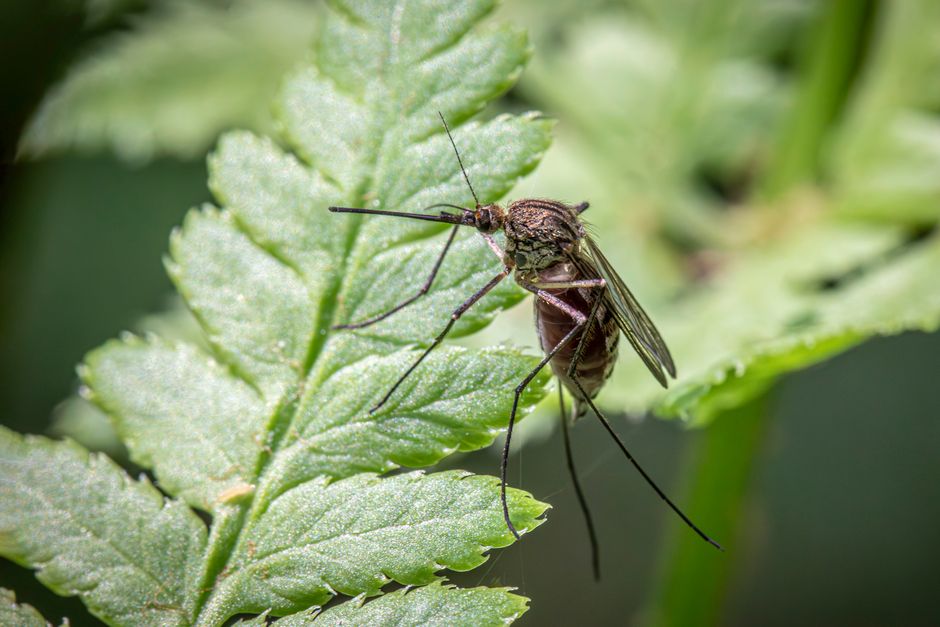
No, male mosquitoes cannot bite. They lack the physical equipment for it. Only female mosquitoes bite, and they do it for a specific biological reason: they need blood to develop eggs. Males feed on plant nectar and other sugar sources, and that diet is enough to keep them alive.
That single fact explains a lot about how mosquitoes work. It also explains why the mosquito buzzing near your ear at night is almost certainly female. Here is what the science actually shows about male mosquitoes, female biting behavior, and what it means for you.
Why Can’t Male Mosquitoes Bite?
The answer comes down to anatomy. Male mosquitoes have mouthparts that are not built for piercing skin. Female mosquitoes have a set of specialized structures that together form a needle-like bundle called a proboscis, designed to cut through skin and locate a blood vessel.
Male mouthparts are different. They are shorter and lack the cutting and piercing components that females have. A male cannot penetrate skin even if it lands on you and probes around. It simply does not have the tools.
This is not a subtle difference. Entomologists who study mosquito anatomy can sex a mosquito under low magnification just by looking at the mouthparts and antennae. Males also have noticeably bushier, more feathery antennae, which they use to detect the wingbeat frequency of females. Females have sparser antennae.
Why Do Only Female Mosquitoes Bite?
Female mosquitoes bite because they need protein and iron from blood to produce eggs. This is the core reason. Without a blood meal, most female mosquitoes cannot complete egg development.
Both males and females also feed on plant nectar and sugary liquids. That is their basic energy source. Blood is an additional requirement that only females have, and only during their reproductive cycle.
Not every female bites. Some mosquito species can produce their first batch of eggs without a blood meal, a behavior called autogeny. It is uncommon but documented in certain species and populations. After that first batch, most still need blood to continue reproducing.
This is one of those details that gets oversimplified in popular explanations. “Only females bite” is accurate as a general rule. “All females bite” is not quite true.
What Do Male Mosquitoes Eat?
Male mosquitoes feed on nectar, honeydew, and other plant sugars. They spend their short lives near flowering plants and water sources, mating and feeding on sugar. They do not seek out humans or animals for blood.
Their lifespan is short. Many male mosquitoes live only a week or two, and some die shortly after mating. Females typically live longer, partly because they need time to find blood meals and lay eggs.
Because males do not bite, they play no direct role in disease transmission to humans. That is a meaningful distinction. When public health agencies talk about mosquito control, they are targeting the biting females and the larvae that will become them.
Do Male Mosquitoes Transmit Disease?
Male mosquitoes do not transmit disease through biting, because they do not bite. This is straightforward and well established.
There is one caveat worth knowing. Pathogens can sometimes be passed from an infected female to her offspring, a process called vertical transmission. This has been documented for some mosquito-borne viruses. In theory, a male mosquito could carry a pathogen it inherited from its mother. But since males do not bite, they cannot pass it to a human through a bite. They are not a transmission route to people.
The mosquitoes that matter for human disease — the ones spreading malaria, dengue, West Nile virus, and other infections — are all biting females. That is where public health efforts focus, and rightly so.
How Can You Tell Male and Female Mosquitoes Apart?
Most people never get close enough to tell the difference, and that is fine. But if you are curious, there are a few visible differences.
- Antennae: Males have bushy, feathery antennae. Females have thin, sparse ones.
- Mouthparts: Females have a long, straight proboscis built for piercing. Males have shorter, less developed mouthparts.
- Size: Males are often slightly smaller, though this varies by species and is not a reliable way to tell them apart on its own.
- Behavior: A mosquito landing on you and biting is female. Males do not land on people to feed.
For most people, the practical takeaway is simpler. If a mosquito is biting you, it is female. That is the only distinction that matters in the moment.
Does This Mean Male Mosquitoes Are Harmless?
Male mosquitoes are harmless to humans in the sense that they cannot bite or spread disease through biting. They do not bite pets either, for the same reason.
They are not entirely without impact. Males still mate with females, and that mating leads to the next generation of biting mosquitoes. This is why some mosquito control strategies target males. Certain genetic and sterile-insect approaches aim to reduce male fertility or reduce male populations, with the goal of shrinking the number of biting females over time.
These approaches are studied and, in some regions, used. Their effectiveness varies by species, location, and how the programs are run. They are not a universal solution, and they work alongside conventional control methods rather than replacing them.
What Actually Protects You From Mosquito Bites?
Since only females bite, protection means stopping biting females. The most reliable tools are well established.
EPA-registered insect repellents containing ingredients such as DEET, picaridin, or oil of lemon eucalyptus are effective when used as directed. The specific concentrations and reapplication times are printed on the product label, and those instructions matter.
Covering skin with long sleeves and pants reduces exposed areas. Screening windows and using bed nets in areas with mosquito-borne disease are proven measures. Removing standing water around your home reduces breeding sites, since mosquitoes lay eggs in standing water.
None of these methods is perfect on its own. Combining them works better than relying on any single approach. That is the consistent finding across public health guidance.
One thing that does not work well is relying on gadgets or devices marketed as mosquito deterrents without evidence. Some ultrasonic devices and certain bug zappers have not been shown to meaningfully reduce bites. If a product makes strong claims without solid evidence behind it, treat that with skepticism.
The Bottom Line
Male mosquitoes cannot bite. They lack the mouthparts to pierce skin, and they do not need blood to survive. Only females bite, and they do it to get the protein and iron needed to develop eggs.
That single biological fact shapes almost everything about mosquito behavior and mosquito control. The mosquito biting you is female. The ones spreading disease are female. And the ones you need to protect yourself from are female.
Understanding that does not make the bites any less annoying. But it does explain what is actually happening when a mosquito finds you.
Frequently Asked Questions
Can male mosquitoes bite humans?
No, male mosquitoes cannot bite humans because their mouthparts are not built to pierce skin. Only female mosquitoes bite, and they do so to obtain blood for egg development.
What do male mosquitoes eat if they don’t bite?
Male mosquitoes feed on plant nectar, honeydew, and other sugar sources. This diet provides the energy they need for their short lifespan.
Do male mosquitoes carry diseases?
Male mosquitoes cannot transmit disease to humans because they do not bite. While some pathogens can pass from an infected mother to her offspring, males have no route to infect a person through a bite.
How can you tell if a mosquito is male or female?
Male mosquitoes have bushy, feathery antennae and shorter mouthparts, while females have thin antennae and a long proboscis built for piercing. If a mosquito is biting you, it is female.
