
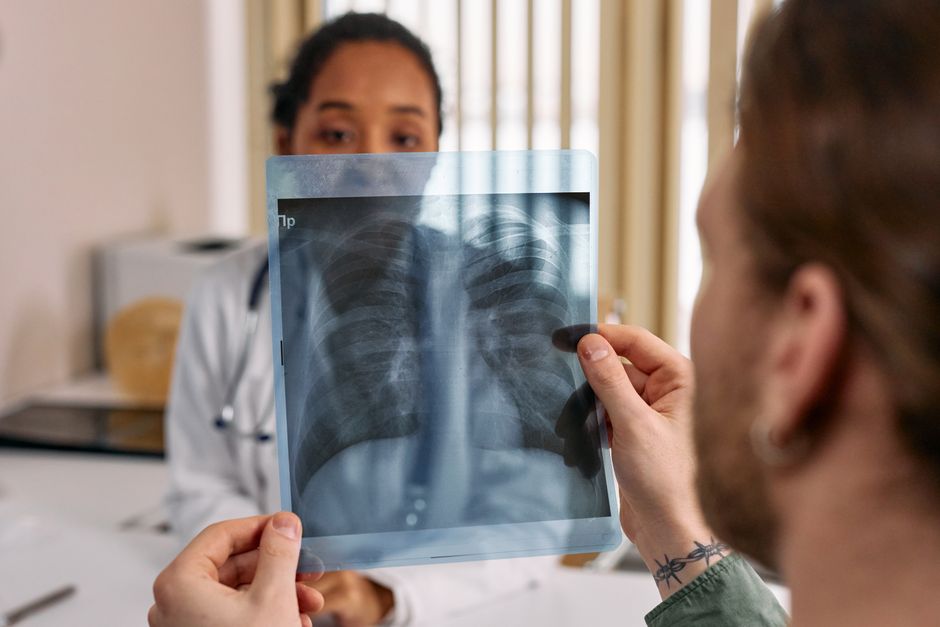
Yes, some lung nodules do disappear. Most small nodules found on a CT scan turn out to be benign, and many of those are temporary areas of inflammation or infection that the body clears on its own. Whether a specific nodule will go away depends on what caused it, how big it is, and how it looks on imaging.
What Is a Lung Nodule?
A lung nodule is a small, rounded spot of tissue in the lung that shows up on a CT scan or chest X-ray. By definition, it is no larger than 3 centimeters across. Anything bigger is usually called a mass and gets treated with more urgency.
Nodules are extremely common. Many are found by accident, when someone has a scan for an unrelated reason like a minor injury or a heart check. Most people who are told they have one have no symptoms at all.
The key point to understand is that “nodule” is a description, not a diagnosis. It tells you the shape and size of something on a scan. It does not tell you what that something is. A nodule can be a tiny scar, a pocket of infection, a benign growth, or, in a minority of cases, an early cancer.
Why Do Lung Nodules Form?
There are many causes, and most are harmless. The body produces nodules for a range of reasons.
- Infection and inflammation. A past or current infection can leave a small cluster of inflamed tissue. This is one of the most common causes, and these nodules often shrink or vanish as the infection resolves.
- Scarring. Old damage from infection or inflammation can leave a permanent scar that looks like a nodule on a scan.
- Benign tumors. Growths like hamartomas are non-cancerous but can persist and look like nodules.
- Blood vessel abnormalities. Sometimes a tangle of blood vessels appears as a small spot.
- Early lung cancer. A minority of nodules are malignant. This is why follow-up matters, even though most nodules are not cancer.
One clarification that often surprises people: the size of a nodule matters more than almost anything else. Smaller nodules are far more likely to be benign. A nodule under about 6 millimeters is generally very low risk, while larger nodules get closer attention. Your doctor uses size, shape, and your personal history together, not any single factor alone.
Can Lung Nodules Disappear on Their Own?
Yes. Nodules caused by infection or inflammation frequently resolve without any treatment. When the underlying process clears, the nodule can shrink and eventually no longer be visible on a scan.
This is common enough that doctors often build a “wait and see” step into the plan. If a nodule looks like it is probably inflammatory, the safest and most sensible next step is often a repeat scan after a period of time. If it has shrunk or gone, that strongly suggests it was never cancer.
Not all nodules disappear, though. Scar tissue and benign tumors tend to stay the same size. A nodule that stays exactly the same for a long time is usually reassuring, because cancers tend to grow. A nodule that shrinks is even more reassuring.
What you should not assume is that a nodule will disappear simply because you feel fine. Feeling well does not tell you what a nodule is. Only imaging follow-up can do that.
How Do Doctors Decide What to Do Next?
The decision usually comes down to risk. Doctors weigh the size and appearance of the nodule against your personal risk factors, then choose between watching it, scanning it again sooner, or ordering more tests.
Several features on the scan guide this. Smooth, round nodules are more often benign. Irregular or “spiculated” nodules, which have spike-like edges, raise more concern. Nodules that are solid versus partly solid versus ground-glass (a hazy appearance) are also handled differently, because each type has a different likelihood of being cancer.
Your history matters too. Age, smoking history, and previous cancers all shift the calculation. This is why two people with a nodule of the same size can get different advice.
For many small nodules, the plan is a follow-up CT scan at a set interval. If the nodule is stable, the interval may be extended or the follow-up stopped. If it grows, the next step is usually more investigation, which can include a PET scan or a biopsy.
What Does It Mean If a Nodule Does Not Go Away?
A nodule that stays the same size over time is often not a problem. Stability is generally a good sign, because malignant nodules usually grow. Doctors often track a nodule across multiple scans to confirm it is not changing.
A nodule that grows is the finding that matters most. Growth is the main signal that prompts further testing. That is the entire reason follow-up scans are scheduled: to catch change early, when any problem is most treatable.
It helps to keep the odds in view. The large majority of small lung nodules detected on screening or by chance are benign. Being told you have a nodule is not the same as being told you have cancer. It means you need a plan to find out.
Can You Do Anything to Make a Nodule Go Away?
There is no proven way to make a lung nodule disappear through diet, supplements, or lifestyle changes. No clinical evidence currently confirms that any home remedy shrinks nodules. If a nodule is caused by a bacterial infection, treating that infection may resolve it, but that decision belongs to a doctor.
The most useful thing you can do is follow the recommended follow-up schedule. Skipping a repeat scan because you feel well is the main way people lose the benefit of monitoring. If you smoke, stopping is one of the most meaningful steps for lung health in general, though it does not remove a nodule that is already there.
Be cautious with anything marketed as a way to “clear” lung nodules. No study has confirmed such claims. The evidence simply is not there.
When Should You Be Concerned?
Most nodules cause no symptoms. When symptoms do appear, they are usually tied to the underlying cause rather than the nodule itself. Seek medical attention for a new or worsening cough that does not go away, coughing up blood, unexplained weight loss, or shortness of breath.
These symptoms do not mean a nodule is cancer, but they do warrant a prompt conversation with a doctor. The same is true if you have a known nodule and develop any of these symptoms before your next scheduled scan.
The bottom line is that lung nodules are common, most are benign, and some do disappear. The right approach is not to ignore them or to panic, but to follow the monitoring plan your doctor recommends.
Frequently Asked Questions
Can lung nodules disappear on their own?
Yes, nodules caused by infection or inflammation can shrink and vanish without treatment. Scar tissue and benign tumors usually stay the same size instead.
How fast can a lung nodule go away?
There is no single timeline, because it depends on the cause. Inflammatory nodules may resolve over weeks to months, which is why follow-up scans are spaced out rather than done immediately.
Does a shrinking lung nodule mean it is not cancer?
A shrinking nodule is generally reassuring and less likely to be cancer. Your doctor interprets the change along with the nodule’s size, appearance, and your personal risk factors.
Can lung nodules be cancer?
Some can be, but the large majority of small nodules are benign. Size, shape, and growth over time are the main features doctors use to judge risk.
