
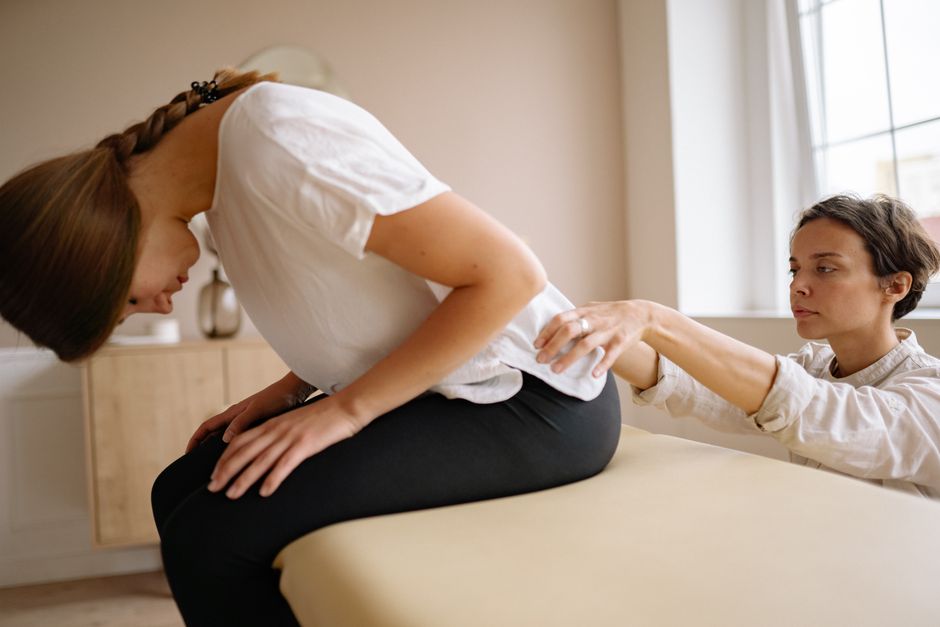
Yes, lower back pain can cause pelvic pain — but not in the way most people assume. The lower back and pelvis share muscles, nerves, and joints, so a problem in one area often produces symptoms in the other. This is not a coincidence or a sign that something mysterious is happening. It is basic anatomy.
The more important question is why. A pulled muscle, a worn spinal disc, an irritated nerve, or an inflamed joint can all send pain into the pelvis. In some cases, the reverse happens: a pelvic problem causes back pain. Telling the difference matters because the treatment is not the same.
How Are the Lower Back and Pelvis Connected?
The lower back and pelvis form one continuous structure. They are not separate regions that happen to sit near each other.
The lumbar spine — the five vertebrae in your lower back — sits directly on top of the sacrum, a triangular bone wedged between your hip bones. That junction is called the lumbosacral joint. It carries the weight of your upper body and transfers it into your legs when you walk, stand, or lift.
Several muscle groups span both areas. The erector spinae run along your spine and attach to the pelvis. The glutes and deep hip rotators connect the sacrum to the thigh bones. The pelvic floor muscles form a sling at the bottom of your pelvis and attach to the tailbone and pubic bone.
Nerve roots leave the lower spine and travel through the pelvis on their way to the legs. The sciatic nerve is the largest of these. It passes directly through the deep gluteal region.
Because of this shared anatomy, tension, inflammation, or injury in any one part can spread. A tight muscle in the lower back pulls on the pelvis. An irritated nerve in the spine sends pain signals along its entire path. An unstable sacroiliac joint causes pain that radiates into the buttock and groin.
What Conditions Cause Both Lower Back and Pelvic Pain?
Several well-documented conditions produce pain in both regions at the same time.
Sacroiliac joint dysfunction is one of the most common. The sacroiliac joints connect the sacrum to the two iliac bones of the pelvis. When these joints become inflamed or move abnormally, pain typically appears in the lower back, buttock, and sometimes the groin or front of the thigh. This is a well-established cause of what doctors call axial low back pain.
Lumbar disc problems can refer pain into the pelvis. A herniated disc in the lower lumbar spine presses on nerve roots. Depending on which nerve is affected, pain can travel into the buttock, hip, groin, or leg. This is called radicular pain. It follows a nerve pathway rather than staying in one spot.
Piriformis syndrome occurs when the piriformis muscle deep in the buttock compresses the sciatic nerve. Pain starts in the buttock and can spread into the lower back and down the leg. Some clinicians consider this diagnosis controversial because it overlaps with other causes of sciatica, but the muscle does sit directly over the sciatic nerve.
Pelvic floor dysfunction is a two-way street. Tight or weak pelvic floor muscles can cause pain in the pelvis, tailbone, and lower back. The reverse is also true: chronic lower back pain changes how you move, which can tighten the pelvic floor over time.
Lumbar spinal stenosis narrows the spinal canal and compresses nerves. It causes back pain that worsens with standing or walking and may radiate into the buttocks and legs. It is more common after age 50.
Endometriosis and other pelvic conditions can cause back pain. In endometriosis, tissue similar to the uterine lining grows outside the uterus. It commonly causes pelvic pain, but many women also report lower back pain, especially during menstruation.
Can Pelvic Pain Cause Lower Back Pain Instead?
Yes. The relationship works in both directions, and this is where many people get confused.
Conditions that start in the pelvis frequently cause lower back pain. Pelvic inflammatory disease, uterine fibroids, ovarian cysts, and endometriosis can all produce back pain. So can pregnancy, which shifts the center of gravity and strains the lumbar spine and sacroiliac joints.
Pelvic floor dysfunction is a clear example. When the muscles at the base of the pelvis stay tight or go into spasm, they pull on the sacrum and tailbone. That tension travels upward into the lower back. Many people with chronic pelvic pain also have chronic lower back pain, and treating only one area does not resolve the other.
This is why a good clinical evaluation looks at both regions together. Treating the back when the pelvis is the source — or the reverse — leads to frustration and wasted time.





How Do You Tell Where the Pain Is Coming From?
Location and behavior of the pain give strong clues, though imaging and a physical exam are often needed to confirm.
- Pain that worsens with sitting or standing in one position often points to a disc or joint problem in the spine.
- Pain that worsens with walking and eases when you bend forward suggests spinal stenosis.
- Pain felt mostly in the buttock, groin, or tailbone may point to the sacroiliac joint or pelvic floor.
- Pain that follows a specific line down the leg suggests nerve root irritation.
- Pain tied to your menstrual cycle raises the possibility of a pelvic condition like endometriosis.
A physical exam can test sacroiliac joint movement, nerve tension, and pelvic floor muscle tone. Imaging such as MRI can show disc herniation, joint inflammation, or structural problems. But imaging does not always explain pain. Many people with visible disc changes on MRI have no pain at all, and many with severe pain have normal scans. That disconnect is well documented.
When Should You See a Doctor?
Most lower back pain improves on its own within a few weeks. But some symptoms need medical attention right away.
Seek urgent care if you have:
- Loss of bladder or bowel control
- Numbness in the groin or inner thighs
- Sudden weakness in both legs
- Fever along with back or pelvic pain
- Pain after a fall or accident
- Unexplained weight loss with new back pain
These can signal a serious condition such as cauda equina syndrome, spinal infection, or fracture. Cauda equina syndrome is a surgical emergency. Delays in treatment can cause permanent nerve damage.
See a doctor within a few days if the pain is severe, keeps getting worse, or does not improve after a few weeks of rest and over-the-counter pain relief. Also see a doctor if pelvic pain is your main symptom, especially if it comes with unusual bleeding, discharge, or pain during sex. Those symptoms point toward a pelvic cause rather than a spinal one.
What Treatments Help Both Areas?
Treatment depends on the underlying cause. There is no single approach that works for everyone.
Physical therapy is a first-line treatment for most musculoskeletal causes of back and pelvic pain. A physical therapist can address posture, core strength, hip mobility, and pelvic floor function together. For pelvic floor dysfunction specifically, pelvic floor physical therapy is the standard approach. It is a specialized field, and not all physical therapists have this training.
Over-the-counter pain relievers such as ibuprofen or acetaminophen can reduce pain in the short term. They treat symptoms, not causes. Long-term use should be discussed with a doctor, especially if you have stomach, kidney, or liver conditions.
Heat and cold therapy can ease muscle tension and reduce inflammation. Evidence supports modest short-term relief for musculoskeletal pain.
Injections such as corticosteroid shots into the sacroiliac joint or epidural space can reduce inflammation and pain. These are typically used when conservative treatment has not worked. They are diagnostic as well as therapeutic — if a sacroiliac joint injection relieves your pain, that joint was likely the source.
Surgery is reserved for specific cases: herniated discs that do not improve, spinal stenosis causing significant disability, or structural problems that cannot be managed otherwise. Surgery is not a first-line treatment for most back or pelvic pain.
Does Exercise Help or Hurt?
For most people with chronic lower back pain, movement helps. Prolonged rest tends to make things worse.
Research consistently shows that exercise reduces pain and improves function in chronic low back pain. The type matters less than consistency. Walking, swimming, yoga, and targeted strengthening all have evidence behind them. For pelvic pain related to pelvic floor dysfunction, exercises that relax and coordinate the pelvic floor are often more helpful than general strengthening alone.
That said, some movements make specific conditions worse. If you have spinal stenosis, bending backward may increase pain. If you have a herniated disc, bending forward and lifting may aggravate it. A physical therapist can help you find movements that work for your situation.
One clarification worth making: core strength is not just about the abdominal muscles. The deep muscles that stabilize the spine and pelvis — the transverse abdominis, multifidus, and pelvic floor — matter more for support than a visible six-pack. Training those muscles is different from doing sit-ups.
Can Supplements Help With Back or Pelvic Pain?
The evidence for most supplements is weak. This is an honest assessment, not a dismissal.
Some studies suggest vitamin D may help people who are deficient, but results vary. Turmeric and omega-3 fatty acids have shown anti-inflammatory effects in some trials, but the effect sizes are generally small and study quality varies. Magnesium is sometimes recommended for muscle tension, but strong clinical evidence for pain relief is limited.
No supplement has been shown to cure chronic back or pelvic pain. If you choose to try one, tell your doctor. Some supplements interact with medications or cause side effects. And none of them replace proper diagnosis and treatment.
Frequently Asked Questions
Can lower back pain cause pelvic pain?
Yes. The lower back and pelvis share muscles, nerves, and joints, so problems in one area often produce pain in the other. Conditions like sacroiliac joint dysfunction, disc herniation, and pelvic floor tension commonly cause pain in both regions.
How do I know if my pelvic pain is coming from my back?
Pain that worsens with sitting, standing, or specific movements and follows a nerve pathway into the buttock or groin often points to a spinal source. A physical exam and sometimes imaging are needed to confirm the cause.
Can a pinched nerve in the lower back cause pelvic pain?
Yes. Nerve roots from the lower lumbar spine travel through the pelvis, so compression can send pain into the buttock, groin, or hip. This type of pain usually follows a specific nerve path rather than staying in one spot.
When should I see a doctor for lower back and pelvic pain?
See a doctor promptly if you have loss of bladder or bowel control, numbness in the groin, or sudden leg weakness — these are emergencies. For pain lasting more than a few weeks or getting worse, schedule an appointment.
