
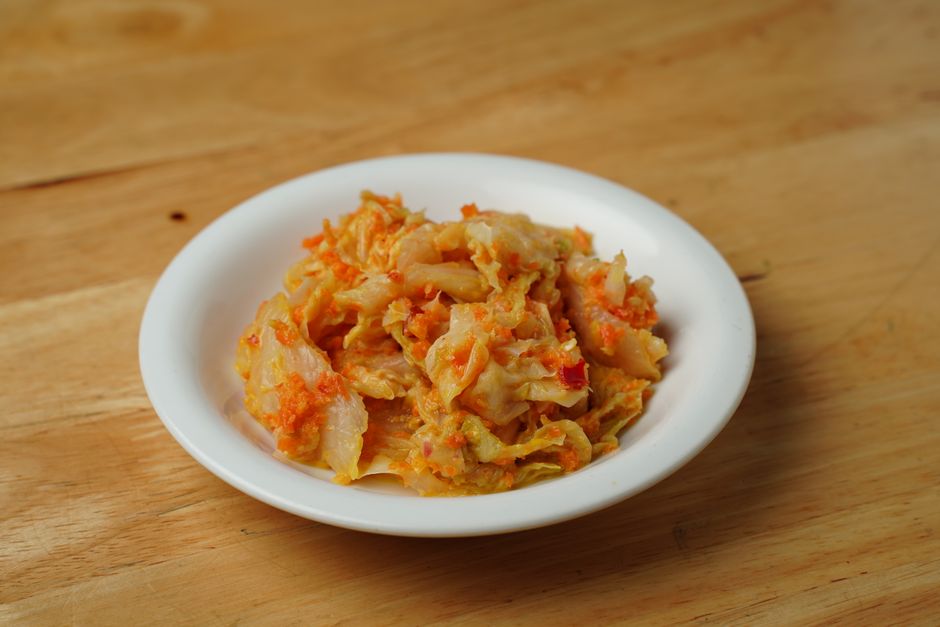
Kimchi can cause diarrhea in some people, but it is not a common reaction in healthy adults who eat it regularly. The most likely reasons are the capsaicin in chili peppers, the high salt content, the acidity from fermentation, or a sensitivity to the probiotics and fiber it contains. If you already have a sensitive gut or a condition like IBS, kimchi is more likely to trigger loose stools than it would in someone without those issues.
Kimchi is a fermented vegetable dish, usually made from napa cabbage seasoned with chili powder, garlic, ginger, salt, and fish sauce. It is a staple in Korean cuisine and has become popular worldwide as a probiotic food. Most people tolerate it well. But fermented, spicy, salty foods can irritate the digestive tract in certain situations, and diarrhea is one possible result.
What in Kimchi Could Cause Diarrhea?
Kimchi contains several compounds that can affect digestion. Any one of them could be the trigger, and the effect depends on how much you eat and how sensitive your gut is.
Capsaicin is the compound that gives chili peppers their heat. It binds to pain receptors in the gut and can speed up intestinal motility — the rate at which food moves through your digestive system. Faster transit means less water is absorbed from waste, which produces looser stools. This is a well-established effect of spicy food, though it does not affect everyone equally.
Salt is used heavily in kimchi production. A high sodium load can draw water into the intestines, which may loosen stool. People who are sensitive to salt or who eat large portions may notice this more.
Organic acids produced during fermentation — mainly lactic acid — lower the pH of the kimchi. Eating a lot of acidic food can irritate the stomach and intestines in some people. This is a mechanical and chemical irritation, not an infection.
Fiber from cabbage is fermentable and can produce gas and loose stools when eaten in large amounts, especially if your gut is not used to it.
Probiotics — live lactic acid bacteria — are present in kimchi. For most people these are beneficial. But when someone introduces a large dose of probiotics suddenly, the gut microbiome can shift, and temporary diarrhea or gas is possible during the adjustment period. This is usually short-lived.
Who Is Most Likely to React to Kimchi?
Not everyone reacts the same way. Some groups are more vulnerable to digestive upset from kimchi than others.
People with irritable bowel syndrome (IBS) often react to spicy, fermented, or high-FODMAP foods. Cabbage is high in fermentable carbohydrates that can trigger symptoms in IBS. If you have IBS, kimchi may be a problem food for you.
People with inflammatory bowel disease (IBD) — Crohn’s disease or ulcerative colitis — may find that spicy and high-fiber foods worsen symptoms during flares. This does not mean kimchi causes IBD, only that it can aggravate existing inflammation.
People who are not used to fermented foods may react when they first start eating kimchi. The gut microbiome needs time to adjust to new bacterial strains and higher fiber loads.
People with a histamine sensitivity may also react. Fermented foods contain histamine, and some people have trouble breaking it down. Symptoms can include diarrhea, flushing, and headache.
People taking certain medications — including some antibiotics, metformin, or proton pump inhibitors — may have altered gut bacteria that make them more sensitive to fermented foods. This is not a reason to avoid kimchi entirely, but it is worth noting if you notice a pattern.
Is Kimchi Food Poisoning a Risk?
Kimchi is a fermented food, and fermentation is generally protective against harmful bacteria because the lactic acid lowers pH. Well-made, properly stored kimchi is unlikely to cause food poisoning. But there are exceptions.
Improperly fermented or contaminated kimchi can harbor harmful bacteria. If kimchi is made with contaminated ingredients, stored at the wrong temperature, or left out too long, it can grow pathogens like Listeria or E. coli. These can cause diarrhea, vomiting, and fever — symptoms that go beyond a mild reaction to spicy food.
Commercial kimchi is usually pasteurized or controlled for safety. Homemade kimchi carries more risk if hygiene or storage is poor. If you develop severe diarrhea, bloody stools, or a fever after eating kimchi, that is not a simple sensitivity — it may be an infection and needs medical attention.




How to Tell If Kimchi Is the Cause
The only reliable way to know if kimchi is causing your diarrhea is to remove it from your diet and see if symptoms improve. This is not a formal test, but it is practical.
Stop eating kimchi for a week or two. If diarrhea stops, reintroduce a small amount — one or two tablespoons — and watch what happens. If symptoms return, kimchi is likely the trigger. If nothing changes, something else is probably responsible.
Keep a food and symptom diary. Write down what you eat and when symptoms occur. This can reveal patterns that are not obvious.
Consider other possible causes. Diarrhea has many sources — infections, medications, other foods, stress, or underlying conditions. Kimchi may be one factor among several.
What to Do If Kimchi Gives You Diarrhea
If kimchi triggers diarrhea, the first step is to stop eating it. Most mild cases resolve on their own within a day or two once the trigger is removed.
Stay hydrated. Diarrhea causes fluid loss, and replacing water and electrolytes is important. Plain water, broth, or an oral rehydration solution can help. Avoid alcohol and caffeine, which can worsen dehydration.
Eat bland foods temporarily. Bananas, rice, applesauce, and toast are often recommended during short bouts of diarrhea. This is a comfort measure, not a cure.
Do not take anti-diarrheal medication without checking with a doctor if you have a fever or bloody stools. Those symptoms suggest infection, and slowing the gut down can make things worse.
See a doctor if diarrhea lasts more than two days, if you cannot keep fluids down, if you have severe pain, or if you notice blood. These are signs that something more serious may be going on.
Can You Build Tolerance to Kimchi?
Some people can build tolerance over time. If you start with very small amounts and gradually increase, your gut may adapt. This is especially true for the probiotic and fiber components.
But tolerance is not guaranteed. If capsaicin or histamine is the trigger, gradual exposure may not help. Some people simply do not tolerate spicy or fermented foods well, and that is not a failure — it is individual biology.
If you want to keep eating kimchi, try milder varieties. Some kimchi is made with less chili powder or is aged differently. White kimchi (baek-kimchi) is not spicy at all and may be easier on the gut. Rinsing kimchi before eating can remove some of the chili and salt.
Does Kimchi Have Health Benefits?
Kimchi contains probiotics, fiber, and various vitamins and minerals. Some research suggests that fermented foods may support gut health and immune function. But the evidence is not strong enough to claim kimchi prevents or treats any specific disease.
Studies on kimchi and health outcomes are mostly observational or small. They cannot prove cause and effect. It is reasonable to include kimchi as part of a varied diet if you tolerate it. It is not a medicine.
If you have a digestive condition, talk to your doctor or a registered dietitian before making kimchi a regular part of your diet. They can help you figure out whether it fits your situation.
Frequently Asked Questions
Can kimchi cause diarrhea?
Yes, kimchi can cause diarrhea in some people. The most common triggers are capsaicin from chili peppers, high salt content, acidity, fiber, and probiotics, especially in people with sensitive guts or IBS.
How long does diarrhea from kimchi last?
Mild diarrhea from a food reaction usually resolves within a day or two after stopping the food. If it lasts longer than two days or you have severe symptoms, see a doctor.
Is kimchi safe for IBS?
Kimchi is often not well tolerated by people with IBS because it is spicy, fermented, and high in FODMAPs. If you have IBS, you may need to limit or avoid it.
Can kimchi give you food poisoning?
Properly fermented kimchi is generally safe, but improperly made or stored kimchi can harbor harmful bacteria. If you have fever, bloody stools, or severe pain, seek medical care.
