
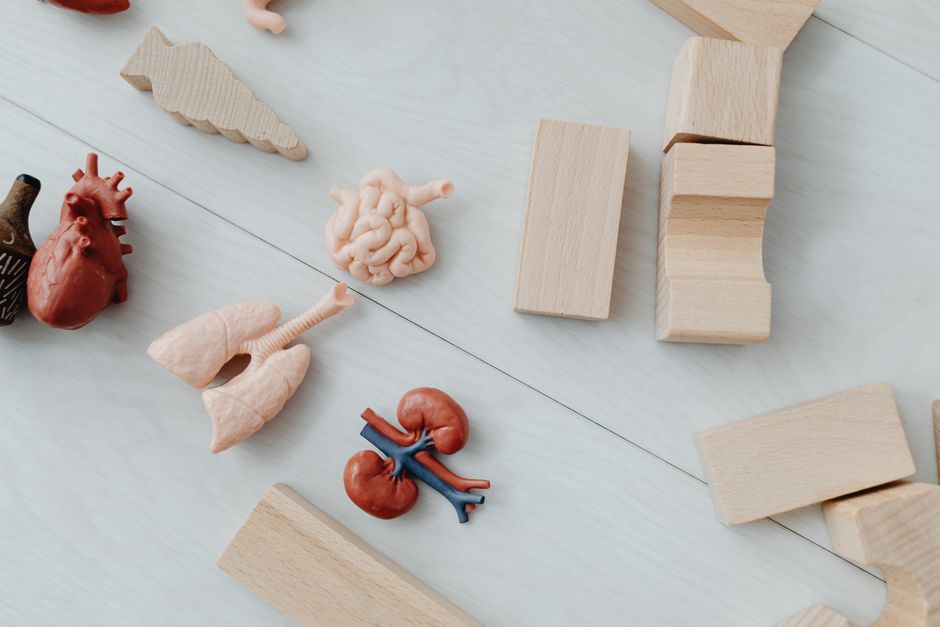
Yes, kidney stones can cause pain in the lower back. This is one of the most common and recognizable symptoms of a stone moving through or blocking the urinary tract. The pain often starts in the flank — the side of the body between the ribs and the hip — and can radiate toward the lower back, groin, or abdomen.
The pain is not a dull ache. It is typically severe, comes in waves, and can be difficult to get comfortable. Knowing how to tell kidney stone pain apart from ordinary back pain matters, because the two have very different causes and require very different responses.
Why Do Kidney Stones Cause Pain in the Lower Back?
The pain comes from a physical blockage, not from the kidney itself being damaged. When a stone grows large enough or moves into the ureter — the narrow tube that carries urine from the kidney to the bladder — it can block the flow of urine.
That backup causes the ureter to stretch and spasm. The ureter is a muscular tube lined with sensitive nerve endings. When a stone scrapes against it or forces it to contract against a blockage, those nerve signals register as intense pain. The brain interprets signals from the upper ureter as coming from the flank and lower back, which is why the pain shows up there rather than in the front of the body.
The location of the pain often shifts as the stone moves. A stone high in the ureter tends to cause flank and upper back pain. As it travels lower, the pain may move toward the groin, lower abdomen, or genitals. This migrating pattern is one of the clearest clues that a stone is the cause.
What Does Kidney Stone Pain Actually Feel Like?
Kidney stone pain is distinctive. It is usually not a steady, positional ache like a muscle strain. It comes in waves that build to a peak and then ease, often lasting 20 to 60 minutes per cycle. The medical term for this pattern is renal colic.
People who have experienced it often describe it as the worst pain of their lives. Many say they cannot find any position that helps — sitting, standing, lying down, and walking all feel equally bad. That restlessness is a hallmark. Muscle and joint back pain usually improves when you change position. Kidney stone pain does not.
Other symptoms often appear alongside the pain:
- Blood in the urine, which may look pink, red, or brown
- Nausea and vomiting
- Pain or burning when urinating
- A constant urge to urinate
- Urine that looks cloudy or smells unusual
Fever and chills are not typical of an uncomplicated stone. When they appear together with flank pain, that combination can signal an infection behind the blockage. That is a medical emergency and requires immediate care.
How Is Kidney Stone Pain Different From Regular Back Pain?
The two feel different in ways most people can recognize. Ordinary back pain from muscles, joints, or discs tends to be in the lower back near the spine. It usually worsens with certain movements and eases with rest or a change in position.
Kidney stone pain sits higher and more to one side. It starts in the flank, just below the ribs on one side, and may wrap around toward the lower back. It does not improve with rest. It does not respond to stretching. And it is almost always one-sided, whereas common muscle back pain is often centered or affects both sides.
There is one detail worth knowing. Kidney pain that comes from an infection, rather than a stone, tends to be a constant dull ache rather than waves of severe pain. So the wave pattern itself points more toward a stone or another cause of ureteral blockage, not infection alone.


When Is Lower Back Pain a Medical Emergency?
Most kidney stones pass on their own, but some situations need urgent care. Go to an emergency room or call emergency services if you have:
- Severe pain that you cannot manage at home
- Fever, chills, or shaking along with flank or back pain
- Vomiting that will not stop, or signs of dehydration
- Blood in the urine that is heavy or persistent
- Pain in only one side along with a rapid heart rate or confusion
Fever plus flank pain is the combination that worries clinicians most. It can mean an infected, blocked kidney, which can become life-threatening if not treated quickly. Do not wait to see if it improves.
Another reason to seek care: a stone that completely blocks urine flow can damage the kidney over time. A stone that is not passing, or one that is large, may need a procedure to remove or break it up.
How Are Kidney Stones Diagnosed?
Doctors usually start with a urine test to look for blood, infection, or crystals. A blood test can check kidney function and look for signs of dehydration or other problems.
Imaging confirms the diagnosis. A non-contrast CT scan is the most accurate way to find a stone and see its size and location. Ultrasound is often used instead in certain situations, including in pregnancy, because it avoids radiation. The size and position of the stone guide treatment decisions.
If you have had more than one stone, your doctor may test the stone itself or your urine to look for the underlying cause. Most stones are made of calcium oxalate, but others form from uric acid, struvite, or cystine. Knowing the type can change prevention advice.
What Happens After the Pain Starts?
Small stones often pass on their own within a few weeks. Pain control is the first priority. Nonsteroidal anti-inflammatory drugs are commonly used and are generally more effective for stone pain than opioids in many cases, though the choice depends on your health and other medications. A doctor may also prescribe a medication that relaxes the ureter to help the stone move.
Drinking enough fluids can help a stone pass, but the evidence on how much is not firmly established for every case. Your doctor’s guidance matters more than a general rule here.
Larger stones, or ones that are not moving, may need a procedure. Options include shock wave lithotripsy, which uses sound waves to break the stone into smaller pieces, and ureteroscopy, in which a thin scope removes or breaks up the stone. The right choice depends on stone size, location, and your overall health.
Can You Prevent Kidney Stones?
Prevention depends on the type of stone and the cause. For the most common type, calcium oxalate stones, the general direction of the evidence points to a few habits.
Drinking more water is the most widely supported step. Staying well hydrated dilutes the substances that form stones. Some research suggests that higher fluid intake reduces the chance of new stones forming, though the exact amount that helps varies from person to person.
Getting enough calcium from food, rather than cutting it out, may actually lower risk for some people. Calcium binds oxalate in the gut so less of it reaches the kidneys. This is a case where the intuitive move — avoiding calcium — can work against you.
Reducing sodium and limiting foods very high in oxalate, such as spinach and rhubarb, may help some people. But the picture is not the same for everyone, and blanket dietary rules can be wrong for your specific stone type. A doctor or dietitian can tailor advice to your situation.
If you have had multiple stones, ask about a metabolic evaluation. Finding the underlying cause can lead to more targeted prevention than general lifestyle advice alone.
Frequently Asked Questions
Can kidney stones cause pain in the lower back only?
Yes, pain can be limited to the lower back or flank on one side, especially early on. As the stone moves, the pain often shifts toward the groin or abdomen.
How do I know if my back pain is a kidney stone or a muscle strain?
Kidney stone pain comes in waves, does not improve with rest or position changes, and usually sits in the flank on one side. Muscle back pain tends to ease with rest and changes position.
How long does kidney stone pain last?
Pain can last from minutes to hours per episode and may come and go for days or weeks until the stone passes or is treated. Severe or persistent pain should be evaluated by a doctor.
When should I go to the ER for kidney stone pain?
Go to the emergency room if you have fever or chills with flank pain, uncontrollable vomiting, heavy blood in the urine, or pain you cannot manage. Fever with flank pain can signal a serious infection.
