
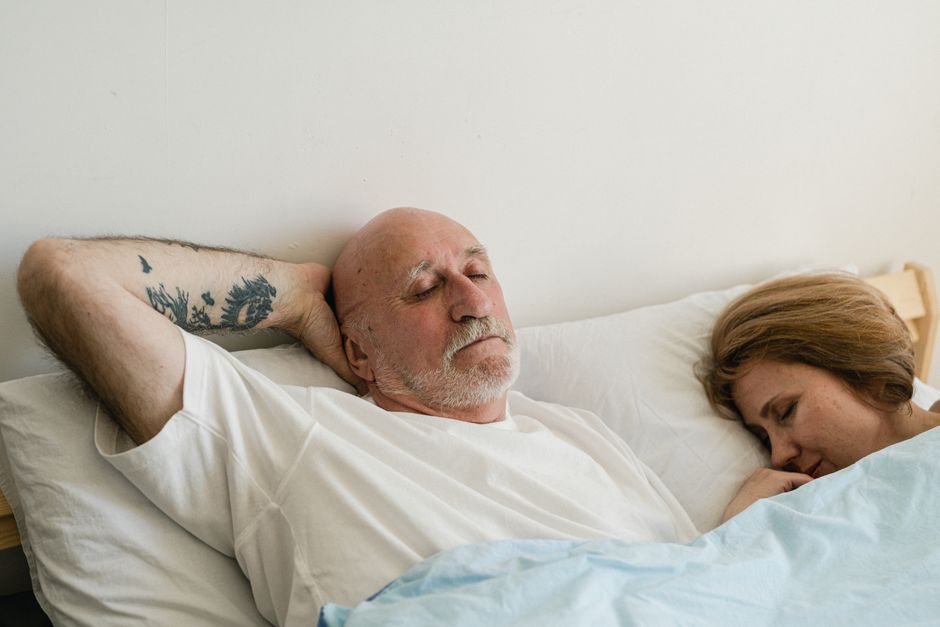
Yes, you can sleep on your side after a total knee replacement — but usually not right away, and often not on the side you had surgery on. Most surgeons allow side sleeping within the first few weeks after surgery, once swelling and pain are under control and you can keep the knee comfortably supported. In the early days, back sleeping with the leg elevated is typically the position that causes the least strain.
The bigger issue is not whether side sleeping is allowed. It is whether you can get into that position without twisting the new knee, rolling onto it, or waking up in pain. Those problems are manageable with a few adjustments to your pillow setup and your bedtime routine.
Why Does Sleeping Position Matter After Knee Replacement?
Sleep is when your body does most of its tissue repair, and it is also when you are least able to control what your knee is doing. During the day you can feel a bad position coming and correct it. At night you cannot.
After a total knee replacement, the soft tissues around the joint — the capsule, the tendons, the quadriceps and hamstring muscles — have been cut, stretched, and stitched back together. Those tissues are inflamed and sensitive for weeks. Certain positions put more stress on them than others.
Side sleeping on the operated side presses the outside of the knee directly into the mattress. The new implant itself is not fragile, but the healing soft tissue around it does not like sustained pressure. Many people find this position uncomfortable for the first several weeks, and some find it painful for longer.
Side sleeping on the non-operated side is usually easier. The operated leg rests on top of the other leg, which is fine as long as the knee is not allowed to drop or rotate inward.
There is one more factor people rarely think about. Poor sleep in the weeks after surgery is extremely common, and it is not only about position. Pain, anesthesia recovery, disrupted routine, and the need to take medications at night all play a role. Position is one piece of a larger puzzle.
Can I Sleep On My Side After Total Knee Replacement — And When?
Most surgeons do not prohibit side sleeping for long. Many people are comfortable on their non-operated side within the first week or two. Others need four to six weeks before side sleeping feels normal again.
There is no universal timeline, and no clinical guideline sets a specific number of days. The honest answer is that your knee tells you when it is ready. If you try side sleeping and wake up with more swelling, stiffness, or pain the next morning, that is a signal to go back to back sleeping for a while longer.
A few things tend to make side sleeping easier:
- Wait until you can move your leg in bed without help or with minimal help.
- Wait until swelling has clearly started to settle rather than still increasing.
- Try short stretches of side sleeping rather than committing to a whole night.
- Keep pain medication timing in mind — sleeping through a dose can make the morning worse.
If your surgeon or physical therapist has given you specific instructions, those take priority over general advice. Some people have additional procedures, wound concerns, or complications that change the picture.
How Do You Sleep On Your Side Without Hurting the New Knee?
The pillow setup does most of the work. The goal is to keep the knee in line with your hip and not let it roll forward, drop down, or twist.
If you sleep on your non-operated side, place a pillow between your legs. A firm pillow works better than a soft one. It should run from roughly your knees to your ankles so the whole lower leg is supported, not just the knee. This keeps the operated leg from sagging toward the mattress and prevents the knee from rotating.
Some people need a second pillow under the operated knee itself for extra support. Others find a body pillow easier to manage because it stays in place when you shift.
If you sleep on your operated side, the challenge is different. You are putting direct pressure on the healing knee. Some people manage this by placing a soft pillow under the knee to cushion it and slightly bend the leg. Others simply cannot tolerate it for weeks, and that is normal.
A few practical points that help:
- Keep the leg relatively straight rather than curled up tightly.
- Avoid crossing the operated leg over the other one.
- Do not tuck the operated leg under your body.
- If you wake up in a bad position, correct it slowly rather than jerking the leg.
Getting into position matters as much as the position itself. Rolling onto your side by pushing with your arms and moving your whole body as a unit is gentler on the knee than twisting at the waist.
-
 How To Sleep With Nerve Pain In Your Arm At Night?
 -
SleepLean Reviews. Does It Help Weight Loss & Sleep (2025 Verdict)
-
Yu Sleep Weight Loss Supplement Reviews. Critical March 2026 Update.
-
Yu Sleep Reviews (2026): Does Liquid Formula Actually Work?
-
Joint Vive Reviews And Complaints 2026: Consumer Reports & Ratings




Is Back Sleeping Better in the First Few Weeks?
For most people, yes. Back sleeping with the leg elevated on a pillow is the position surgeons and physical therapists most often recommend early on.
The reason is straightforward. On your back, the knee is not bearing weight, not pressed against anything, and not being asked to hold a position against gravity. Elevation also helps move fluid out of the leg, which can reduce swelling.
The catch is that many people are not natural back sleepers. If you have slept on your side your whole life, forcing yourself onto your back can lead to worse sleep, which slows recovery in its own way.
A reasonable middle ground is to start the night on your back with the leg elevated, then switch to your side later if you wake up and cannot get comfortable. Some people also find that a recliner works well for the first week or two, since it keeps the leg elevated and makes it harder to roll onto the operated side.
What If Side Sleeping Causes Pain or Swelling?
Some discomfort when you first try a new position is expected. Increasing pain that lasts into the next day, new swelling, or a knee that feels hotter than usual is not something to push through.
Swelling after knee replacement is normal and can come and go for weeks. What matters is the trend. Swelling that is steadily improving is part of healing. Swelling that is getting worse, or that suddenly increases, deserves a call to your surgeon’s office.
Contact your surgical team if you notice:
- Swelling that is clearly increasing rather than settling
- Pain that is getting worse instead of better
- Redness, warmth, or drainage from the incision
- Fever
- Calf pain, tenderness, or swelling in the lower leg
That last one matters. Blood clots in the leg are a known risk after knee replacement, and calf symptoms should never be ignored. This is a medical emergency, not a sleep position problem.
Does Sleep Position Affect How Well the Knee Recovers?
Sleep position is not what determines whether a knee replacement succeeds. Rehabilitation exercise, following your surgeon’s instructions, and attending physical therapy are what drive recovery.
But sleep does matter indirectly. Poor sleep is linked to worse pain perception and slower recovery in general. If a position keeps you awake night after night, that is worth solving even if the position itself is not dangerous.
There is also a practical point about stiffness. A knee that is left in one position for many hours can feel stiff in the morning regardless of how you slept. That stiffness usually loosens up with movement and is not a sign that something is wrong.
One thing worth knowing: the timing of when you sleep on your side does not appear to change the final outcome of the surgery. What changes is how comfortable the first several weeks feel. So if you need to stay on your back a little longer than you expected, you are not falling behind.
When Can You Go Back to Sleeping Normally?
Most people are sleeping in their usual position again within a few months. Some get there in a few weeks. A smaller number take longer, especially if swelling lingers or if they had a more complex procedure.
The transition is usually gradual. You start with short stretches on your side, then longer ones, until one night you realize you slept the whole night in your normal position without thinking about it.
If you are several months out and still cannot sleep on the operated side without pain, mention it at a follow-up visit. Persistent pain with pressure on one side of the knee is worth evaluating rather than assuming it will pass.
Frequently Asked Questions
Can I sleep on my side after total knee replacement?
Yes, most people can sleep on their side after knee replacement, usually within the first few weeks. Sleeping on the non-operated side with a pillow between the legs is generally easier than sleeping on the operated side.
How long after knee replacement can I sleep on my side?
There is no fixed timeline, and no clinical guideline sets a specific number of days. Many people are comfortable on their non-operated side within one to two weeks, while others need four to six weeks or longer.
Which side should I sleep on after knee replacement?
Sleeping on the side that was not operated on is usually more comfortable, with a pillow between your legs to keep the new knee aligned. Sleeping directly on the operated side puts pressure on healing tissue and is often painful early on.
What if side sleeping makes my knee swell or hurt more?
Go back to sleeping on your back with the leg elevated for a few more days, then try again. Call your surgeon if swelling is steadily increasing, or if you have calf pain, redness, drainage, or fever.
