
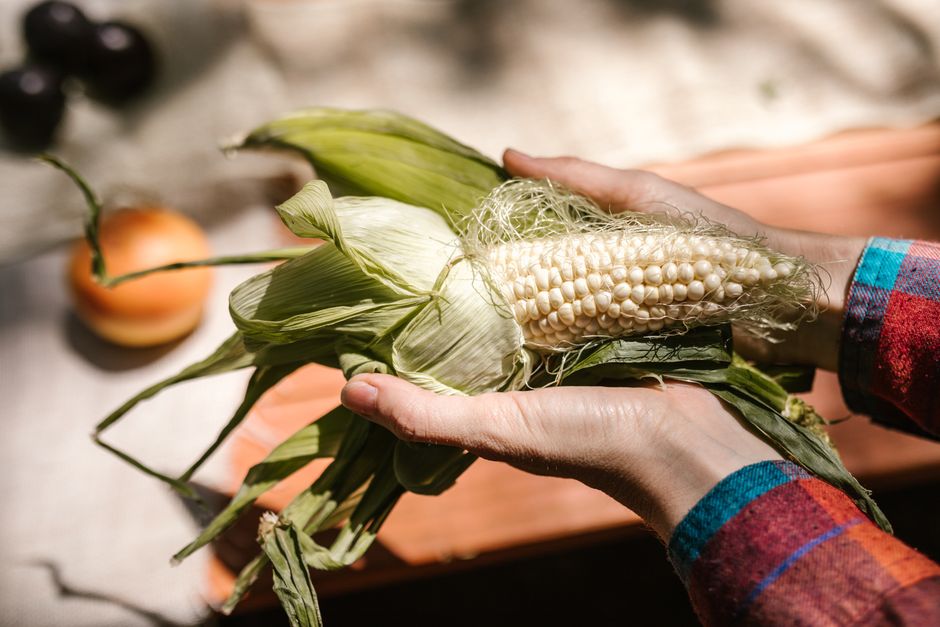
Yes, humans can digest corn. The idea that we cannot is one of the most persistent food myths around, and it survives because of a simple misunderstanding about what people actually see in the toilet. What you notice in your stool is the outer shell of the kernel, not the whole kernel.
The inside of a corn kernel is mostly starch, and your body breaks that starch down and absorbs it without much trouble. The yellow outer layer is made of cellulose and other fibers that human digestive enzymes cannot break apart. So corn is partly digested, and the undigested part is the hull.
Why Does Corn Come Out Looking Whole?
The kernel’s outer coat is tough for a reason. It protects the seed so it can survive a trip through an animal’s gut and still sprout somewhere new. That same toughness is why it sometimes survives your digestive tract looking much the way it went in.
Here is the part most people miss. Chewing is the main tool you have for breaking that coat. If you swallow kernels without cracking them, the hull stays intact and the starch inside may never be exposed to your digestive enzymes. The kernel passes through largely unchanged, and it looks whole in the stool.
That does not mean corn is indigestible. It means the outer shell is indigestible. The starch inside is a different story entirely, and it gets absorbed if the hull is broken open.
Some people notice corn in their stool more than others. That can come down to how thoroughly they chew, how fast they eat, and normal differences in how quickly food moves through the gut.
What Happens to Corn During Digestion?
Digestion of corn follows the same path as most plant foods, with one twist at the start.
- Mouth: Chewing breaks the kernel open. Saliva begins breaking down starch.
- Stomach: Acid and churning further break down the kernel’s contents.
- Small intestine: Enzymes finish breaking starch into simple sugars, which get absorbed into the bloodstream.
- Large intestine: The fiber that survived reaches the colon, where gut bacteria ferment some of it.
The starch in corn is digestible. It is chemically similar to the starch in potatoes, rice, and wheat. Your small intestine handles it the same way. The difference is that corn’s starch is locked behind a hull that your enzymes cannot dissolve.
Cellulose, the main fiber in that hull, is a carbohydrate too. Humans do not make the enzyme needed to break it down. Cows and other ruminants can, because they have gut bacteria that do the job for them. We do not. So the hull moves through largely intact and adds bulk to the stool.
Is Corn Harder to Digest Than Other Foods?
Corn is not especially hard to digest. It is just visible. That is the whole difference.
Many foods contain plant cell walls made of cellulose. We cannot digest those either. Think of the stringy fibers in celery, the skins on beans, or the hulls on seeds. They pass through the same way corn hulls do. You just do not see them as clearly, so you do not think about them.
Corn stands out because the kernel is large enough to recognize. A tomato skin or a bit of lettuce leaf is not. Corn gives you a visual receipt for something that happens with lots of foods all the time.
There is one real caveat. Corn is a common trigger for digestive discomfort in people with certain conditions. If you have irritable bowel syndrome or another gut sensitivity, corn may cause bloating or gas. That is not the same as being unable to digest it. It is a symptom response, and it varies from person to person.





Does the Type of Corn Matter?
Different forms of corn behave differently in the gut, and this is where the conversation gets more useful.
- Whole kernel corn: Fresh, frozen, or canned kernels keep their hull intact. This is the form people notice in stool.
- Creamed corn: The kernels are broken down during processing, so less hull survives intact.
- Cornmeal and polenta: Ground corn has no intact hull. It is digested much like any other grain.
- Popcorn: The kernel bursts open when heated, exposing the starch. The hull fragments are still tough.
- Corn tortillas and masa: Treated and ground corn is easier to break down than whole kernels.
Processing matters more than most people realize. Once corn is ground into flour or meal, the tough outer layer is no longer a barrier. The starch is exposed, and digestion proceeds normally. This is why you do not see cornmeal in your stool.
Popcorn is a middle case. The heat pops the kernel and gelatinizes the starch inside, but the hull fragments remain. Those fragments are the bits that can feel like they get stuck in your teeth, and they are also the parts that resist digestion.
Does Corn Provide Any Nutrition If It Passes Through?
Yes, and this is worth understanding clearly. The fact that some corn passes through undigested does not mean you get nothing from it.
Corn provides starch, which your body uses for energy. It also supplies fiber, some B vitamins, and certain minerals. Yellow corn contains lutein and zeaxanthin, two carotenoids that concentrate in the retina. The degree to which dietary lutein and zeaxanthin affect eye health is an active area of research, and I would not overstate what is established here.
Whole corn also delivers fiber to the colon, where gut bacteria ferment some of it. That fermentation produces short-chain fatty acids, which are a fuel source for the cells lining the colon. This is a normal and well-described process, not a special property of corn.
How much nutrition you actually absorb depends in part on how well you chew. A kernel swallowed whole gives up less of its starch than one broken open. That is one more reason chewing matters more than most people give it credit for.
When Should You Be Concerned About Undigested Food in Stool?
Seeing corn in your stool is normal and is not a sign of a digestive problem. The same goes for other recognizable plant bits, like seeds, skins, and leafy fibers.
There are situations where undigested food in stool can point to something worth checking. These are uncommon, and they usually come with other symptoms. Talk to a clinician if you notice any of the following alongside it:
- Persistent diarrhea or stools that are oily, pale, or unusually foul-smelling
- Unintended weight loss
- Ongoing abdominal pain or cramping
- Fatigue or signs of nutrient deficiencies
- Undigested food appearing along with several of these at once
These can be signs that food is moving through too quickly or that nutrients are not being absorbed properly. Conditions affecting the pancreas, small intestine, or bile flow can cause this pattern. That is a clinical question, not something to diagnose from a single observation.
One thing worth saying plainly. Occasional corn in the stool by itself is not a red flag. It is the expected result of eating a food with a tough outer shell.
Can Humans Digest Corn? The Short Version
Humans digest the starch inside corn and cannot digest the outer hull. That is the whole answer, and it explains everything people notice.
The kernel’s coat is fiber, and fiber passes through. The inside is starch, and starch gets absorbed. Chewing determines how much of each outcome you get. Chew well and you absorb more. Swallow whole and more passes through intact.
Corn is a normal, nutritious food for most people. The myth that humans cannot digest it comes from a reasonable observation and an incorrect conclusion. What you see in the stool is the wrapper, not the food.
Frequently Asked Questions
Can humans digest corn completely?
No, not completely. The starch inside the kernel is digested and absorbed, but the outer hull is fiber that human enzymes cannot break down, so it passes through.
Why does corn come out whole in poop?
Because the tough outer shell of the kernel resists digestion and can survive the trip intact. If you swallow kernels without chewing them open, the hull stays whole and looks unchanged in the stool.
Is it bad if you see corn in your stool?
No, it is normal and not a sign of a digestive problem. It just means the hull was not broken down, which is expected.
Does chewing corn help you digest it?
Yes. Chewing breaks the hull open and exposes the starch inside to your digestive enzymes, so more of the kernel gets absorbed.
