
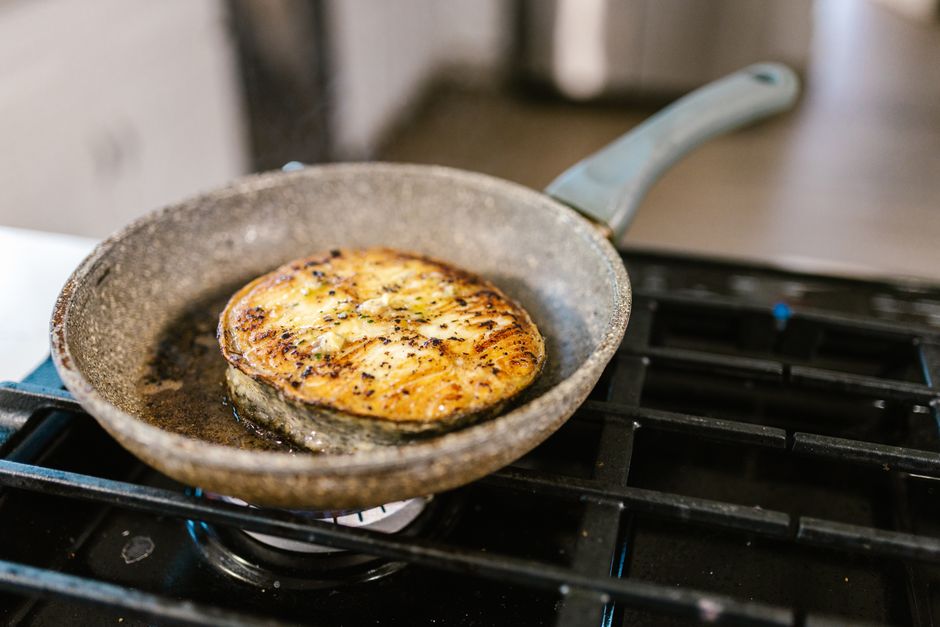
Yes, properly cooked fresh salmon can give you diarrhea, but the fish itself is rarely the cause. The problem is almost always something that happened to the salmon before, during, or after cooking. Heat kills bacteria and parasites in the fish when it reaches a safe internal temperature. What heat does not do is remove toxins that bacteria already produced, or fix cross-contamination from a cutting board, a sick cook, or a warm car ride home.
So if you ate salmon that looked and smelled fine and still ended up sick, the answer is usually not “bad fish.” It is a specific breakdown somewhere in the chain from water to plate.
Can Good Salmon Thats Cooked Give You Diarrhea?
Cooking salmon to a safe internal temperature kills the live bacteria and parasites that commonly cause foodborne illness. The USDA recommends a minimum internal temperature of 145°F for fish, and that step is effective against organisms like Listeria, Salmonella, and the parasite Anisakis when the temperature is actually reached throughout the fish.
What cooking cannot do is destroy heat-stable toxins. Some bacteria, including certain Staphylococcus aureus and Bacillus cereus strains, release toxins into food before cooking. Those toxins survive normal cooking temperatures. If salmon sat at room temperature long enough for those bacteria to multiply and produce toxin, reheating or cooking it thoroughly will not make it safe.
The other common route is contamination after cooking. A clean piece of cooked salmon placed on a board that held raw chicken, or handled by someone with unwashed hands, can pick up enough bacteria to cause illness. In that case the salmon was never the problem — the surface it touched was.
How Long Does It Take to Get Sick After Eating Salmon?
The timing of symptoms is one of the most useful clues about what made you sick. Different causes have different incubation periods, and the pattern often points to the source.
- Within 30 minutes to 6 hours: This fast window often points to a pre-formed toxin, such as Staphylococcus aureus toxin or Bacillus cereus. Vomiting tends to dominate. Cooking does not prevent this because the toxin is already present.
- 6 to 24 hours: This range fits Bacillus cereus and some Clostridium perfringens cases, which often cause watery diarrhea and cramping.
- 12 to 72 hours: This is a common window for Salmonella, Listeria, and many other bacterial causes of diarrhea.
- 1 to 2 weeks: A longer delay can point to parasites such as Anisakis or Giardia, though these are less common with properly cooked fish.
These windows overlap, so timing narrows the possibilities but does not confirm a cause. A doctor can only identify the specific organism through a stool test.
Why Does Cooked Salmon Sometimes Cause Diarrhea Even When It Smells Fine?
Smell and appearance are weak safety tests. The bacteria that cause most foodborne illness do not necessarily change how fish looks, smells, or tastes. Listeria and Salmonella can be present in meaningful numbers without any visible spoilage.
There is also a group of compounds called scombrotoxin, or histamine, that forms in certain fish when they are not kept cold enough. Salmon is not the classic scombrotoxin fish — tuna, mackerel, and mahi-mahi are more commonly linked to it — but the same principle applies to any fish left warm too long. The histamine produced does not break down with cooking. It can cause flushing, headache, and diarrhea within minutes to a couple of hours.
One more factor worth separating out: not every reaction to salmon is an infection. Some people have a genuine allergy or intolerance that produces gastrointestinal symptoms. A fish allergy usually involves hives, swelling, or breathing trouble alongside digestive symptoms, but reactions vary. If the same symptoms follow salmon every time, that pattern points away from a one-time contamination and toward a personal sensitivity.
What Are the Most Common Causes of Diarrhea After Eating Cooked Salmon?
The causes fall into a few clear groups. Knowing which one fits your situation helps you understand what happened and whether you need medical care.
| Cause | How It Happens | Does Cooking Prevent It? |
|---|---|---|
| Bacterial infection (Salmonella, Listeria, Campylobacter) | Undercooking or cross-contamination | Yes, if cooked to 145°F and handled cleanly |
| Pre-formed bacterial toxin | Fish held at unsafe temperatures before cooking | No — toxin survives heat |
| Histamine (scombrotoxin) | Fish left warm, allowing histamine to build up | No — heat does not destroy it |
| Cross-contamination after cooking | Contact with raw foods, dirty surfaces, or unwashed hands | No — happens after the cooking step |
| Parasites (Anisakis) | Raw or undercooked fish | Yes, if fully cooked or properly frozen first |
| Personal allergy or intolerance | Immune or digestive reaction to the fish itself | No — unrelated to cooking |
The table makes one point clear: cooking is only one link in the chain. Temperature control before cooking and hygiene after cooking matter just as much.
How Should You Store and Cook Salmon to Lower the Risk?
Most salmon-related illness is preventable with a few consistent habits. None of them are complicated, but they have to happen every time.
- Keep raw salmon refrigerated at 40°F or below, and use it within one to two days of purchase.
- Freeze fresh salmon if you will not cook it within a couple of days. Freezing at the proper temperature also kills parasites, which matters if you ever plan to eat it raw.
- Thaw frozen salmon in the refrigerator, not on the counter. Room-temperature thawing is one of the most common ways fish spends too long in the temperature range where bacteria multiply fastest.
- Cook to an internal temperature of 145°F, checked with a food thermometer at the thickest part.
- Use separate cutting boards and utensils for raw fish and for anything eaten raw.
- Refrigerate leftovers within two hours of cooking, and sooner if the room is warm.
The two-hour rule is not arbitrary. It reflects the point at which bacteria can multiply to levels that raise illness risk. On a hot day or in a warm car, that window is shorter.
When Should You See a Doctor?
Most cases of diarrhea from contaminated food resolve on their own within a few days. Dehydration is the main concern, especially for older adults and young children, so replacing fluids matters more than trying to stop the diarrhea.
Seek medical care if you have bloody stools, a fever above 102°F, severe abdominal pain, signs of dehydration such as dizziness or very dark urine, or diarrhea that lasts more than three days. These signs suggest a more serious infection that may need testing or treatment.
Pregnant women, adults over 65, infants, and people with weakened immune systems should contact a doctor sooner. Listeria in particular can cause severe illness in these groups, and it is one of the bacteria that can be present in fish and fish products.
Do not take anti-diarrheal medication without checking with a doctor if you have a fever or bloody stools. Slowing the gut in those cases can keep the infection in your system longer.
Does Farmed vs Wild Salmon Matter for Food Safety?
Both farmed and wild salmon can carry the same foodborne risks. The farming method does not determine whether the fish is safe after cooking. What matters is temperature control and handling.
Parasite risk differs somewhat. Wild salmon may have a higher chance of carrying parasites than farmed salmon raised on controlled feed, but proper cooking or freezing eliminates that risk in either case. Raw salmon dishes, including sushi and gravlax, depend on the fish having been frozen to a temperature and for a duration that kills parasites, which is why sourcing matters so much for raw preparations.
For cooked salmon, the practical answer is the same regardless of origin: cook it to 145°F, keep it cold before cooking, and keep it clean after.
Frequently Asked Questions
Can you get food poisoning from fully cooked salmon?
Yes, if the salmon was contaminated before cooking with bacteria that produced heat-stable toxins, or if it was contaminated after cooking. Cooking kills live bacteria but does not remove toxins or undo cross-contamination.
How long after eating salmon would diarrhea start?
It depends on the cause. Toxin-related illness can start within 30 minutes to 6 hours, while bacterial infections like Salmonella typically take 12 to 72 hours.
Does reheating salmon kill bacteria that cause diarrhea?
Reheating kills live bacteria but does not destroy toxins that bacteria already produced. If the salmon was left warm too long before reheating, the toxin remains and can still make you sick.
Should I throw out salmon if I got diarrhea after eating it?
Yes, discard the remaining salmon and do not eat it again. If others ate the same batch and are also sick, that points to the food as the source rather than a personal sensitivity.
