
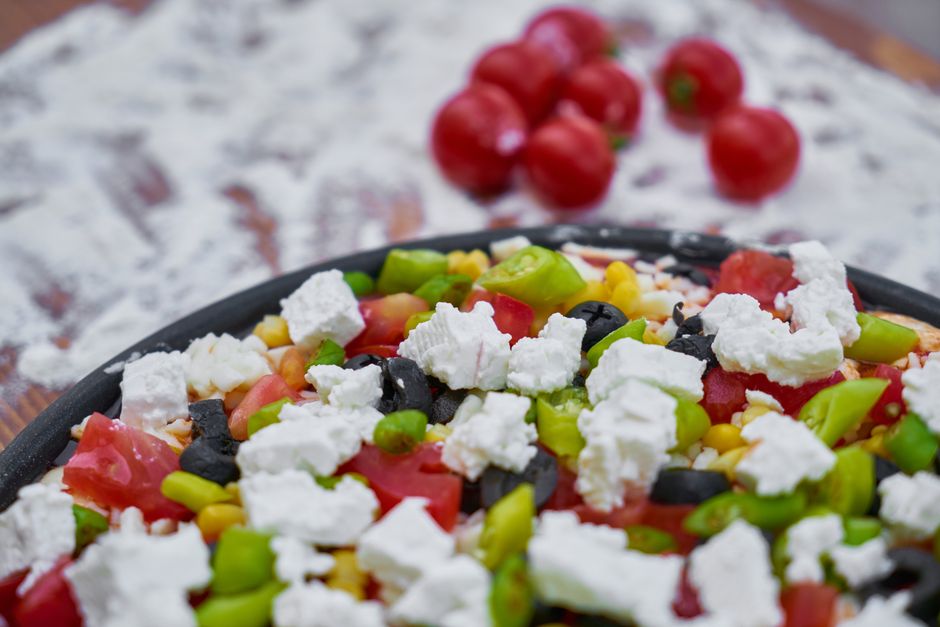
Yes, you can freeze feta cheese. But the texture will change, and it will not be the same as fresh feta when thawed. Freezing feta is a practical option for extending its shelf life, especially if you bought too much or found a good sale. The key is knowing what to expect and how to use it after thawing.
What Happens to Feta Cheese When It Is Frozen?
Freezing feta changes its structure at a microscopic level. Feta is a brined cheese with a high moisture content. When water inside the cheese freezes, it forms ice crystals. These crystals expand and puncture the delicate protein network that gives feta its creamy, crumbly texture.
When you thaw the cheese, the ice melts and leaves behind small gaps. The result is a softer, more crumbly, and slightly grainy texture. Some people describe it as dry or mealy. The once smooth and creamy feta becomes more like a dry cottage cheese.
This change is not a sign of spoilage. It is a physical change caused by freezing. The cheese is still safe to eat, but its texture is different. If you plan to eat the feta plain or in a salad, freezing is not a good idea. The texture will not be pleasant.
Can Feta Cheese Be Frozen Without Losing Too Much Quality?
The quality loss depends on how you freeze it and what you use it for. Research and kitchen experience show that freezing works best for feta that will be cooked or baked. Dishes like spanakopita, pasta sauces, quiches, and casseroles hide the texture change well.
Freezing feta in its original brine helps protect it. The brine acts as a buffer, slowing down ice crystal formation. If you freeze feta without brine, the texture change is more severe. The cheese dries out faster and becomes harder to use.
Vacuum sealing is another method that works well. Removing air prevents freezer burn and helps the cheese stay usable longer. Some people report that vacuum-sealed feta lasts up to three months in the freezer with acceptable results.
One study published in the Journal of Dairy Science examined how freezing affects the texture of brined cheeses. The researchers found that faster freezing produces smaller ice crystals, which cause less damage to the cheese structure. So if you freeze feta, do it as quickly as possible. Place it in the coldest part of your freezer, and do not stack warm items around it.
What Is the Best Way to Freeze Feta Cheese?
Start with fresh feta. Check the expiration date. Do not freeze feta that is already close to spoiling. Freezing will not improve the quality of old cheese.
Cut the feta into portions you will actually use. A common mistake is freezing one large block and then thawing the whole thing. Once thawed, feta does not refreeze well. Portioning avoids waste.
Here is a simple step-by-step method:
- Cut feta into 4-ounce or 8-ounce portions.
- Place each portion in a freezer-safe bag or container.
- Pour enough brine over the feta to cover it completely.
- Remove as much air as possible from the bag.
- Seal and label with the date.
- Freeze immediately in the coldest part of your freezer.
If you do not have brine, you can make a quick substitute. Mix one tablespoon of salt with one cup of water. This is not identical to commercial brine, but it helps protect the cheese. Some people use milk instead of brine, though this is less common and not supported by strong evidence.
For vacuum sealing, skip the extra liquid. The vacuum process removes air, and the cheese’s own moisture is enough. Vacuum-sealed feta freezes faster and thaws with a slightly better texture than brine-packed feta.





How Long Can You Keep Frozen Feta Cheese?
Frozen feta is safe to eat indefinitely if kept at 0°F (-18°C) or below. Freezing stops bacterial growth. Safety is not the concern here. Quality is.
For the best quality, use frozen feta within three months. After that, the texture continues to degrade. The cheese becomes more crumbly and dry. The flavor may also become slightly muted or bland.
The USDA states that frozen cheese retains its quality for six to eight months, but that is a general guideline for all cheeses. Feta, with its high moisture, does not hold up as well as hard cheeses like cheddar or Parmesan. Three months is a realistic limit for acceptable quality.
If you notice ice crystals on the surface of the cheese, that is freezer burn. Freezer burn is not dangerous, but it affects taste and texture. Trim off the affected parts before using the cheese. Vacuum sealing or removing air from bags reduces freezer burn significantly.
How Do You Thaw Frozen Feta Cheese?
Thaw feta slowly in the refrigerator. Do not thaw it on the counter or in warm water. Rapid temperature changes cause more moisture loss and worsen the texture.
Place the frozen feta in a bowl or on a plate to catch any liquid that leaks out. Let it thaw overnight, or for about 12 to 24 hours depending on the portion size. Do not rush this step.
Once thawed, drain off any excess liquid. The cheese will be softer and more fragile than fresh feta. Handle it gently if you need to crumble it. If the texture is too dry for your recipe, you can mix in a small amount of fresh milk or cream to restore some moisture.
Do not refreeze thawed feta. The second freeze-thaw cycle destroys the texture completely. Only thaw what you plan to use within a few days.
What Are the Best Uses for Thawed Frozen Feta?
Thawed feta is not ideal for salads, cheese boards, or eating plain. The texture is too crumbly and dry for those uses. But it works well in cooked dishes where the cheese melts or blends in.
Here is a comparison table to help you decide when frozen feta is worth it:
| Use | Works with Frozen Feta? | Why |
|---|---|---|
| Salads (Greek salad, spinach salad) | No | Texture is too crumbly and dry |
| Cheese boards or platters | No | Appearance and texture are unappealing |
| Baked pasta dishes | Yes | Heat hides texture changes |
| Spanakopita or savory pies | Yes | Baking restores some creaminess |
| Pizza toppings | Yes | Melts and blends with other ingredients |
| Dips and spreads | Yes | Blending smooths out texture |
| Soups and sauces | Yes | Dissolves or softens during cooking |
If you frequently cook with feta, freezing is a practical way to keep it on hand. Buy in bulk when it is on sale, portion it, and freeze. Use the thawed feta within a few days for best results.
Common Misconceptions About Freezing Feta
Some people believe that freezing feta ruins it completely. That is not true. The cheese is still safe and usable. The texture changes, but the flavor remains largely intact. If you only use feta in cooked dishes, you may not notice the difference at all.
Another myth is that you must freeze feta in its original packaging. Original packaging is often not airtight enough for long-term freezing. Transfer it to a freezer-safe bag or container. The original plastic wrap lets air in, which causes freezer burn.
Some claim that freezing feta kills the beneficial bacteria. Feta is a fermented cheese, and freezing does slow down bacterial activity. But it does not kill all the bacteria. Once thawed, some bacteria become active again. The cheese is still a fermented product, though the live culture count may be lower.
There is also a belief that you can freeze feta for a year and it will be fine. As of 2026, there is no clinical evidence supporting that. Quality declines noticeably after three months. Beyond six months, the texture and flavor are significantly degraded. Freezing longer does not make the cheese unsafe, but it will not taste good.
Frequently Asked Questions
Can you freeze feta cheese in the original package?
It is not recommended. The original package is not airtight, and freezer burn will develop quickly. Transfer the feta to a freezer-safe bag or container.
Does frozen feta taste different after thawing?
The flavor stays mostly the same, but the texture becomes more crumbly and dry. Cooking with thawed feta helps mask the texture change.
How long does feta last in the freezer?
For best quality, use frozen feta within three months. It remains safe to eat indefinitely at 0°F, but quality declines after that point.
Can you refreeze feta after thawing?
No. Refreezing destroys the texture and increases the risk of spoilage. Only thaw what you plan to use.
