
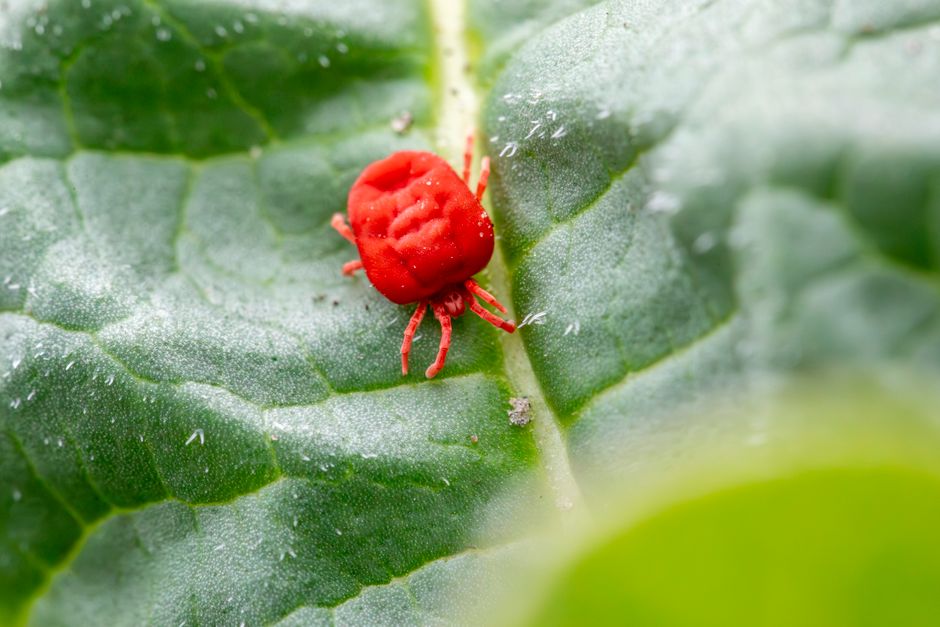
No, dust mites cannot bite. They have no mouthparts built for biting and no stinger. They are tiny arachnids — relatives of spiders and ticks — that feed on flakes of dead skin. The itchy, red skin and sneezing people blame on “bites” come from an allergic reaction to proteins in the mites’ waste and body fragments, not from any wound.
That distinction matters. It changes what will actually help. Bug sprays, bite creams, and sting remedies do nothing useful against dust mites. Reducing exposure and treating the allergy itself are the approaches with real evidence behind them.
What Are Dust Mites and Why Do People Think They Bite?
Dust mites are microscopic. You cannot see them without magnification, and they do not seek out human skin to feed on. They live in soft furnishings — mattresses, pillows, bedding, carpets, upholstered furniture — where they feed on shed skin cells and thrive in warm, humid conditions.
The confusion is understandable. A cluster of itchy red bumps on the skin looks like insect bites. People wake up with a rash and assume something bit them in bed. But the reaction is allergic, not mechanical. The immune system is responding to proteins in mite droppings and shed fragments that contact the skin or get inhaled.
There is a practical detail worth knowing. Dust mites do not drink water. They absorb moisture from the air, which is why indoor humidity is such a strong factor in whether they survive and multiply. In dry climates and well-ventilated homes, mite populations are naturally lower.
One more point of clarification: dust mites are not bedbugs. Bedbugs are visible insects that do bite and leave distinct marks. If you can see the creature, it is not a dust mite.
What Do Dust Mite “Bites” Actually Look Like?
There are no dust mite bites to look at. What people describe as bites is usually one of two things: an allergic skin reaction or an eczema flare triggered by mite exposure.
On the skin, the allergic response can appear as:
- Small red bumps or a patchy rash
- Itching that worsens at night or after contact with bedding
- Dry, irritated skin, sometimes with small raised areas
- Flare-ups in skin creases or areas in prolonged contact with fabric
These skin findings are consistent with atopic dermatitis (the most common form of eczema) aggravated by dust mite allergens. Research has found that dust mite allergy is common among people with atopic dermatitis, and that sensitivity to mite allergens can worsen the condition in some of them. That is a well-supported association, though not every person with eczema reacts to mites.
Respiratory symptoms are often part of the same picture — sneezing, a runny or blocked nose, and itchy, watery eyes. Some people with asthma notice wheezing or chest tightness in dusty rooms or after sleeping. These are allergy and asthma symptoms, not bite reactions.
How Can You Tell a Dust Mite Reaction From a Real Bug Bite?
The pattern of symptoms is the clearest clue. Real bites from insects like bedbugs or mosquitoes typically leave a distinct mark at the point of contact, often in a line or cluster, and appear within a fairly predictable window after exposure. Dust mite reactions tend to be more diffuse — general itching, rash in areas that contact bedding, and symptoms that build over time with repeated exposure rather than appearing suddenly after a single event.
Timing helps too. Allergic symptoms from dust mites are usually worst indoors, especially in the bedroom, and often after lying in bed or waking up. They tend to ease when you are away from the home for a while. Bites from bedbugs can also occur at night, so timing alone is not definitive.
If you are unsure, a clinician can help. Allergy testing — either a skin prick test or a blood test for specific antibodies — can show whether you are sensitized to dust mites. That is more reliable than trying to judge from the appearance of a rash.
Why Do Dust Mites Cause So Many Symptoms Without Biting?
The reaction is driven by the immune system. When someone is allergic to dust mites, their body treats certain mite proteins as a threat. These proteins are found mainly in mite waste particles and shed body fragments.
When those particles are inhaled or contact the skin, the immune system releases chemicals, including histamine, that cause itching, swelling, mucus production, and airway irritation. This is the same basic mechanism behind many environmental allergies, such as pollen or pet dander. The mite itself is harmless. The immune response is what causes trouble.
Because the particles are tiny and lightweight, they become airborne easily when bedding is disturbed — making the bed, fluffing pillows, vacuuming. That is why symptoms can spike during cleaning or right after getting into bed.
How Do You Reduce Dust Mite Exposure at Home?
Reducing exposure is the main practical step, and some measures have better support than others. The strongest evidence is behind physical barriers and moisture control, not sprays or devices.
Measures with reasonable support:
- Allergen-impermeable covers for mattresses, pillows, and duvets — these create a barrier between you and the mites inside
- Washing bedding in hot water on a regular schedule; hot water kills mites and removes allergens
- Keeping indoor humidity lower, since mites depend on moisture from the air
- Regular vacuuming with a machine that has a good filter, and damp-dusting surfaces
- Reducing soft clutter — excess cushions, fabric throws, and carpets where possible
Some popular products have weaker evidence. Studies on chemical acaricides (substances designed to kill mites) and on air filtration have produced mixed results, and no approach has been shown to reliably eliminate mites from a home. Complete elimination is not realistic.
For people with confirmed dust mite allergy and persistent symptoms, allergy treatment — including antihistamines, nasal steroid sprays for nasal symptoms, or allergen immunotherapy in some cases — is often part of the plan. These are decisions to make with a clinician, not something to self-prescribe based on a suspected reaction.
When Should You See a Doctor?
See a clinician if you have a persistent rash, ongoing nasal or eye symptoms, or any breathing difficulty. Breathing problems in particular deserve prompt attention, especially if you have asthma or notice wheezing, chest tightness, or shortness of breath.
Also seek advice if over-the-counter treatments are not controlling your symptoms, or if you are unsure whether your skin reaction is allergic or something else. Skin conditions can look alike, and a rash that does not improve, spreads, or comes with fever or signs of infection should be checked rather than assumed to be an allergy.
Frequently Asked Questions
Can dust mites bite humans?
No. Dust mites have no biting mouthparts and cannot bite or sting people. The itching and rash people notice is an allergic reaction to mite proteins, not a bite.
What do dust mite bites look like?
There is no such thing as a dust mite bite, so there is no bite mark to identify. What people call “dust mite bites” is usually an allergic skin reaction or an eczema flare, appearing as itchy red bumps or irritated patches.
How do you get rid of dust mites in your bed?
Use allergen-impermeable mattress and pillow covers, wash bedding regularly in hot water, and keep indoor humidity lower. These measures reduce exposure, but completely removing dust mites from a home is not realistic.
Can dust mites live on your skin?
No. Dust mites live in soft furnishings like bedding and carpets, not on human skin. A different microscopic mite can live on skin and cause a condition called scabies, but that is not the same organism as the dust mite.
