
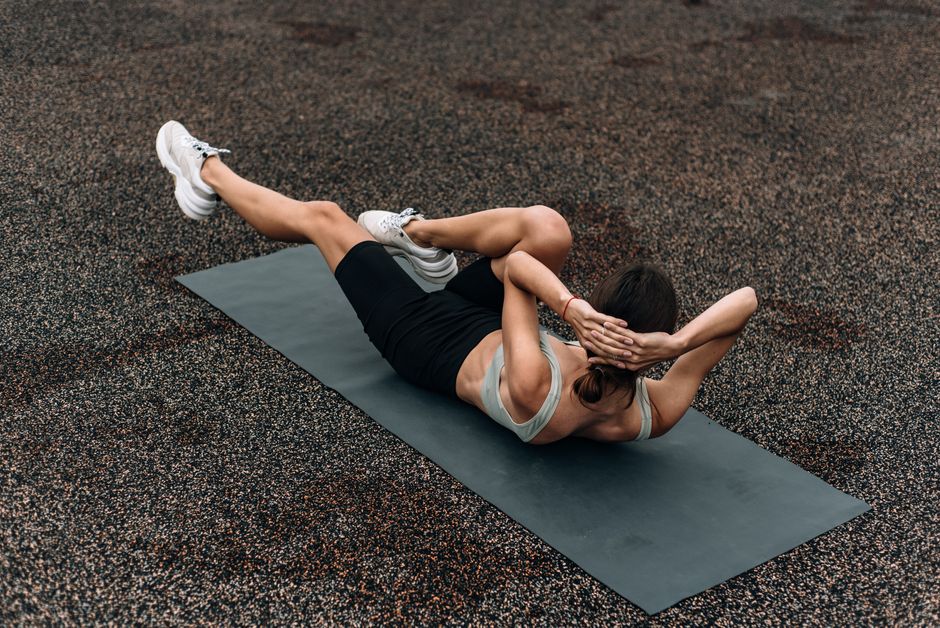
Spot reduction is one of the most persistent myths in fitness. The idea that exercising a specific body part will burn the fat sitting on top of it feels logical. But the body does not work that way.
Crunches cannot reduce belly fat. Doing them will strengthen the abdominal muscles underneath, but the fat layer covering those muscles will not shrink just because you are working the area. Fat loss happens system-wide, driven mostly by a calorie deficit, not by which muscle you happen to be contracting.
That does not make crunches useless. It just makes them the wrong tool for the job people usually hire them for.
Why Can’t You Target Fat on Your Belly?
Your body stores fat in adipose tissue, and it releases that fat through a process controlled by hormones and the nervous system, not by your workout choices. When you need energy, hormones signal fat cells throughout the body to break down stored triglycerides and release them into the bloodstream. Muscles then use that circulating energy.
This process is systemic. The fat burned during a crunch might come from your thigh, your back, or your face. Where it comes from is largely determined by genetics, sex, age, and hormones — not by which muscle is working.
Researchers have tested this directly. Studies that put people through targeted resistance training for one limb or one area generally find that the trained muscle gets stronger but the fat directly over it does not disappear preferentially. Some research suggests a small local effect may exist in certain conditions, but the effect is minor and not reliable. It is not something to build a plan around.
What Do Crunches Actually Do?
Crunches build the rectus abdominis, the muscle running down the front of your torso. That is a real benefit. A stronger core supports your spine, helps with posture, and contributes to everyday movements like bending, lifting, and twisting.
What crunches do not do is change the layer of fat sitting over that muscle. You can have a very strong rectus abdominis and still have a soft belly, because the two things are independent. Strength is about muscle. Visibility is about body fat percentage.
This is the part people miss. When someone says they want “abs,” they usually mean they want to see the muscle. Seeing it requires lowering the fat layer covering it. That is a nutrition and overall energy balance question far more than an exercise selection question.
Does Belly Fat Respond Differently Than Other Fat?
Belly fat is not one thing. There are two main types, and they behave differently.
- Subcutaneous fat sits just under the skin. It is the fat you can pinch. It is common and generally not considered the most metabolically harmful type.
- Visceral fat sits deeper, wrapped around the organs in the abdomen. It is linked to higher risk of heart disease, type 2 diabetes, and other metabolic conditions.
Visceral fat tends to respond well to overall fat loss. When people lose weight through diet and exercise, visceral fat often decreases. This is good news, because it is the type most tied to health risk. But the key phrase is overall fat loss. Crunches alone do not drive that.
Some people carry more belly fat because of genetics, hormones, or age. Menopause, for example, is associated with a shift toward more abdominal fat storage in women. These are real physiological factors, not personal failures.
What Actually Reduces Belly Fat?
A sustained calorie deficit is the foundation. Your body burns stored fat when it consistently uses more energy than it takes in. How you create that deficit matters less than whether you can maintain it.
Exercise helps, but not in the way most people expect. Aerobic activity burns calories and improves cardiovascular health. Resistance training helps preserve and build muscle, which supports your metabolism over time. Neither one lets you choose where the fat comes off.
Sleep and stress matter more than most people realize. Poor sleep and chronic stress are associated with hormonal changes that can promote abdominal fat storage and make fat loss harder. This is not a motivational talking point. It reflects measurable effects on hormones like cortisol and insulin.
Alcohol is another factor. Regular heavy drinking is linked to increased abdominal fat in some people. Cutting back is a reasonable step for anyone trying to reduce belly fat.
The honest summary: belly fat comes off when your whole body loses fat. There is no exercise that shortcuts that.
Should You Stop Doing Crunches?
No. Crunches are a reasonable way to train the abdominal muscles, and a strong core has value. But they should be one small part of a broader plan, not the centerpiece of a fat-loss strategy.
If your goal is a flatter stomach, the priorities look like this:
- Create a consistent calorie deficit through diet
- Include regular aerobic exercise
- Do resistance training to maintain muscle mass
- Get adequate sleep and manage stress
- Limit alcohol
Core work like crunches can sit alongside these, but it will not move the needle on fat loss on its own. Treating it as the main solution is why so many people do hundreds of crunches and see no change in their waistline.
One more note: crunches are not the only or necessarily the best core exercise. Planks, dead bugs, and other movements train the core with less repeated spinal flexion. Some clinicians and trainers prefer these because repetitive flexion may aggravate the lower back in certain people. If you have back pain, it is worth talking to a qualified professional about which core exercises suit you.
Can You Lose Belly Fat Without Exercise?
Yes, in principle. Fat loss is driven primarily by energy balance. A calorie deficit created through diet alone will reduce overall body fat, including belly fat. Exercise adds health benefits and helps preserve muscle, but it is not strictly required for fat loss.
That said, losing weight without any resistance training tends to mean losing some muscle along with fat. That can slow your metabolism over time and change your body composition in ways you may not want. Combining a calorie deficit with resistance training generally produces a better result than diet alone.
There is no food, supplement, or tea that specifically burns belly fat. Products marketed that way are not supported by reliable evidence. If a claim sounds like it targets belly fat specifically, that is usually a sign to be skeptical.
The Bottom Line on Spot Reduction
Spot reduction does not work. This is one of the more consistent findings in exercise science. You cannot choose where your body takes fat from by choosing which muscle to work.
Crunches strengthen your abs. They do not melt the fat over them. If your goal is a leaner midsection, the levers that matter are overall calorie balance, activity, sleep, stress, and alcohol — not the number of crunches you can do.
That is a less satisfying answer than “do this one move.” It also happens to be the accurate one.
Frequently Asked Questions
Can crunches reduce belly fat?
No. Crunches strengthen the abdominal muscles but do not preferentially burn the fat covering them, because fat loss happens throughout the body rather than at the site being exercised.
What is the fastest way to lose belly fat?
There is no fast, targeted method. A sustained calorie deficit combined with regular exercise, adequate sleep, and limited alcohol is the approach most consistently linked to reduced belly fat.
Do I need to do cardio or weights to lose belly fat?
Either can help, but neither targets belly fat specifically. A calorie deficit drives the fat loss, while resistance training helps preserve muscle and aerobic exercise supports heart health.
Why do I have belly fat even though I exercise?
Exercise alone often does not create enough of a calorie deficit to reduce fat. Genetics, hormones, age, sleep, stress, and alcohol intake can all affect where your body stores fat.
