
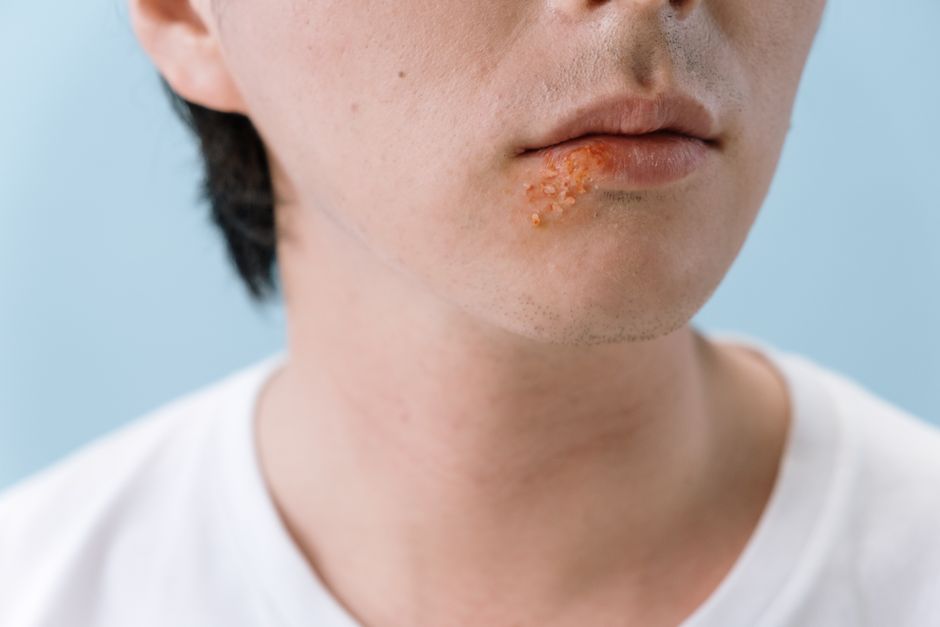
Yes, cold sores can appear inside the mouth, but this is uncommon. Cold sores are caused by the herpes simplex virus, usually type 1 (HSV-1). The virus most often shows up on the outer lip, the edge of the lip, or the skin around the mouth. When it does occur inside the mouth, it typically affects the hard palate (the roof of the mouth) or the gums. True cold sores on the soft, wet inner lining of the lips and cheeks are rare, and sores in those spots usually have another cause.
Can Cold Sores Be Inside The Mouth?
They can, but the location matters more than most people realize. The inside of the mouth has two very different surfaces. The hard palate and the gums are covered by keratinized tissue, a tougher layer similar to skin. HSV-1 can infect that tissue and cause a cold sore there.
The soft inner lining of the cheeks, the underside of the tongue, and the loose tissue inside the lips are different. They are not keratinized. Cold sores rarely form on these surfaces. When a person has sores in those soft areas, the cause is more often something else, such as canker sores, hand-foot-and-mouth disease, or a reaction to food or medication.
This distinction is the single most useful thing to understand about cold sores inside the mouth. Location is a strong clue to what is actually going on.
What Does a Cold Sore Inside the Mouth Look Like?
A cold sore inside the mouth usually starts as a small cluster of tiny fluid-filled blisters. They tend to sit on the hard palate or the gums, not on the soft, movable lining.
The blisters break open quickly. That leaves shallow, round sores with a grayish base and a red border. They can be painful, especially when eating or drinking. Many people notice a tingling or burning feeling in the spot before anything is visible.
Cold sores on the hard palate are often mistaken for other problems. A common one is a pizza burn or a scrape from a sharp chip. The difference is that a cold sore tends to come with that early tingling, and it may be joined by sores on the outside of the lip at the same time.
How Do You Tell a Cold Sore from a Canker Sore?
Canker sores are the most common reason people think they have a cold sore inside the mouth. The two look somewhat alike but behave differently. Canker sores are not caused by a virus and are not contagious.
| Feature | Cold Sore (HSV-1) | Canker Sore |
|---|---|---|
| Usual location | Outer lip, edge of lip, hard palate, gums | Soft inner cheek, inner lip, under the tongue |
| Contagious | Yes | No |
| Early warning | Often tingling or burning first | Usually none |
| Appearance | Cluster of blisters that break into shallow sores | Round sore, often white or yellow center with red ring |
| Pattern | Can recur in the same spot | Can recur, often tied to stress or minor injury |
The location rule is the most reliable guide. A sore on the soft, movable lining of the mouth is far more likely to be a canker sore. A sore on the hard palate or gums, especially with tingling beforehand, points more toward HSV-1.
Appearance alone is not a diagnosis. If sores are frequent, severe, or unclear, a clinician can confirm the cause. In some cases that involves a simple swab test.
Why Are Cold Sores Inside the Mouth Less Common?
The virus needs a certain kind of tissue to set up an infection. HSV-1 infects cells in the outer layer of skin and in keratinized tissue like the hard palate and gums. The soft, wet lining inside the mouth is built differently. It is coated in saliva and lacks the tough outer layer the virus prefers.
There is a second reason. Most adults carry HSV-1 already. The body’s immune system keeps it in check most of the time. When the virus reactivates, it usually travels down the nerve to the same patch of skin where it first entered. For most people, that is the outer lip. That is why the same cold sore tends to return in the same spot.
First-time infections are a little different. The first time someone is infected with HSV-1, sores can appear in more places, including inside the mouth. This is most common in young children. Repeat outbreaks are far more likely to stay on the outside of the lip.
What Triggers a Cold Sore Inside the Mouth?
The triggers are the same ones that set off cold sores anywhere. The virus reactivates when the immune system is under strain. Common triggers include:
- Physical or emotional stress
- Fever or another illness
- Sun exposure
- Minor injury to the mouth, such as a scrape or dental work
- Hormonal changes, including around menstruation
- Fatigue and lack of sleep
These triggers are widely reported by people who get cold sores. The exact way each one tips the virus back into activity is not fully understood. What is clear is that the virus lives quietly in nerve cells between outbreaks and reactivates from time to time.
Are Cold Sores Inside the Mouth Contagious?
Yes. A cold sore inside the mouth carries the same virus as one on the lip, and it can be passed to others through direct contact. The virus spreads through saliva and through contact with the sore itself.
This matters most for people who are vulnerable. That includes newborns, people with weakened immune systems, and anyone with severe eczema. HSV-1 can cause serious illness in a newborn. Anyone with an active cold sore should avoid kissing a baby and should not share utensils, cups, or towels with an infant.
The virus can also spread from the mouth to other parts of the body, such as the eye or a finger, through touch. Washing hands after touching a sore is a simple step that reduces this risk.
How Are Cold Sores Inside the Mouth Treated?
Most cold sores heal on their own within about one to two weeks. The body clears the visible sore without treatment. The goal of treatment is to ease discomfort and, in some cases, shorten the outbreak.
For discomfort, cool foods and drinks can help. Avoid acidic, salty, or spicy foods that sting an open sore. Over-the-counter oral pain relievers are commonly used for mouth pain. Some clinicians recommend a rinse of salt water or a numbing gel, though evidence for these is limited and they mainly ease symptoms rather than speed healing.
Antiviral medicines are the main treatment that targets the virus itself. These include acyclovir, valacyclovir, and famciclovir. For cold sores, antivirals work best when started early, ideally at the first tingle. Prescription antivirals are usually reserved for people with frequent or severe outbreaks. Whether an antiviral is right for a cold sore inside the mouth is a decision for a clinician, not something to assume.
No over-the-counter product has been shown to cure cold sores or stop them from coming back. Products marketed for cold sores may ease symptoms, but claims of preventing outbreaks are not supported by strong evidence.
When Should You See a Doctor?
Most cold sores are minor and clear up without medical care. Some situations warrant a professional look.
- Sores that last longer than two weeks
- Sores that are large, spreading, or very painful
- Fever, trouble swallowing, or drooling, especially in a child
- Sores near the eye, which need urgent attention
- Frequent outbreaks that disrupt eating or daily life
- Cold sores in a person with a weakened immune system
A clinician can tell whether a sore inside the mouth is a cold sore or something else. That distinction matters, because the treatment and the risk to others are different.
Can You Prevent Cold Sores Inside the Mouth?
You cannot fully prevent cold sores if you already carry the virus. Most adults do. What you can do is reduce the chance of triggering an outbreak and reduce the chance of passing the virus on.
Managing stress, getting enough sleep, and protecting the lips from strong sun are commonly recommended, though the evidence that these reliably prevent outbreaks is limited. Avoiding close contact with others while a sore is active lowers the chance of spread. Not sharing utensils, lip balm, or towels during an outbreak is a sensible step.
For people with very frequent outbreaks, a clinician may discuss daily antiviral treatment to reduce how often they occur. That is a medical decision based on individual history, not a general recommendation.
Frequently Asked Questions
Can you get a cold sore on the roof of your mouth?
Yes. The roof of the mouth, called the hard palate, is one of the more common spots for a cold sore inside the mouth because its tissue is like skin. Sores on the soft, movable lining of the mouth are rarely cold sores.
How do I know if it’s a cold sore or a canker sore?
Location is the best clue: cold sores favor the outer lip, gums, and hard palate, while canker sores favor the soft inner cheek and inner lip. Canker sores are not contagious and usually have no tingling before they appear.
Are cold sores inside the mouth contagious?
Yes. The virus can spread through saliva and direct contact with the sore, so avoid kissing babies and do not share utensils or towels while a sore is active.
How long do cold sores inside the mouth last?
Most clear up on their own within about one to two weeks. See a clinician if a sore lasts longer than two weeks or comes with fever or trouble swallowing.
