
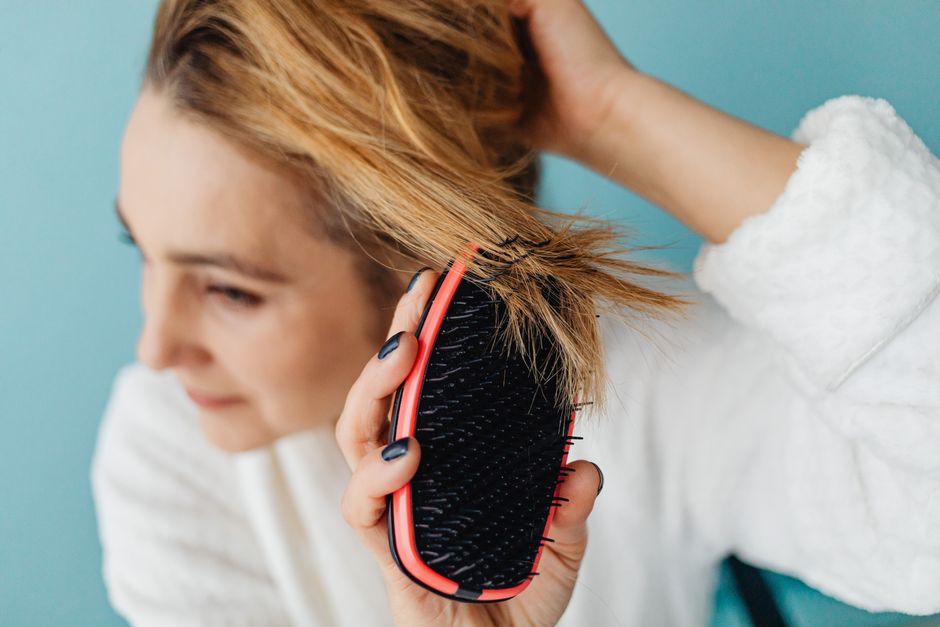
Brushing your hair too much does not cause permanent hair loss, but it can cause hair breakage and damage the hair shaft. Over-brushing can pull out hairs that were already loose, which makes it look like more hair is falling out than is normal. The old advice of brushing 100 strokes a day is outdated and can actually harm your hair over time.
What Does Over-Brushing Actually Do to Your Hair?
Excessive brushing creates friction. Friction weakens the outer layer of the hair, called the cuticle. When the cuticle wears down, the hair becomes dry, brittle, and more likely to snap.
This is breakage, not hair loss. Hair loss happens at the root, inside the scalp. Breakage happens along the length of the hair shaft. Both make hair look thinner, but they are different problems with different causes.
Brushing too hard or too often can also irritate your scalp. Redness, soreness, and small scratches can develop. An irritated scalp is not a healthy environment for hair growth, though this is temporary and resolves once brushing habits improve.
Can Brushing Your Hair Too Much Cause Hair Loss at the Root?
No. Brushing does not damage the hair follicle, which is the living part of the hair under the skin. The follicle is anchored deep in the scalp and cannot be pulled out by a brush.
What you see in the brush after brushing is mostly hair that was already shed. The average person loses 50 to 100 hairs per day as part of the normal hair cycle. Brushing collects these loose hairs and brings them to the surface.
When you brush daily, you see a normal amount of shed hair. When you skip brushing for a day or two, you see more hair in the brush at once. The total amount shed is the same. Brushing only changes when you notice it, not how much is actually falling out.
How Much Brushing Is Too Much?
There is no single number that works for everyone. Hair type, texture, and condition all matter. A good general rule is to brush only as much as needed to detangle and distribute natural oils from the scalp to the ends.
For most people, that means brushing once or twice a day for a few minutes. The “100 strokes” advice from past decades has no scientific support. It increases friction and damage without any benefit to hair growth or scalp health.
Signs you are brushing too much include:
- Hair snapping off when you brush
- Excessive hair in the brush beyond your normal shed amount
- Dry, rough, or frizzy hair that feels worse after brushing
- Scalp tenderness or soreness after brushing
If you notice these signs, reduce how often you brush and how much pressure you use.



Is Brushing Good for Your Hair at All?
Brushing does have benefits when done correctly. It distributes sebum, the natural oil produced by your scalp, down the hair shaft. This can add shine and moisture to the hair.
Brushing also helps remove dirt, product buildup, and loose hairs. It can feel relaxing and stimulate blood flow to the scalp, though there is no strong evidence that this alone improves hair growth.
Some people believe brushing stimulates hair follicles to grow faster. Research does not support this. Hair growth is controlled by hormones, genetics, and overall health — not by physical stimulation from a brush.
What Is the Right Way to Brush Your Hair?
How you brush matters more than how often. Start by detangling with your fingers or a wide-tooth comb before using a brush. Work from the ends upward, holding the section of hair above where you are brushing to reduce tugging on the scalp.
Brush gently. Do not yank through knots. For wet hair, use a wide-tooth comb or a brush designed for wet hair. Wet hair is more fragile and stretches more easily, making it more prone to breakage.
Choose a brush that suits your hair type. Boar bristle brushes are gentle and good for distributing oils. Wide-tooth combs work well for curly or thick hair. Paddle brushes cover more surface area for straight hair. Avoid brushes with sharp plastic bristles that can scratch the scalp.
What Actually Causes Hair Loss?
If you are seeing more hair in your brush than usual, the cause is rarely the brushing itself. Common causes of increased shedding include stress, illness, rapid weight loss, and hormonal changes. These can trigger a temporary condition called telogen effluvium, where many hairs enter the resting phase at once and shed a few months later.
Genetics is the most common cause of permanent hair loss. This is known as androgenetic alopecia, or pattern hair loss. It affects both men and women and is not related to brushing habits.
Other causes include thyroid disorders, iron deficiency, certain medications, and autoimmune conditions. If you notice sudden or patchy hair loss, or if shedding continues for more than a few months, see a doctor. A blood test can check for underlying medical issues.
Does Brushing Help With Hair Growth?
No. Brushing does not make hair grow faster or thicker. Hair growth rate is determined by genetics and health, not by brushing.
What brushing can do is make hair look healthier by smoothing the cuticle and distributing oils. Healthier-looking hair is less prone to breakage, which means it can retain length better over time. This is not the same as stimulating new growth, but it can help hair look fuller.
Some scalp massage devices and brushes claim to stimulate hair follicles. The evidence for these claims is limited. Some small studies suggest scalp massage may be associated with thicker hair, but larger, well-controlled trials have not confirmed this. Treat these claims with caution.
How to Tell the Difference Between Breakage and Hair Loss
Breakage and hair loss look different. Breakage produces short pieces of hair of varying lengths. The ends may look frayed or split. Hair loss from the root produces hairs with a small white bulb at the end, which is the root sheath.
If you see mostly short pieces in your brush, you are dealing with breakage. Reducing brushing frequency and pressure, using conditioner, and avoiding heat styling can help.
If you see hairs with white bulbs, that is normal shedding. If the volume is much higher than your usual amount, or if you notice thinning patches, that warrants a medical evaluation.
What Are the Best Alternatives to Brushing?
For detangling, a wide-tooth comb is gentler than a brush. It separates hair without pulling on knots as aggressively. Use it on damp hair with conditioner for the easiest detangling.
Your fingers are also a valid tool. Gently working through tangles with your hands causes the least damage. This works especially well for curly or coily hair, which is more fragile and prone to breakage.
For distributing oils, you can use your hands or a soft bristle brush. Focus on the scalp area and let the natural oils spread naturally. You do not need to brush the full length of your hair to get this benefit.
Frequently Asked Questions
Can brushing your hair too much cause permanent hair loss?
No. Brushing cannot damage the hair follicle, so it cannot cause permanent hair loss. It can cause breakage and damage to the hair shaft, which makes hair look thinner but is reversible.
How many times a day should you brush your hair?
Most people only need to brush once or twice a day for a few minutes to detangle and distribute oils. The old advice of 100 strokes a day is not supported by evidence and can increase damage.
Does brushing your hair 100 times a day make it grow faster?
No. Brushing does not stimulate hair growth. Hair growth is controlled by genetics, hormones, and overall health. Brushing only helps distribute natural oils and smooth the hair surface.
Why is there so much hair in my brush after brushing?
That is mostly hair you already shed during the day. The average person loses 50 to 100 hairs daily as part of the normal hair cycle. Brushing simply collects these loose hairs.
