
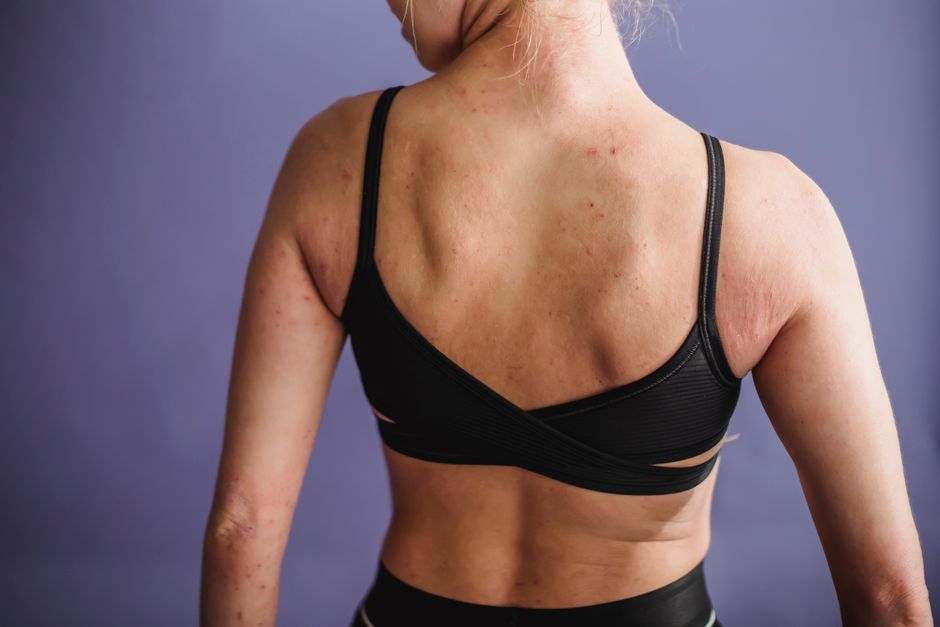
A bra can absolutely cause a skin rash. The friction of fabric, trapped moisture, heat, and contact with specific materials or laundry products are common triggers. For many women, the rash is a form of contact dermatitis or a heat rash that clears up once the irritant is removed. However, a persistent or painful rash can also signal an infection, which requires a different approach to treatment.
What Does a Bra-Related Rash Look Like?
A rash from a bra can look different depending on the cause. The most common appearance is red, irritated skin that mirrors the shape of the bra band, straps, or underwire. The skin may feel itchy, tender, or burn slightly.
With heat rash, you might see tiny red bumps or clear fluid-filled blisters. This happens when sweat ducts become blocked and trap sweat beneath the skin. It commonly appears under the breasts and along the band line where fabric sits tightest.
If the rash involves cracked, oozing, or scaly patches, it may be something more than simple irritation. A yeast infection, for example, often produces a bright red rash with small satellite bumps at the edges. It thrives in warm, moist areas and is common under the breasts.
What Causes a Rash From Wearing a Bra?
Several distinct mechanisms can cause a bra-related rash. Understanding the cause matters because treatment differs for each one.
Friction and Pressure
Constant rubbing of fabric against skin breaks down the outer layer of the epidermis. This is mechanical irritation. It is most likely to happen with ill-fitting bras, new bras that have not been broken in, or bras with rough seams and tags. The friction damages the skin barrier, leading to redness, soreness, and sometimes chafing that feels like a burn.
Contact Dermatitis
Contact dermatitis is an immune reaction or direct irritation from something the fabric touches your skin. The most common culprits are:
- Laundry detergents and fabric softeners left on the fabric
- Latex or elastic in the band and straps
- Nickel in metal clasps or underwire
- Dyes used to color the fabric
- Formaldehyde resins used to make fabrics wrinkle-resistant
Allergic contact dermatitis typically appears 24 to 48 hours after exposure. The rash is often intensely itchy and may blister. Irritant contact dermatitis, by contrast, tends to sting or burn more than itch.
Heat and Moisture
Bras trap heat and sweat against the skin, especially in warm weather or during exercise. This creates the perfect environment for blocked sweat ducts and for microorganisms to multiply. The skin under the breasts is naturally warm and often folded, which makes it vulnerable to moisture-related rashes.
Microbial Overgrowth
When sweat and dead skin cells accumulate, yeast and bacteria can overgrow. Candida, a yeast that normally lives on skin in small amounts, can cause a fungal infection when conditions become warm and damp. This produces a characteristic rash that is red, itchy, and sometimes has a distinct border.
Bacterial infections can also develop, particularly if the skin is already broken from scratching or friction. These may produce pus, crusting, or significant pain.
How to Tell the Difference Between Irritation and Infection
Distinguishing a simple irritation from an infection is important because the treatments are different. An irritation rash responds to removing the trigger and letting the skin heal. An infection requires an antifungal or antibacterial treatment.
Signs that point toward a yeast infection include a bright red rash with well-defined edges, intense itching, and small red bumps just outside the main rash area. The rash often sits symmetrically under both breasts.
Signs that point toward a bacterial infection include pain out of proportion to the appearance of the rash, warmth in the area, pus, swelling, or red streaks extending from the rash. A fever alongside a skin rash is a red flag that requires prompt medical attention.
If you are not certain what type of rash you have, see a healthcare provider. They can examine the skin and, if needed, take a small sample to identify the organism.


How to Prevent a Bra Rash
Prevention focuses on reducing friction, moisture, and exposure to irritants. These steps are straightforward and effective for most people.
- Get fitted properly. Many women wear the wrong bra size. A band that is too tight increases friction and blocks sweat evaporation. A band that is too loose allows the bra to move and rub against the skin.
- Choose breathable fabrics. Cotton and moisture-wicking synthetic fabrics allow air circulation and pull sweat away from the skin. Avoid non-breathable materials like some polyesters and nylon for everyday wear.
- Wash new bras before wearing them. This removes excess dyes and finishing chemicals that can irritate skin.
- Use fragrance-free laundry products. Fragrances and dyes in detergents and fabric softeners are common contact allergens. Double-rinsing can help remove detergent residue.
- Keep the area dry. After showering or exercising, dry thoroughly under the breasts. Some women find that applying a gentle, fragrance-free powder helps absorb moisture during the day.
- Remove your bra promptly after exercise. Do not sit in a sweaty bra. Change into dry clothing as soon as possible.
- Alternate bras. Wearing the same bra every day does not give the fabric time to fully dry between uses. Rotating between two or three bras helps.
How to Treat a Bra Rash at Home
For a mild rash that appears to be simple irritation, home care is usually sufficient. The first step is to stop wearing the bra that triggered the rash until the skin heals. This may take several days.
Wash the area gently with mild, fragrance-free soap and lukewarm water. Pat the skin dry rather than rubbing it. Applying a barrier cream containing zinc oxide can protect the skin from further moisture and friction.
For itching, a low-potency hydrocortisone cream can reduce inflammation. Use it sparingly and only for a few days. Prolonged use of hydrocortisone can thin the skin.
If you suspect a yeast infection, over-the-counter antifungal creams containing clotrimazole or miconazole are available. Apply the cream as directed on the package, typically twice daily for one to two weeks. Continue using it for a few days after the rash clears to prevent recurrence.
Do not use hydrocortisone and an antifungal together unless a healthcare provider has instructed you to. Steroids can suppress the immune response in the skin, which may allow a fungal infection to spread.
See a healthcare provider if the rash does not improve within one week of home treatment, if it worsens, or if you develop signs of a bacterial infection such as pus, increasing pain, or red streaks.
When a Bra Rash Is Not Just a Rash
Most bra-related rashes are benign and resolve with simple measures. But some skin changes under the breast warrant more attention.
A rash that does not respond to treatment, keeps returning in the same spot, or is accompanied by a lump or thickening of the skin should be evaluated by a doctor. Inflammatory breast cancer is a rare form of breast cancer that can present with redness, swelling, and skin changes that resemble an infection. It does not typically cause a rash from a specific bra, but persistent unexplained redness of the breast should never be dismissed.
Similarly, a rash that appears only on one breast while the other breast is completely clear deserves a closer look. Most irritant and fungal rashes affect both sides because both breasts are exposed to the same bra.
This is not meant to cause alarm. The vast majority of rashes under the breasts are irritation, heat rash, or yeast. But knowing the warning signs helps you decide when to seek medical advice rather than continuing home treatment.
Frequently Asked Questions
Can an underwire bra cause a rash?
Yes. Underwire can press and rub against the skin, causing friction irritation, and the metal may contain nickel, which is a common allergen. If the rash follows the exact line of the underwire, contact with the metal or pressure from the wire is the likely cause.
How long does a bra rash take to heal?
A simple irritation rash typically improves within a few days once the irritant is removed. A yeast infection may take one to two weeks of consistent antifungal treatment to fully clear.
Should I stop wearing a bra if I have a rash?
Yes, until the rash improves. Going braless or wearing a loose cotton camisole allows the skin to breathe and reduces friction and moisture.
Can a bra rash be a sign of breast cancer?
Rarely. Most bra rashes are irritation, heat rash, or infection. However, persistent redness, swelling, or skin changes on one breast that do not improve with treatment should be evaluated by a healthcare provider.
