
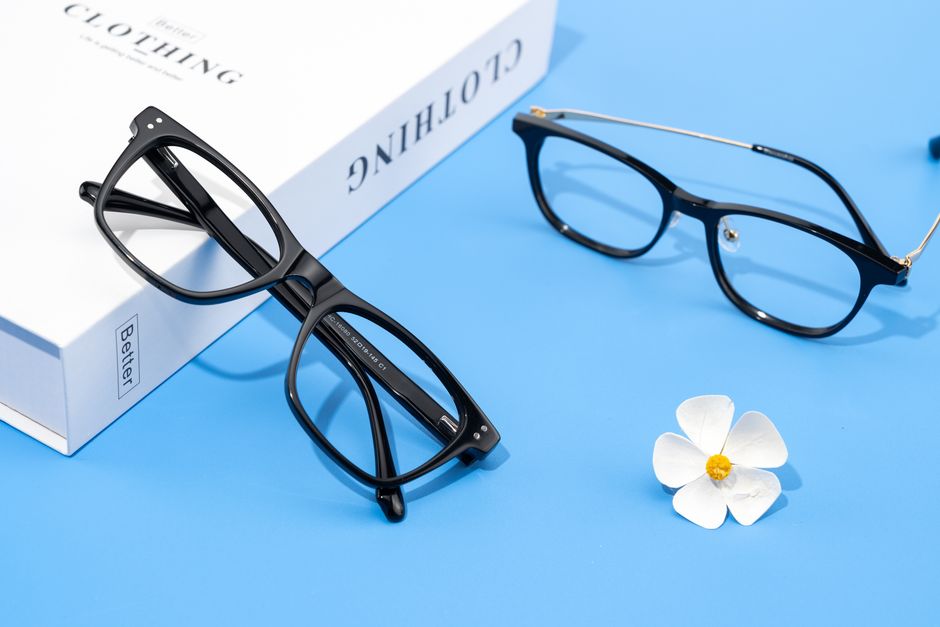
No, blue light glasses do not damage your eyes. There is no evidence that the lenses themselves cause harm, and no evidence that blocking blue light from screens is necessary for eye health. The bigger concern with blue light glasses is not damage — it is wasted money on a product that has not been shown to do much of anything.
That answer surprises people. Blue light gets talked about as if it were a toxin coming out of your laptop. It is not. It is a normal part of sunlight, and your eyes have been handling it for as long as humans have existed. What matters is the dose, the timing, and what you are actually trying to fix.
What is blue light and why does it get blamed for eye problems?
Blue light is simply light at the short-wavelength end of the visible spectrum, roughly 380 to 500 nanometers. The sun is by far your biggest source. Screens emit some, but at levels far below what you get standing outside on an overcast day, let alone a sunny one.
The concern started with a reasonable observation. Blue light is high-energy compared with red or green light. In laboratory experiments, intense blue light can damage retinal cells. That finding got repeated in headlines without the crucial context — the exposures used in those experiments were far higher than anything a screen produces, and often applied directly to cells in a dish.
There is one real, well-documented effect of blue light on the eye, and it has nothing to do with the retina. Blue light scatters more than longer wavelengths, which is part of why the sky looks blue. In your eye, that scattering can reduce contrast and contribute to visual fatigue during long screen sessions. That is a comfort issue, not a damage issue.
Can blue light glasses damage your eyes?
No. The lenses are passive filters. They block a portion of blue light and transmit the rest. There is no known mechanism by which wearing them would injure the eye, and no clinical reports of harm from ordinary use.
The more honest question is whether they do anything useful. On that, the evidence is weak. A systematic review published in the Cochrane Database of Systematic Reviews examined blue-light-filtering lenses for reducing eye strain from computer use and found little to no short-term benefit compared with clear lenses. That is a careful, well-regarded review, and it did not support the marketing claims.
One clarification worth making: blue light glasses and blue light filters on screens are not the same thing. Screen filters change the color output of the display. Glasses filter light entering your eye. Neither has strong evidence behind it for preventing eye disease.
Do blue light glasses help with eye strain from screens?
Probably not much. The discomfort people describe after long screen use — burning, aching, watering, a feeling of grit — is usually called digital eye strain, and blue light is not its main driver.
The dominant cause is that people blink less when looking at screens. Blinking spreads tears across the surface of the eye. When blink rate drops, the tear film breaks up and the surface dries out. That is what produces most of the burning and grittiness.
Other contributors include:
- Holding a screen closer than you would hold a book, which increases focusing effort
- Poor lighting that creates glare or forces your pupils to work harder
- Uncorrected vision problems that make the eyes strain to compensate
- Long stretches without looking away at anything distant
Fix those and most people notice real improvement. Buy tinted lenses and change nothing else, and you probably will not. This is the part the marketing skips.




Does blue light from screens damage the retina?
No evidence supports this at screen levels. The retina can be damaged by intense blue light — that is established — but the intensity matters enormously. The American Academy of Ophthalmology has stated that there is no evidence that blue light from digital devices damages the retina.
To put the dose in perspective, a person would need to stare at a bright screen for an extremely long time to approach the light exposure of simply being outdoors on a sunny day. Sunlight contains blue light too, in far greater amounts.
There is a separate and more interesting line of research about blue light and the eye that does not involve screens at all. Some studies suggest that time outdoors during childhood is associated with lower rates of myopia progression. The mechanism is not settled, and blue light may or may not be part of it. That is a genuinely open question, and it is not a reason to buy glasses for a child.
Do blue light glasses help you sleep?
This is the one area where the logic is strongest, and even here the evidence is mixed. Blue light exposure in the evening can suppress melatonin, the hormone that helps regulate the sleep-wake cycle. That effect is real and well documented.
But suppressing melatonin and disrupting sleep are not identical. Studies on blue light glasses for sleep have produced inconsistent results. Some show modest improvement in sleep quality or sleep onset; others show little difference. The evidence is not strong enough to call this a reliable treatment for insomnia.
If evening screen use is affecting your sleep, the more reliable levers are straightforward. Dim the screen. Reduce overall brightness in the room. Stop using screens for a stretch before bed. Get bright light in the morning, which helps anchor your body clock. Those steps have better support than a pair of tinted lenses.
Is there any harm in wearing blue light glasses?
Not to the eye. The main risks are indirect. Spending money on lenses that do not address the actual problem is one. Missing a real diagnosis is another.
Persistent eye pain, sudden vision changes, flashes of light, a curtain over part of your vision, or redness with discharge are not screen strain. Those need a clinician, not a new pair of glasses. Some eye conditions are treatable when caught early and harder to manage later.
There is also a practical downside worth mentioning. Blue light during the day helps regulate your circadian rhythm and keeps you alert. Wearing strong blue-blocking lenses all day, indoors and out, works against that. If you use them at all, evening use makes more biological sense than round-the-clock use.
What actually helps with screen-related eye discomfort?
Addressing the real causes works better than filtering light. The steps below are widely recommended by eye care clinicians and rest on well-understood physiology rather than marketing.
- Blink deliberately during screen work, and take brief breaks to look at something far away
- Position the screen roughly an arm’s length away and slightly below eye level
- Reduce glare from windows and overhead lights
- Use lubricating eye drops if dryness is the main symptom — ask a pharmacist which type suits you
- Get a vision check if strain is persistent, since uncorrected refractive error is a common and fixable cause
None of this is dramatic. It also costs far less than a pair of blue light glasses, and it targets what is actually going wrong.
Frequently Asked Questions
Can blue light glasses damage your eyes?
No. The lenses filter light and have no known mechanism for injuring the eye. The concern is that they may not help much, not that they cause harm.
Do blue light glasses actually work?
The evidence is weak for eye strain and mixed for sleep. A Cochrane review found little to no short-term benefit for computer-related eye strain compared with clear lenses.
Is blue light from screens bad for your eyes?
At screen levels, no evidence shows it damages the retina. The American Academy of Ophthalmology has stated that blue light from digital devices does not damage the retina.
Should I wear blue light glasses at night?
Evening use makes more biological sense than all-day use, since blue light at night can suppress melatonin. The evidence that this improves sleep is mixed, so it is a reasonable option rather than a proven fix.
