
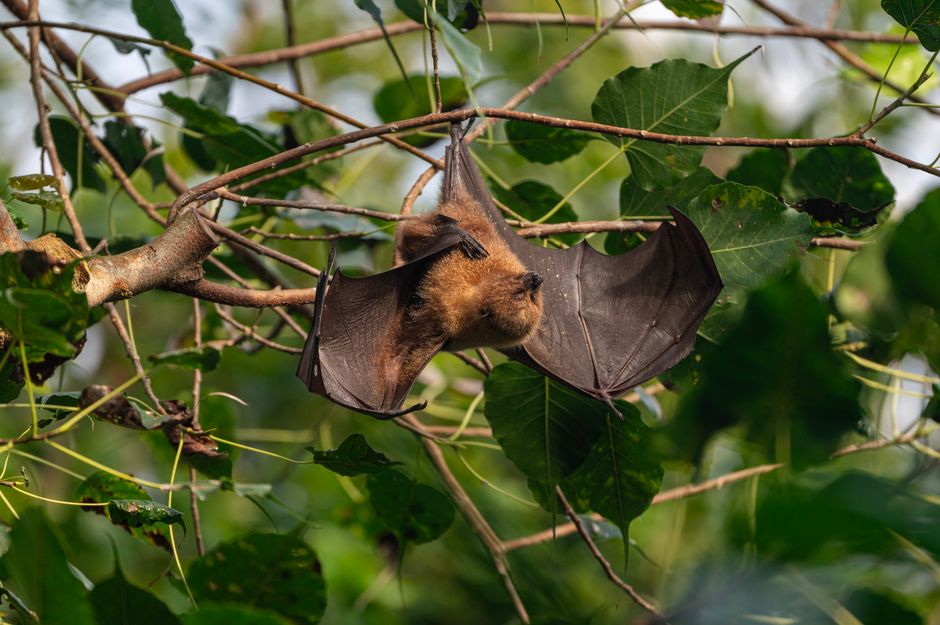
Rabies can only be spread through saliva or brain tissue from an infected animal getting into a person’s body. A bat cannot transmit rabies by flying past you, by touching you with its wings, or through guano (bat droppings). The virus does not survive in the environment or travel through air. The real risk comes from a bite or scratch you may not notice, because bat teeth and claws are tiny and a bat’s bite can leave marks too small to see.
That last point is why health officials treat any direct contact with a bat seriously. If you wake up with a bat in your room, find one in a child’s bedroom, or touch a bat with bare hands, the standard guidance is to get the bat tested and talk to a health care provider the same day. Rabies is nearly always fatal once symptoms start, but it is preventable with prompt treatment. The gap between “preventable” and “fatal” is measured in hours and days, not weeks.
How Is Rabies Actually Transmitted?
Rabies is caused by a virus that travels along nerves toward the brain. For a person to be infected, virus-laden saliva or nervous tissue has to get past the skin barrier. That means a bite, a scratch that breaks the skin, or saliva contacting an open wound or a mucous membrane like the eyes, nose, or mouth.
The virus does not spread through the air under normal circumstances. It also does not pass through intact skin. This is why a bat flying overhead or roosting in an attic is not, by itself, a rabies exposure. The virus is fragile outside the body and does not linger on surfaces in a way that creates a realistic risk.
One important exception exists, and it comes from a specific setting: caves with very large bat colonies. There are documented cases, including among researchers and cave explorers, of rabies exposure from breathing air in these environments. This is rare and tied to extreme concentrations of bats in enclosed spaces. It does not apply to a single bat in a house or a bat flying outdoors.
Can Bats Spread Rabies Without Biting The Real Risk?
The phrase “without biting” is where most confusion starts. In practice, the risk is not that a bat transmits rabies with no contact at all. The risk is that a bite or scratch happens without the person realizing it. A bat’s teeth are small enough that a bite can leave no obvious wound. Someone who is asleep, intoxicated, or cognitively impaired may not feel or remember a bite at all.
This is not a theoretical worry. Public health guidance in the United States specifically addresses situations where a bat is found in a room with a sleeping person, an unattended child, or someone who cannot reliably report what happened. In those cases, the bat should be captured safely for testing if possible, and a health care provider should be consulted even if no bite is visible.
So the accurate answer is this: bats do not spread rabies through the air, through droppings, or by proximity. They spread it through saliva entering a wound. The genuine risk is unrecognized contact, not airborne transmission.
Why Are Bat Bites So Easy to Miss?
Bat bites are often painless and tiny. People frequently describe feeling nothing at all. A bite mark may look like a small scratch or may not be visible to the naked eye. This is why “I didn’t feel anything” is not a reliable way to rule out exposure.
The situation that raises the most concern is waking up to find a bat in your bedroom. You cannot know whether contact occurred while you slept. The same applies to a bat found near a young child or someone who has been drinking or has a condition affecting awareness.
If a bat is present in these circumstances, do not release it outside. It may need to be tested. Contact local animal control or your health department for guidance on safe capture. Testing the bat can spare you an unnecessary course of treatment, or confirm that treatment is needed.





What Should You Do After Contact With a Bat?
Wash the area thoroughly with soap and water right away. This simple step is recommended for any animal bite or scratch and helps reduce risk. Then seek medical advice promptly, ideally the same day.
Post-exposure treatment for rabies is highly effective when started before symptoms appear. It typically involves a dose of rabies immune globulin and a series of rabies vaccines given over several days. The exact schedule is set by current clinical guidance, which your provider will follow. Treatment is not something to delay while you decide.
Never handle a bat with bare hands. If you must move one, use thick gloves or a tool, and only if it is safe to do so. A bat on the ground during daylight is more likely to be sick and should be left to animal control.
How Common Is Rabies in Bats?
Most bats do not carry rabies. Studies of wild bat populations generally find the virus in a small minority of animals. However, because bats are widespread and contact with them happens, they remain one of the most commonly reported sources of rabies exposure in the United States.
A bat that is acting strangely is a warning sign. Bats seen flying during the day, lying on the ground, or unable to fly are more likely to be sick. A healthy bat avoids people. Any bat that lets you approach it closely should be treated with caution.
It is also worth knowing that rabies in the U.S. is rare in people, and that is largely because of prompt post-exposure treatment. The low number of human cases reflects successful prevention, not an absence of risk.
What About Bat Droppings and Guano?
Bat guano does not transmit rabies. The virus is not shed in feces, and it does not survive long outside a living animal. Cleaning up bat droppings carries a different concern: certain fungi that can grow in accumulated guano can cause respiratory illness when spores are disturbed and inhaled. This is a separate issue from rabies and mainly affects people cleaning large accumulations in attics or caves without protection.
For occasional droppings, the practical step is to avoid disturbing them dry and to use protective equipment if cleanup is needed. This has nothing to do with rabies risk, but it is a real reason not to sweep up guano without care.
The Bottom Line on Bat Rabies Risk
Bats cannot spread rabies through the air, through droppings, or by simply being nearby. Transmission requires saliva entering a bite, scratch, or open wound. The genuine danger is contact so minor it goes unnoticed.
That is why the guidance is cautious. If a bat was in your room while you slept, near a child, or in contact with someone who cannot report a bite, treat it as a possible exposure and get advice the same day. The cost of checking is small. The cost of missing a real exposure is not.
Frequently Asked Questions
Can you get rabies from a bat without being bitten?
Yes, in the sense that a bite or scratch can happen without you noticing it. Transmission still requires saliva entering a wound, but the wound may be too small to see.
Can bat droppings give you rabies?
No, rabies is not spread through bat droppings. Guano can carry fungi that cause respiratory illness, which is a separate concern from rabies.
What should I do if I wake up with a bat in my room?
Do not release the bat, and contact your health department or animal control about testing it. Speak with a health care provider the same day, even if you see no bite.
Do all bats carry rabies?
No, most bats do not carry the virus, and studies of wild populations generally find it in a small minority of animals. A bat acting strangely or unable to fly is more likely to be sick and should be avoided.
