
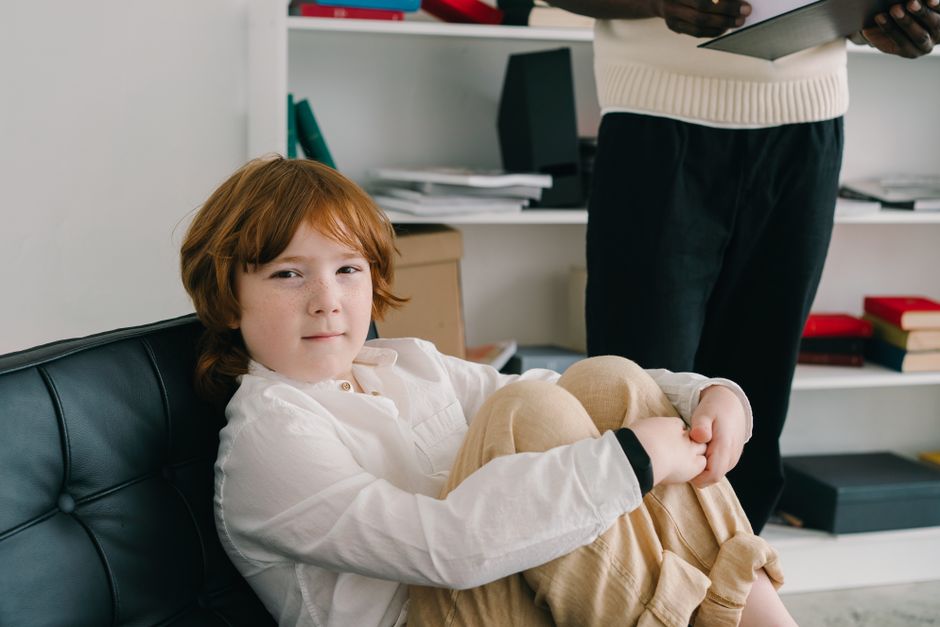
Yes, autism can affect both how people feel emotions and how they show them — but often in opposite ways. Many autistic people experience emotions more intensely than others, while expressing them in ways that may be hard to read. This difference is not a lack of feeling. It is a difference in how emotions are processed and expressed.
What Does “Feeling vs Showing” Mean in Autism?
When experts talk about feeling emotions versus showing them, they point to two separate processes. Feeling is the internal experience: sadness, joy, anger, fear. Showing is the outward expression: facial expressions, tone of voice, body language, and words.
In autistic people, these two processes do not always line up the way they do in non-autistic people. Someone may feel intense grief but show a flat face. Another may feel calm but pace and flap their hands. This gap can confuse others and lead to misunderstandings about what the autistic person actually feels.
Can Autism Affect Emotions Feeling Vs Showing Them?
The direct answer is yes. Autism can create a real disconnect between what a person feels inside and what they show on the outside. Research consistently shows that autistic people report experiencing emotions as strongly — and often more strongly — than non-autistic people. Yet their facial expressions, voice tone, and gestures may not match that internal state. This is not intentional hiding. It is a difference in the brain’s wiring for emotional processing and motor expression.
Some autistic people also experience a condition called alexithymia, which makes it hard to identify and describe feelings. In that case, the person feels something but may not know what it is or how to name it. The feeling still exists. The challenge is labeling and communicating it.
Do Autistic People Feel Emotions More Intensely?
Many autistic people describe their emotions as overwhelming. Small events can trigger huge reactions. A minor disappointment can feel like a major loss. A kind word can bring tears of joy. This is called emotional intensity, and it is common in autism.
One reason may be differences in sensory processing. The autistic brain takes in more raw information from the environment. That same heightened sensitivity may apply to emotions. The feeling is not filtered or dampened the way it often is in non-autistic brains.
Another reason may be differences in brain areas that regulate emotion. For example, the amygdala, which helps process fear and excitement, may react more strongly in autistic people. This does not mean all autistic people have extreme emotions. But many do report a depth and strength of feeling that surprises others.





What Is Alexithymia and How Does It Relate to Autism?
Alexithymia is a condition often described as “emotional blindness.” People with alexithymia have trouble identifying their own emotions, describing them, and telling the difference between emotional feelings and physical sensations like a racing heart or tight chest.
Alexithymia is not part of the official diagnostic criteria for autism. But studies show it is much more common in autistic people than in the general population. Some research suggests up to half or more of autistic people also have alexithymia.
This matters because a person with alexithymia may feel a strong emotional response but cannot name it. They may appear emotionless because they cannot explain what is happening inside. Others then assume they do not care, while in reality they are flooded with feelings they cannot sort out.
Why Might Autistic People Show Emotions Differently?
There are several reasons an autistic person’s outward expression may not match their internal experience.
- Differences in facial expression control. Some autistic people have less automatic control over their facial muscles. A neutral face does not mean a neutral mood. It means the face is not automatically reflecting the feeling.
- Motor planning differences. Gestures like shrugging or nodding require quick coordination. In autism, motor planning can be slower or less coordinated, so those natural gestures may not happen.
- Masking. Many autistic people learn from an early age to hide their true emotions to fit in. They may force a smile when sad or stay quiet when excited. This masking takes effort and can lead to burnout.
- Sensory overload. In a loud or bright environment, an autistic person may be managing sensory input first. Expressing emotion becomes secondary. Their face and body may go still because they are overwhelmed.
Each of these factors can make an autistic person look less emotional than they really are. The expression is not missing. It is just not the automatic, readable output that non-autistic people expect.
How Does Emotional Expression Affect Relationships and Daily Life?
This gap between feeling and showing can cause significant problems. Partners, family members, and coworkers may misinterpret a flat expression as coldness or disinterest. The autistic person then feels misunderstood and frustrated.
Children in school may be labeled as unemotional or uncooperative when they are actually anxious or sad. Adults in the workplace may be passed over for promotions because they are seen as lacking empathy or team spirit.
These misunderstandings are real and can damage relationships. But they are not caused by a lack of feeling. They are caused by a mismatch in communication style between autistic and non-autistic people. Some researchers call this the “double empathy problem” — both sides struggle to understand each other, not just the autistic person.
Can Therapies Help with Emotional Awareness and Expression?
Yes, some therapies can help autistic people better identify and express their emotions. But the goal should not be to force a neurotypical style of expression. The goal should be to build self-understanding and find ways to communicate that work for the individual.
Cognitive behavioral therapy (CBT) designed for autistic people can help with emotional awareness. Therapists may use visual tools, emotion wheels, or body mapping to help the person connect physical sensations with specific emotions.
Speech therapy and social communication groups can teach practical ways to express feelings — using words, pictures, or technology when facial expressions do not come naturally.
It is important to note that no therapy changes the underlying intensity of emotion. The goal is to help the person recognize what they feel and find a way to share it, not to dampen or hide the feeling.
Key Takeaways
Autism can affect emotions in two distinct ways: feeling and showing. The feeling part is often stronger, not weaker. The showing part may look different — flatter, delayed, or masked. Alexithymia explains some of this gap, but not all.
The most important takeaway is that an autistic person’s outward expression is not a reliable guide to their internal state. A still face can hide deep feeling. A lack of words does not mean a lack of emotion. Asking respectfully and giving time to respond often reveals much more than observation alone.
Frequently Asked Questions
Do autistic people lack empathy?
No, most autistic people have empathy, but they may show it differently. Some have difficulty with cognitive empathy (understanding what another person feels) while still feeling strong emotional empathy (sharing the feeling).
Can autistic people learn to read emotions better?
Many autistic people can improve at recognizing emotions through practice and explicit teaching. However, this may always take more mental effort than it does for non-autistic people.
Is alexithymia the same as autism?
No, alexithymia is a separate condition that overlaps with autism frequently. Not all autistic people have alexithymia, and not all people with alexithymia are autistic.
Why do some autistic people show very strong emotions?
Emotional intensity is common in autism due to differences in sensory processing and brain regulation. The feeling may be stronger and harder to regulate, leading to big outward reactions.
