
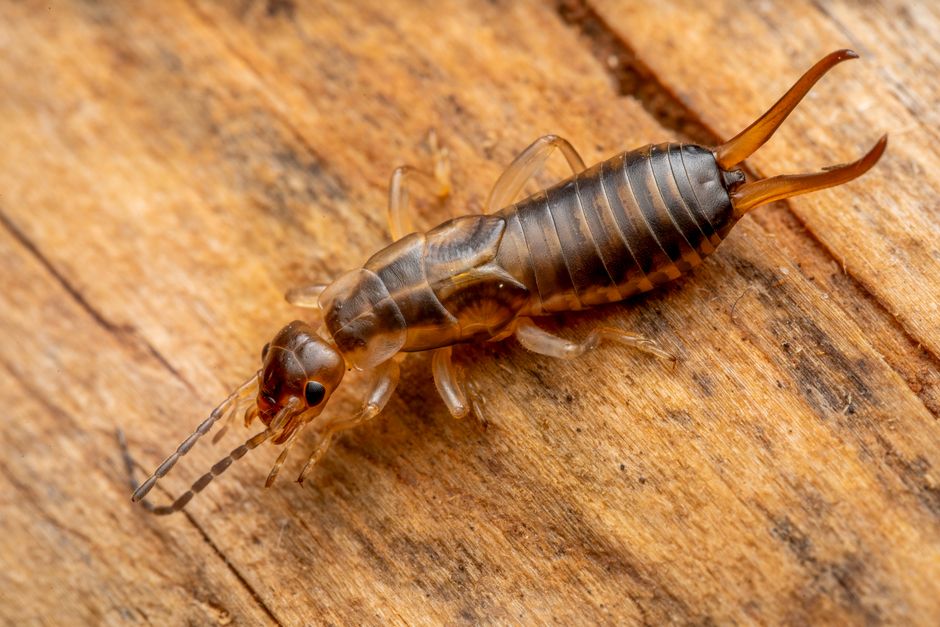
Yes, an earwig can bite, but it rarely does. Earwigs are capable of delivering a small pinch with their pincers, usually only when they are trapped against skin or handled roughly. The pinch rarely breaks the skin, and earwigs are not venomous. There is no evidence they burrow into ears or lay eggs in the human brain, despite the old myth that gave them their name.
Can An Earwig Bite Humans?
Earwigs have mouthparts built for chewing plant material and small insects, not for biting people. What most people call an earwig “bite” is actually a pinch from the cerci — the pair of forceps-like appendages at the rear of the body. The insect turns its abdomen toward a threat and squeezes.
That pinch can hurt. The skin may redden or show a small mark. In the great majority of cases the forceps are not strong enough to break intact skin. A bite from the mouthparts is even less common and generally less noticeable.
Earwigs are not venomous and do not carry venom glands. They are not known to transmit disease to humans. This is different from mosquitoes, ticks, or certain spiders, where the bite itself or the saliva can carry risk. An earwig pinch is a mechanical event — pressure from the pincers — not an injection of anything harmful.
Some people are more likely to react with a red, itchy spot than others, and that reaction is usually mild and short-lived. Anyone who develops spreading redness, swelling, or fever after any insect injury should seek medical care, because those signs can indicate a skin infection rather than a reaction to the insect itself.
What Does an Earwig Bite Look Like?
Most earwig pinches leave little or nothing to see. When a mark does appear, it tends to be a small red spot or a faint pair of parallel indentations where the forceps pressed the skin. There is no characteristic pattern that reliably identifies an earwig, which matters because people often assume an insect caused a mark when the cause was something else.
Common features people report include:
- A brief sharp sensation at the moment of contact
- A small red mark or slight indentation
- Mild itching or tenderness around the spot
- No swelling in most cases
Earwig pinches do not produce the two-puncture mark associated with some spider bites, and they do not cause the expanding rash that can follow a tick bite. If a mark is growing, blistering, or accompanied by systemic symptoms, the cause is likely something other than an earwig, and a clinician should look at it.
One clarification worth making: many “bug bites” people find in the morning are never traced to a specific insect. Earwigs are common around homes and are easy to blame. A mark alone is not proof of an earwig encounter.
When Are Earwigs Likely to Pinch?
Earwigs pinch defensively. They do it when they feel threatened, most often when they are trapped between skin and clothing, bedding, or a shoe. Picking one up with bare hands is the most common way people get pinched.
Earwigs are nocturnal and seek dark, damp spaces. That is why they turn up in folded laundry left on the floor, in shoes stored in a garage, under garden pots, and in mulch or leaf litter. They are not aggressive toward people and do not seek humans out. They feed on decaying plant matter and small insects.
The insect most likely to be near your ears is not an earwig. Earwigs do not target ears, and there is no scientific basis for the idea that they crawl into ears to lay eggs. If an insect does enter an ear canal, it is usually a small flying insect or a crawling insect that wandered in by accident, and the correct response is to have a clinician remove it rather than to dig at it at home.
How Should You Treat an Earwig Pinch?
Most earwig pinches need only basic first aid. Wash the area with soap and water. A cool compress can ease discomfort. Keep the spot clean and avoid scratching it, since scratching is what most often turns a minor skin break into an infection.
If the skin is broken, clean it and cover it with a simple bandage. Watch for signs of infection over the next few days: increasing redness, warmth, swelling, pus, or fever. These are general wound-care principles, not earwig-specific treatment, because there is no earwig-specific treatment.
No clinical guidelines recommend antihistamines or steroid creams specifically for earwig pinches, though some people use them for itching from minor insect injuries in general. Over-the-counter options exist, but the evidence for any product labeled for earwig bites is essentially absent. If discomfort is significant or a wound looks infected, see a clinician.
Get medical attention promptly if a bite or sting is followed by trouble breathing, swelling of the face or throat, or widespread hives. Those are signs of a severe allergic reaction and are a medical emergency. Severe reactions to earwig pinches are not well documented, but any insect injury can coincide with an allergic response, and the safe course is to treat those symptoms as urgent.
How Do You Keep Earwigs Out of Your Home?
Prevention is mostly about removing the damp, dark hiding spots earwigs favor. Earwigs need moisture. Reducing moisture near your foundation and clearing debris reduces the places they settle.
- Clear leaf litter, mulch piles, and stacked wood away from the foundation
- Fix leaks and improve drainage near basements and crawl spaces
- Shake out shoes, gloves, and laundry stored in garages or basements before use
- Seal gaps around doors and windows
- Keep firewood and compost bins away from exterior walls
Earwigs are attracted to light, so exterior lighting near doors can draw them in. Yellow or motion-activated bulbs may help, though the evidence for specific bulb types is not strong. If you find one indoors, remove it with a cup or paper rather than your fingers. That single habit prevents most pinches.
Pesticide use is rarely necessary for earwigs. If an infestation is heavy, a licensed pest professional can advise on options, and any product should be used exactly as the label directs, especially in homes with children or pets.
Are Earwigs Dangerous?
Earwigs are not dangerous to people. They are not venomous, they do not transmit disease to humans, and they do not damage homes the way termites or carpenter ants do. They can nibble garden plants, but their role as plant pests is modest and often overstated.
The real risk from an earwig is minor: a small pinch, a red mark, and in rare cases a minor skin infection if the spot is scratched and broken. That risk is far lower than the risk from mosquitoes, ticks, or stinging insects.
The persistent fear of earwigs comes from folklore, not from harm. The name itself refers to an old belief about the ear, and that belief has no support. Earwigs are a nuisance insect, not a health threat. Treat them that way, and the fear fades faster than the insect does.
Frequently Asked Questions
Can an earwig bite hurt you?
An earwig can deliver a small pinch that hurts briefly, but it rarely breaks the skin and is not venomous. Most people feel a sharp sensation and see a small red mark that fades.
Do earwigs crawl into ears?
No. There is no evidence earwigs crawl into human ears or lay eggs there, and they do not seek out ears. The name comes from folklore, not from the insect’s behavior.
What should I do if an earwig pinches me?
Wash the area with soap and water, apply a cool compress if it helps, and avoid scratching. See a clinician if the skin breaks and shows spreading redness, swelling, or fever.
Are earwig bites poisonous?
No. Earwigs have no venom and do not inject anything when they pinch. The mark is from pressure, not poison, and earwigs are not known to spread disease to people.
