
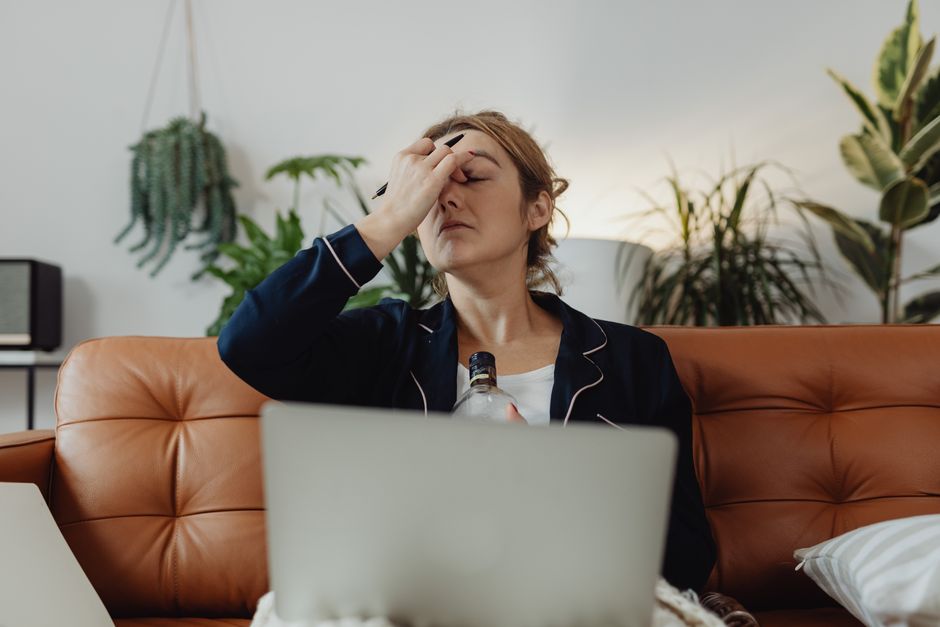
If you have bipolar disorder and you drink, you have probably noticed that your mood can shift in ways that feel out of proportion to the alcohol itself. The short answer is yes — alcohol can trigger mania in some people with bipolar disorder, though the relationship is more complicated than a simple cause and effect. Alcohol does not reliably produce mania in everyone, and the effect depends on the person, the amount consumed, and the underlying course of the illness. What the evidence does show is that drinking is associated with more frequent mood episodes, worse outcomes, and a higher chance of relapse into mania.
How Does Alcohol Affect Bipolar Disorder?
Alcohol is a central nervous system depressant. It slows brain activity by boosting the effects of GABA, the brain’s main calming neurotransmitter, and by dampening glutamate, which is excitatory. In the moment, that produces relaxation, sedation, and reduced inhibition.
The rebound is where things get interesting. As alcohol clears from the body, the brain tries to restore balance. GABA activity falls and glutamate activity climbs. For someone with a brain already prone to mood instability, that swing can push the system toward agitation, insomnia, and elevated mood rather than back to baseline.
Sleep is a major part of this picture. Alcohol fragments sleep and suppresses REM in the first half of the night, then produces a lighter, more disrupted second half. Reduced need for sleep is one of the hallmark symptoms of mania. Disrupted sleep alone is a well-recognized trigger for mood episodes in bipolar disorder, independent of alcohol.
There is also a practical trap. Alcohol lowers impulse control. Someone in the early, subtle stages of a manic or hypomanic episode may drink more, stay out later, and skip medications — all behaviors that feed the episode.
Can Alcohol Directly Trigger a Manic Episode?
Alcohol is not a classic pharmacological trigger the way some antidepressants can be. But it functions as a behavioral and physiological trigger in people who are vulnerable.
The evidence here is observational, not experimental. Researchers cannot ethically randomize people with bipolar disorder to heavy drinking. So what exists is data from surveys, clinical samples, and longitudinal studies. These consistently show that people with bipolar disorder who drink heavily tend to have more mood episodes, earlier relapse, and more hospitalizations than those who do not. What these studies cannot do is prove that alcohol is the cause in every individual case.
There is a distinction worth drawing. A substance-induced mood episode is a recognized category in psychiatric diagnosis. It describes mania or hypomania that emerges during or shortly after substance use and would not otherwise have occurred. Alcohol is one of the substances that can produce this picture, though it is more commonly associated with depressive episodes than with mania.
Some people with bipolar disorder report that a single night of heavy drinking is followed within a day or two by elevated mood, racing thoughts, and decreased sleep. Others report no such pattern. The variability is real, and it likely reflects differences in individual sensitivity, illness subtype, and how well the condition is being managed.
What Does the Research Actually Show?
The strongest and most consistent finding is that alcohol use disorders and bipolar disorder frequently occur together. This is called comorbidity, and it is not random. Across clinical samples, a substantial share of people with bipolar disorder also meet criteria for an alcohol use disorder at some point in their lives.
The direction of the relationship runs both ways. People with bipolar disorder are more likely to develop problem drinking, possibly as self-medication for depression, anxiety, or the agitation of mixed states. And problem drinking, once present, worsens the course of bipolar disorder.
What the research does not support is the idea that moderate, occasional drinking is harmless for everyone with bipolar disorder. The evidence is mixed on whether low-level drinking affects mood stability. Some studies suggest even moderate use is linked to more mood symptoms; others find no clear effect. The honest position is that the evidence is mixed, and individual response varies.
One non-obvious point: alcohol withdrawal is itself a mood destabilizer. For someone who drinks heavily and then stops abruptly, the withdrawal period can involve anxiety, agitation, insomnia, and in severe cases seizures. That withdrawal state can mimic or precipitate a mood episode, which makes it hard to untangle what is causing what.



Why Do Alcohol and Bipolar Disorder So Often Overlap?
The overlap is not a coincidence, and it is not simply a matter of poor judgment. Several factors drive it.
- Self-medication. Alcohol temporarily blunts the anxiety, irritability, and depression that come with bipolar disorder. That relief is short-lived and usually makes the underlying problem worse.
- Shared brain pathways. Both bipolar disorder and alcohol use involve the same neurotransmitter systems, including dopamine, GABA, and glutamate. Disruption in one area can affect the other.
- Genetic overlap. Some of the same genetic factors that raise risk for bipolar disorder also appear to raise risk for substance use problems.
- Impulsivity. Bipolar disorder, particularly during elevated or mixed states, is associated with increased impulsivity, which raises the odds of heavy drinking.
This overlap matters because it changes treatment. When both conditions are present, treating only one rarely works well.
What Are the Signs That Alcohol Is Affecting Your Mood?
It can be hard to tell whether a mood shift is caused by alcohol, by the natural course of bipolar disorder, or by both. Some patterns are worth paying attention to.
- Mood elevation, irritability, or agitation that appears within a day or two of drinking
- Worsening sleep in the days after drinking, especially sleeping much less without feeling tired
- More frequent mood episodes overall during periods of heavier drinking
- Feeling worse, not better, in the days after drinking despite expecting relief
- Needing to drink more to get the same effect, or feeling shaky and anxious without it
These are patterns, not diagnostic criteria. Only a clinician who knows your history can sort out what is driving what. But tracking your mood alongside your drinking can give that clinician useful information.
Does Cutting Back on Alcohol Help Stabilize Mood?
For many people with bipolar disorder, reducing or stopping alcohol use is associated with fewer mood episodes and better overall stability. This is widely reported in clinical practice and supported by observational research, though the strength of the evidence varies.
The catch is that quitting is not always straightforward, and it is not always safe to do alone. If someone has been drinking heavily for a long time, sudden cessation can cause withdrawal that requires medical supervision. Anyone in that situation should talk to a doctor before stopping.
It is also important to be clear about what reducing alcohol does and does not do. It is not a substitute for mood stabilizers, therapy, or other components of bipolar treatment. It is one factor among several that influence mood stability. Some people find that cutting back makes a noticeable difference; others find that mood episodes continue regardless. Both outcomes are possible, and neither means the effort was wasted.
No clinical guidelines specify a safe level of alcohol consumption for people with bipolar disorder. That absence is itself informative. It means there is no established threshold below which drinking is known to be safe for this population.
When Should You Talk to a Doctor?
Anyone with bipolar disorder who drinks should have an honest conversation with their care team about it. That conversation is not about judgment. It is about getting accurate information and adjusting treatment if needed.
It becomes more urgent if drinking is increasing, if mood episodes are becoming more frequent or severe, if sleep is consistently disrupted, or if there are signs of dependence such as withdrawal symptoms or difficulty cutting back.
Bipolar disorder is a serious, treatable condition. Alcohol use is a modifiable factor that can interact with it in ways that are sometimes predictable and sometimes not. Being honest about both — with yourself and with a clinician — is the most useful thing you can do.
Frequently Asked Questions
Can one night of drinking trigger mania?
In some people with bipolar disorder, a single episode of heavy drinking has been followed by manic symptoms within a day or two, though this is not universal. The effect depends on individual sensitivity, illness course, and other factors like sleep loss.
Does alcohol affect bipolar disorder differently than other conditions?
Alcohol can destabilize mood in anyone, but people with bipolar disorder appear more vulnerable to the mood-disrupting effects because of underlying brain chemistry differences. The interaction between alcohol and bipolar disorder is generally more pronounced than in people without a mood disorder.
Is it safe to drink occasionally if I have bipolar disorder?
No clinical guidelines establish a safe level of alcohol for people with bipolar disorder, so this is a decision to make with your doctor. Some people tolerate occasional drinking without obvious mood effects, while others do not.
Can quitting alcohol stop manic episodes?
Reducing alcohol is associated with fewer mood episodes for many people, but it does not guarantee that mania will stop. Bipolar disorder requires ongoing treatment, and alcohol is only one of several factors that influence mood stability.
