
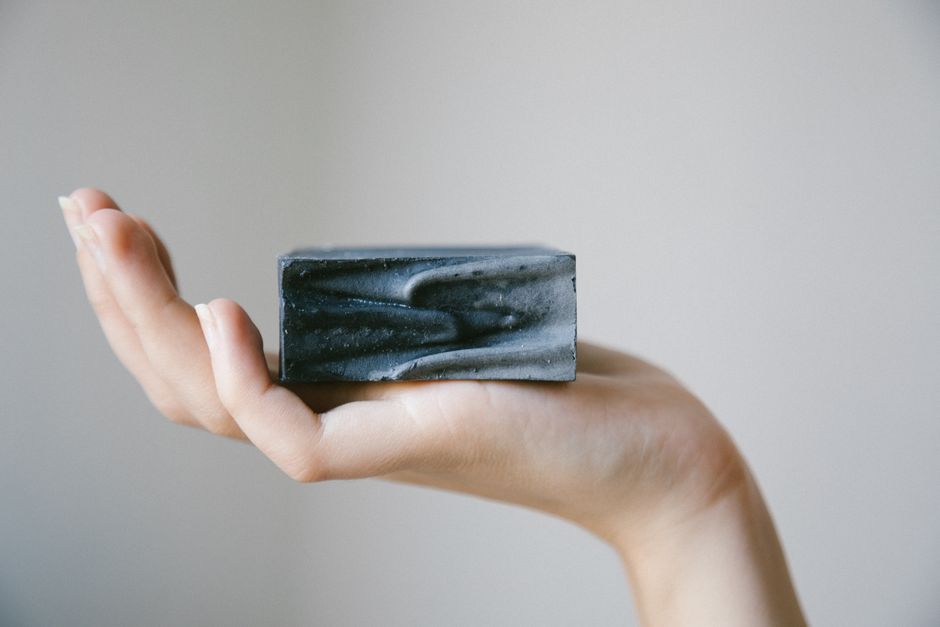
Activated charcoal binds to certain poisons in the stomach, which is why it shows up in emergency rooms and in viral posts about food poisoning. But the gap between those two settings is enormous. For food poisoning, activated charcoal is not a recommended treatment, and there is no good evidence that it helps.
The confusion comes from a real medical fact. Activated charcoal is a genuine antidote for some poisonings, and it is used in hospitals for that purpose. Food poisoning is a different problem, and the charcoal that helps in one situation does not carry over to the other. Here is what the evidence actually shows.
What Is Activated Charcoal and How Does It Work?
Activated charcoal is not the same as the blackened briquettes in a barbecue grill. It is a specially processed powder made from materials like wood, coconut shells, or peat, heated to very high temperatures and treated with gases. That process creates millions of tiny pores, giving the charcoal an enormous surface area. A single gram can have a surface area comparable to several tennis courts.
That surface is what does the work. Many chemicals and drugs stick to it through a process called adsorption. The charcoal acts like a sponge that traps certain molecules before they can be absorbed into the bloodstream. For a handful of specific poisons, this can be genuinely life-saving.
Two details matter for food poisoning. First, activated charcoal binds poorly to some substances and not at all to others. It does not attach well to metals like iron or lithium, to alcohols, or to strong acids and bases. Second, and more important here, it has to reach the poison while the poison is still in the stomach or gut. Once a substance is absorbed into the bloodstream, charcoal in the digestive tract cannot pull it back out.
Does Activated Charcoal Help With Food Poisoning?
No. Activated charcoal is not a treatment for food poisoning, and no major clinical guideline recommends it for that purpose.
The reason is partly about timing and partly about what food poisoning actually is. Most food poisoning is caused by bacteria, viruses, or the toxins they produce. By the time symptoms like nausea, vomiting, and diarrhea appear, the offending substance has usually already moved through the stomach and triggered the body’s response. Charcoal taken at that point has little to bind to and nothing useful to do.
There is also a mismatch in what charcoal can trap. Activated charcoal adsorbs many drugs and chemicals well. It does not reliably bind to bacteria, viruses, or the protein-based toxins that some foodborne germs release. So even in theory, the target is wrong.
Some people point out that charcoal might reduce gas or bloating. That is a separate claim from treating food poisoning, and the evidence for it is limited and mixed. It does not translate into a treatment for a foodborne illness.
Why Do People Think Charcoal Treats Food Poisoning?
The idea spreads because two different things share a name. Emergency departments do use activated charcoal for certain poisonings. When someone swallows too much of a drug like aspirin or carbamazepine, charcoal given quickly can reduce how much of that drug the body absorbs. That is real, established emergency medicine.
Food poisoning is not a poisoning in that same sense. The word “poisoning” makes the two sound related, but the mechanisms are different. A drug overdose is a single substance in the stomach that charcoal can grab. A foodborne illness is usually an infection or a toxin already at work, and charcoal does not address either.
Social media has amplified the confusion. Posts showing someone taking charcoal after a bad meal make the logic feel obvious. It is not. A plausible-sounding mechanism is not the same as a demonstrated benefit, and in this case the demonstrated benefit does not exist.




What Are the Risks of Taking Charcoal for Food Poisoning?
Activated charcoal is not harmless just because it is sold without a prescription. Taken in the wrong situation, it can cause real problems.
- It can cause vomiting. Charcoal is gritty and unpleasant to swallow, and it frequently triggers nausea and vomiting, which is the last thing someone with food poisoning needs.
- It can cause constipation or blockages. In rare cases, charcoal has contributed to bowel obstructions, especially when someone is dehydrated or has slowed gut movement.
- It can interfere with medications. Charcoal does not distinguish between a drug you need and a poison. If you take prescription medications and then take charcoal, it can bind those medications and reduce how much your body absorbs. This matters for people on heart medications, seizure medications, thyroid medication, birth control pills, and many others.
- It can delay real care. The biggest risk may be the time lost. Someone who feels reassured by taking charcoal may wait longer to seek help for a serious infection.
There is one more concern worth naming. Charcoal can mask or complicate the picture if you later need medical evaluation, because it turns vomit and stool black. That can confuse an assessment in an emergency setting.
When Is Activated Charcoal Actually Used?
Activated charcoal is a legitimate medical treatment in a narrow set of situations, and it is given by healthcare professionals, not self-administered at home.
It is used most often for certain medication overdoses when a person arrives at the hospital soon after swallowing the drug. Timing is everything. The charcoal must be given while the drug is still in the stomach or upper intestine. In many cases, that window has closed before the person reaches care.
It is also used for some specific industrial or chemical exposures. It is not used for every poisoning. Clinicians consider what was swallowed, how much, how long ago, and whether charcoal can actually bind that substance. For many poisons, it cannot, and other treatments are used instead.
The key point for anyone reading this at home is that this is a hospital decision. It is not something to guess at, and it is not a first-aid step.
What Actually Helps With Food Poisoning?
Most food poisoning resolves on its own within a few days, and the main job is to stay hydrated while the body clears the infection. That is the honest, unglamorous answer.
Rehydration is the priority. Water is fine for mild cases. For more significant fluid loss, an oral rehydration solution, which balances water with salts and sugar, works better than water alone. These are available at pharmacies, and the World Health Organization publishes an oral rehydration formula that is widely used.
Rest helps. Eating may not feel appealing, and that is normal. Small, bland meals can be reintroduced as appetite returns. There is no strong evidence that any specific food speeds recovery.
Over-the-counter anti-diarrheal medications can reduce symptoms in some adults, but they are not appropriate for everyone. They should be avoided if there is fever or bloody diarrhea, because slowing the gut in those situations can make things worse. Anyone unsure should check with a clinician or pharmacist first.
Antibiotics are not routine for food poisoning. Most cases are viral or self-limiting, and antibiotics do not help viral illness. They are sometimes used for specific bacterial infections, and that decision belongs to a clinician.
When Should You See a Doctor?
Most food poisoning is uncomfortable but not dangerous. Certain signs mean it is time to get medical help.
- Blood in vomit or stool
- High fever
- Severe or worsening abdominal pain
- Signs of dehydration, such as very dark urine, dizziness on standing, or a dry mouth
- Vomiting that prevents keeping any fluids down
- Diarrhea that lasts more than a few days
- Symptoms in someone with a weakened immune system, in older adults, in pregnant women, or in young children
Infants and young children can become dehydrated quickly, and the signs can be subtle. For this group, it is better to seek advice early rather than wait. There are no established clinical guidelines for using activated charcoal for food poisoning in children, or in anyone else, because it is not a recommended treatment.
If someone has swallowed a suspected poison or taken too much medication, that is a different emergency. In the United States, poison control can be reached at 1-800-222-1222, and it operates around the clock.
The Bottom Line on Charcoal and Food Poisoning
Activated charcoal is a real medicine with a real but narrow use. It helps in some hospital-treated poisonings when given quickly and when the substance is one it can bind. Food poisoning does not fit that picture.
The charcoal sold in stores is not a substitute for the medical-grade product used in hospitals, and neither version treats a foodborne illness. For most people, the useful steps are hydration, rest, and knowing when to get help. Charcoal is not one of them.
Frequently Asked Questions
Can activated charcoal help with food poisoning?
No. Activated charcoal is not a recommended treatment for food poisoning, and there is no good evidence that it helps. It does not reliably bind to the bacteria, viruses, or toxins that cause most foodborne illness.
Does activated charcoal work for diarrhea?
There is no solid evidence that activated charcoal treats diarrhea from food poisoning. It may cause constipation and can interfere with medications you take, so it is not a recommended remedy.
Can I take activated charcoal after eating bad food?
Taking it after a bad meal is unlikely to help, because the cause has usually already triggered symptoms by then. It can also bind prescription medications and reduce how well they work.
How long does food poisoning usually last?
Most cases improve within a few days without treatment. The main priority is staying hydrated, and anyone with blood in the stool, a high fever, or signs of dehydration should seek medical care.
