
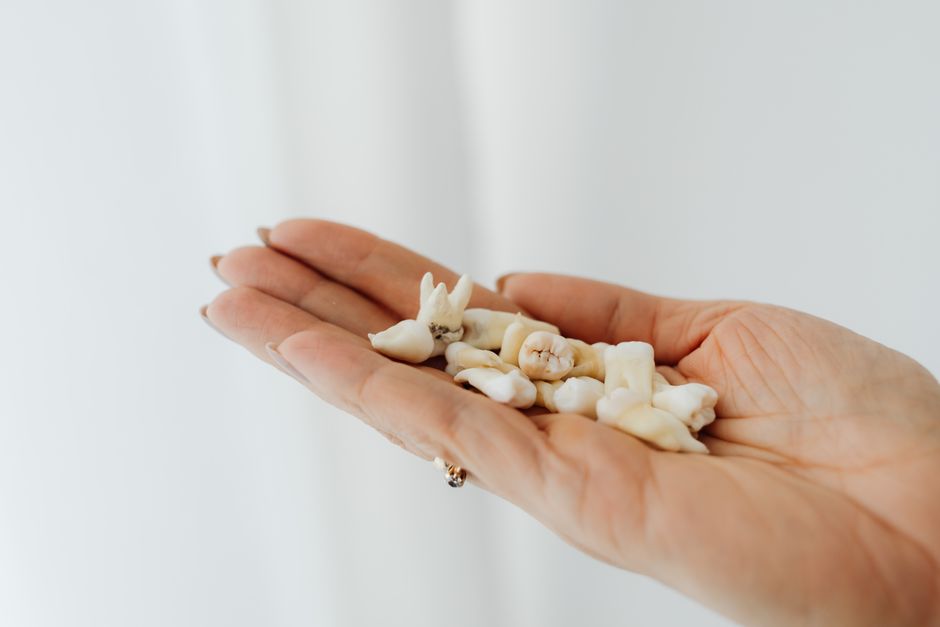
Yes, a wisdom tooth can cause earache. The reason is not that something is wrong inside your ear. It is that the nerves serving your lower wisdom teeth and the nerves serving your ear share the same pathway into the brainstem. When a wisdom tooth causes trouble, your brain can read that signal as pain coming from your ear.
This is called referred pain, and it is common in dentistry. It explains why people with an impacted or infected wisdom tooth often rub their ear, or even see a doctor for an ear problem, when the real source sits at the back of their jaw.
How Can A Wisdom Tooth Cause Earache?
Your trigeminal nerve carries sensation from your teeth, gums, and jaw. One of its branches, the auriculotemporal nerve, also supplies part of the ear and the area just in front of it. Because these fibers converge on the same relay stations in the brainstem, the brain cannot always tell exactly where a signal started.
This is the same principle behind arm pain during a heart attack or shoulder pain from a gallbladder problem. The nerve wiring is shared, so the location of the pain gets misattributed.
Wisdom teeth — your third molars — sit at the very back of the lower jaw. Their roots can lie close to the lingual nerve and the inferior alveolar nerve. When a wisdom tooth pushes against surrounding tissue, becomes impacted, or gets infected, the resulting pain signal can travel along these shared pathways and be felt in the ear.
The pain is real. It is simply not coming from where it feels like it is coming from.
What Does Referred Ear Pain From A Wisdom Tooth Feel Like?
Referred pain from a wisdom tooth usually feels dull and aching rather than sharp and stabbing. It often sits deep in the ear or just in front of it. Many people describe it as a pressure or fullness rather than a classic earache.
Key features that point toward a dental source include:
- Pain that is worse when you chew, bite down, or open your mouth wide
- Aching that comes and goes with jaw movement rather than staying constant
- Discomfort at the back of the jaw, near the hinge, or along the lower gum
- Swelling, tenderness, or a bad taste near the back of the mouth
- No discharge from the ear and no hearing change
If the pain is sharp, comes with fluid draining from the ear, or affects your hearing, the ear itself is more likely the source. That distinction matters because the treatment is completely different.
What Other Symptoms Point To A Wisdom Tooth Rather Than An Ear Problem?
The telltale sign is that the pain follows your jaw, not your ear. Clenching your teeth, chewing on that side, or pressing on the gum behind your last molar tends to make it worse. Touching or pulling on your earlobe usually does not.
Other clues that the wisdom tooth is the culprit:
- Swollen, red, or tender gum tissue behind the last visible molar
- A bad taste in the mouth or foul breath
- Difficulty opening your mouth fully
- Swelling in the cheek or along the jawline
- Pain that started around the same time as jaw stiffness or gum soreness
An ear infection, by contrast, tends to bring muffled hearing, a feeling of fluid in the ear, and sometimes fever. In adults, true middle ear infections are less common than in children, which is one reason ear pain in an adult often turns out to have a dental or jaw source.





When Is Ear Pain A Dental Emergency?
Some situations need prompt care. If you have swelling that is spreading down your neck or under your jaw, difficulty swallowing or breathing, a fever, or swelling that is closing your eye, seek urgent medical care. These can signal a deep infection that has moved beyond the tooth.
An impacted wisdom tooth can also lead to a condition called pericoronitis — inflammation of the gum tissue around a partially erupted tooth. This is one of the more common reasons a wisdom tooth causes referred pain. It can become infected and, in serious cases, spread.
Do not wait on spreading swelling or trouble breathing. Those are not watch-and-see symptoms.
How Do You Tell The Difference Between Ear Pain And Referred Pain?
A clinician can usually sort this out with a focused exam. They will look in your ear with an otoscope and check the canal and eardrum. A normal-appearing ear plus tenderness at the back of the jaw points toward a dental source.
They may also press on the gum behind your last molar, tap on teeth, or ask you to open and close your jaw to see what reproduces the pain. Dental X-rays can show whether a wisdom tooth is impacted, angled, or pushing against a neighbor.
The table below summarizes the general differences, though individual cases vary:
| Feature | Likely Ear Source | Likely Wisdom Tooth Source |
|---|---|---|
| Pain quality | Sharp, throbbing, or with pressure | Dull, aching, deep |
| Triggered by chewing or jaw movement | Usually not | Often yes |
| Hearing changes | Common | Uncommon |
| Fluid or discharge from ear | Possible | No |
| Gum swelling at back of mouth | No | Often yes |
This is a general guide, not a diagnosis. Only an exam can confirm the source.
What Should You Do If You Think A Wisdom Tooth Is Causing Your Earache?
See a dentist. That is the direct answer. If the ear itself looks normal but the pain keeps returning, the next step is an exam of the mouth and jaw, not more ear drops.
In the meantime, some general measures may help manage discomfort:
- Over-the-counter pain relievers such as ibuprofen or acetaminophen, used as directed on the label
- Rinsing gently with warm salt water if the gum is sore
- Eating soft foods and chewing on the other side
- Avoiding very hot, very cold, or very sugary foods if a tooth is sensitive
These manage symptoms. They do not treat an impacted or infected tooth. If the underlying problem is not addressed, the pain tends to come back.
Depending on what the dentist finds, options may include cleaning the area around a partially erupted tooth, antibiotics if there is an infection, or removal of the tooth. Whether removal is needed depends on the position of the tooth, your symptoms, and your overall dental health. Not every wisdom tooth needs to come out.
Can A Wisdom Tooth Cause Other Problems Besides Ear Pain?
Yes. Impacted or partially erupted wisdom teeth can cause several issues beyond referred ear pain. These include gum infection around the tooth, decay on the wisdom tooth or the molar next to it, crowding, and in some cases cyst formation around the tooth root.
Because the back of the mouth is hard to clean, wisdom teeth are prone to problems that build slowly. Pain in the ear may be the first sign that something is going on back there.
The reverse is also worth knowing. Not all ear pain is dental, and not all jaw pain is a wisdom tooth. Temporomandibular joint disorders, sinus problems, and true ear infections can all produce similar symptoms. That overlap is exactly why a proper exam matters more than guessing.
Frequently Asked Questions
Can a wisdom tooth cause earache on one side only?
Yes. Referred pain typically follows the side of the affected tooth, so earache from a wisdom tooth is usually one-sided. Pain on both sides at once is less typical and may point to another cause.
How do I know if my earache is from a tooth or an ear infection?
Ear infections often bring muffled hearing, fluid sensation, or discharge, while dental referred pain tends to worsen with chewing or jaw movement and comes with gum tenderness at the back of the mouth. An exam is the only way to be sure.
Will removing the wisdom tooth stop the ear pain?
If the tooth is the true source, removing it usually resolves the referred pain. If the ear pain has a separate cause, removal will not fix it, which is why an exam comes first.
Can an impacted wisdom tooth cause ear pain without any tooth pain?
Yes. Referred pain can show up in the ear before or without obvious tooth discomfort, especially with a partially erupted or impacted tooth. This is one reason ear pain in adults is sometimes traced back to a wisdom tooth.
