
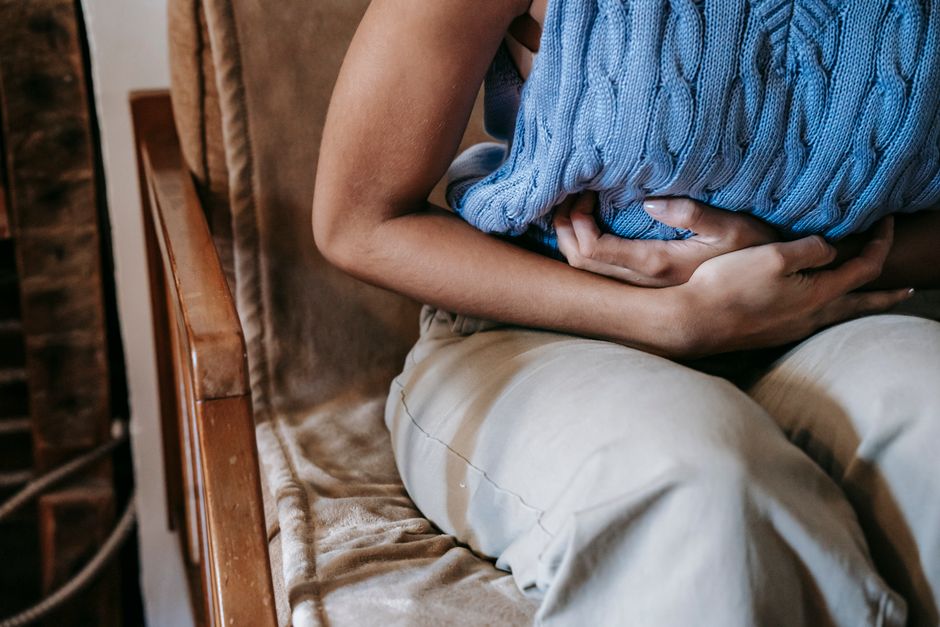
If you feel puffy, heavy, or like your waistband fits differently in the days before your period, you are not imagining it. Bloating is one of the most commonly reported symptoms of the menstrual cycle. It usually shows up in the days before bleeding starts and eases once your period is underway. The cause is a normal shift in hormones, not a sign that something is wrong with your digestion.
Why Do You Get Bloated on Your Period?
The short answer is hormones. In the second half of the cycle, after ovulation, levels of the hormone progesterone rise. Progesterone relaxes smooth muscle throughout the body, including the muscle in the walls of the intestines.
When those intestinal muscles relax, the normal movement that pushes food and gas through the digestive tract slows down. Gas and contents linger longer. That can produce fullness, pressure, and visible swelling in the belly.
At the same time, changing levels of estrogen and progesterone affect how the body handles fluid and salt. The body tends to hold on to more water and sodium in the late luteal phase — the roughly two weeks between ovulation and the start of your period. Some of that fluid sits in the abdomen and other tissues.
These two effects — slower gut movement and fluid retention — often happen together. That is why period bloating can feel different from the bloating you get after a large meal. It tends to build over several days rather than appear suddenly.
When Does Period Bloating Usually Start and Stop?
For most people, bloating begins in the days before bleeding starts and peaks right around the time the period begins. It then fades over the first day or two of bleeding as hormone levels drop.
This timing lines up with a condition called premenstrual syndrome, or PMS. Bloating is one of the most frequently reported PMS symptoms, along with breast tenderness, mood changes, and fatigue. PMS symptoms typically appear in the luteal phase and resolve once menstruation is underway.
Not everyone follows the same pattern. Some people notice bloating a week out. Others feel it mostly on the first day of bleeding. Cycle length, age, and individual hormone sensitivity all play a role. If your bloating consistently lasts well beyond your period, that is worth mentioning to a clinician, because it may not be cycle-related.
Is Period Bloating the Same as Water Weight?
Partly. Fluid retention is a real part of it, but it is not the whole story.
Water retention explains the puffiness you may notice in your hands, feet, or face, and some of the abdominal fullness. But gas and slowed digestion contribute too. That is why some people find that period bloating responds to changes in what they eat, while water retention responds more to hormone shifts you cannot control.
A common myth is that you gain several pounds of fat during your period. That is not how it works. Fat gain requires a sustained calorie surplus over time. Any weight change around your period is mostly fluid, and it typically resolves within a few days.





What Helps With Period Bloating?
No single remedy works for everyone, and the evidence for most home strategies is modest. Still, a few approaches have reasonable support and are low risk.
- Reduce salty foods. High-sodium meals can worsen fluid retention. Cutting back in the days before your period is a common and sensible step.
- Stay active. Light movement, like walking, does not fix the hormonal cause but many people report it eases the feeling of fullness.
- Watch carbonated drinks. Fizzy beverages add gas to the gut, which can add to an already slow system.
- Limit alcohol and caffeine. Both can affect hydration and digestion, though the effect varies by person.
- Consider calcium. Some research suggests calcium intake may reduce PMS symptoms, including bloating. The evidence is not strong enough to call it a treatment.
Over-the-counter options exist. Diuretics, sometimes called water pills, are occasionally used for cyclical fluid retention, but they should not be started without medical guidance. They can affect electrolyte balance. Simethicone, a common anti-gas product, may help with gas-related fullness, though studies on its effect specifically in menstrual bloating are limited.
If symptoms are severe and interfere with daily life, a clinician may discuss hormonal approaches such as certain birth control methods. These are prescription decisions, not self-care steps.
What Does Not Work, Despite What You May Read
A lot of period-bloating advice online is marketing dressed up as science. It helps to know what the evidence actually shows.
Detox teas and “flushing” products are a frequent example. The body already clears fluid and waste through the kidneys, liver, and lungs. No tea changes that. Some of these products contain laxatives, which can cause cramping and electrolyte loss without addressing the hormonal cause of bloating.
Probiotics are often promoted for bloating. The evidence in general digestive bloating is mixed, and there is little high-quality research looking specifically at menstrual bloating. That does not mean they are useless, but no study has confirmed they reliably reduce period bloating.
Cutting out entire food groups, like all dairy or all grains, is another common suggestion. Unless you have a diagnosed intolerance, removing these foods is unlikely to help and can make it harder to meet your nutrient needs.
When Is Bloating a Reason to See a Doctor?
Cycle-related bloating is common and usually harmless. But bloating that does not follow your cycle, or that comes with other symptoms, deserves a medical look.
Talk to a clinician if you notice:
- Bloating that is persistent and does not ease after your period
- Bloating along with significant pain, especially pain that is new or worsening
- Changes in bowel habits that last more than a few weeks
- Unexplained weight loss
- Bloating severe enough to affect eating or daily activities
These signs can point to conditions unrelated to the menstrual cycle, including digestive disorders. Persistent bloating is also one of the symptoms that can, in some cases, be associated with ovarian cancer, which is why doctors take ongoing bloating seriously. That does not mean bloating usually means cancer — it almost never does — but it is a reason not to dismiss bloating that never goes away.
How Period Bloating Differs From Other Kinds
Knowing the difference can help you decide what to do about it.
| Type | Typical trigger | Pattern |
|---|---|---|
| Menstrual | Hormone shifts in the luteal phase | Builds before period, eases during or after |
| After a large meal | Eating volume, gas | Comes on quickly, fades within hours |
| Food intolerance | Specific foods | Follows eating that food, not your cycle |
| Ongoing digestive | Conditions like IBS | Frequent, not tied to a cycle |
If your bloating tracks your cycle month after month, hormones are the likely driver. If it shows up randomly or after certain foods, the cause is probably elsewhere.
Can You Prevent Period Bloating?
You cannot prevent the hormonal shift that causes it. What you can do is reduce how much it bothers you.
Tracking your cycle helps you see the pattern and plan ahead. If you know bloating tends to hit four or five days before your period, you can ease up on salty foods and heavy meals during that window. Some people find that regular exercise across the whole month, not just during their period, makes symptoms feel milder.
Getting consistent sleep and managing stress will not change your hormones directly, but both affect how you experience discomfort. None of this is a cure. It is about lowering the peak so the days before your period feel more manageable.
Frequently Asked Questions
How long does period bloating last?
It usually starts a few days before bleeding and eases within the first day or two of your period. If it lasts well past your period, that is worth discussing with a doctor.
Does period bloating mean you are pregnant?
No, bloating alone does not indicate pregnancy. It is a normal premenstrual symptom, and pregnancy is confirmed by a test, not by bloating.
What foods make period bloating worse?
Salty foods and carbonated drinks tend to make it worse for many people. Alcohol and caffeine may also contribute, though the effect varies from person to person.
Can you lose the water weight from period bloating?
Yes, it usually resolves on its own within a few days as hormone levels drop. Cutting back on salt and staying active may help, but the fluid clears naturally in most cases.
