
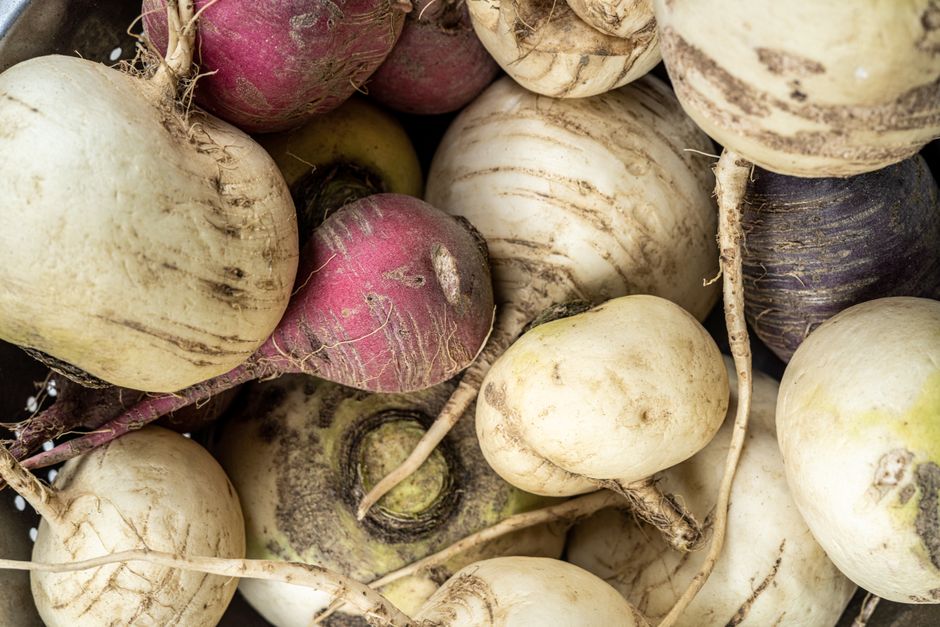
Yes, turnip leaves are edible. They are the leafy tops of the turnip plant, and people have cooked and eaten them for centuries in many parts of the world. In the United States, they are most familiar as “turnip greens,” a staple of Southern cooking. You can eat them raw when young and tender, or cook them in several simple ways. This guide covers what they contain, how they taste, how to clean and prepare them, and what to watch out for.
What Are Turnip Leaves and Are They Safe to Eat?
Turnip leaves are the green tops that grow above the root. The same plant produces both the bulb and the greens. That means when you buy a whole turnip with the tops still attached, you are getting two vegetables in one.
They are safe to eat. Turnip greens belong to the same plant family as mustard greens, collard greens, kale, and broccoli. This family, called Brassica, is one of the most widely eaten groups of vegetables in the world.
One thing worth knowing: turnip greens are not the same as turnip roots nutritionally. The root is mostly carbohydrate and water. The leaves are where much of the plant’s vitamin and mineral content sits. If you have been throwing the tops away, you have been discarding a genuinely nutritious part of the vegetable.
Are Turnip Leaves Nutritious?
Turnip greens are nutrient-dense. They are low in calories and high in several vitamins and minerals the body needs.
According to USDA nutritional data, cooked turnip greens are a strong source of vitamin K, vitamin A (from beta-carotene), and vitamin C. They also provide calcium, folate, and some iron. Like other dark leafy greens, they contain fiber.
One detail that matters: the calcium in turnip greens is relatively well absorbed compared to some other greens. That is because turnip greens are lower in oxalates than spinach. Oxalates are natural compounds that bind to minerals and reduce how much your body can absorb. Spinach is high in oxalates, which limits its calcium absorption. Turnip greens are not.
Vitamin K deserves a note. It plays a role in blood clotting. People taking blood-thinning medications such as warfarin are often advised to keep their vitamin K intake steady rather than avoid it. If you take one of these medications, talk to your doctor before making turnip greens a regular part of your diet.
What Do Turnip Leaves Taste Like?
Turnip greens are peppery and slightly bitter. The flavor is similar to mustard greens, though usually a bit milder. Younger, smaller leaves are more tender and less bitter. Larger, older leaves are tougher and more strongly flavored.
The bitterness comes from natural plant compounds. Some people love it. Others find it strong. Cooking softens both the texture and the bite.
If you have only ever eaten the root, the greens may surprise you. The root is sweet and mild. The leaves are the opposite — sharp and earthy. They are two very different eating experiences from the same plant.
How Do You Clean and Prepare Turnip Leaves?
Start by separating the leaves from the stems. The stems are tougher and take longer to cook. You can either remove them or chop them finely and cook them a few minutes longer than the leaves.
Wash the leaves well. Greens grow close to the ground and can carry grit and soil. Fill a large bowl or sink with cold water, swish the leaves around, and let the dirt settle to the bottom. Lift the leaves out rather than pouring the water off, so the grit stays behind. Repeat until the water runs clean.
For raw use, choose small, tender leaves and tear or slice them thin. For cooking, larger leaves are fine. A quick blanch in boiling water for a minute or two can mellow the bitterness before you use them in other dishes.
Simple Ways to Cook Them
- Sauté: Heat oil or butter, add chopped garlic, then the damp greens. Cook until wilted and tender.
- Boil or simmer: Cook in salted water or broth until soft. This is the traditional Southern method, often with a smoked meat or a splash of vinegar.
- Stir-fry: Toss with other vegetables and a sauce over high heat.
- Add to soups and stews: Stir them in near the end so they keep some texture.
- Raw in salads: Use only young, tender leaves, sliced thin.
A splash of acid — vinegar or lemon juice — cuts the bitterness. So does a little fat, such as olive oil or butter. Both are common in traditional recipes for good reason.
Can You Eat Turnip Leaves Raw?
Yes, but with a caveat. Young, tender leaves work raw. Older leaves are fibrous and unpleasant to chew uncooked.
Raw turnip greens are peppery and can be quite sharp. Many people prefer them cooked. If you eat them raw, slice them thinly and dress them, which softens the texture and balances the bite.
People who take blood thinners should be consistent with raw greens too, since raw and cooked forms both contain vitamin K. The issue is the total amount, not the form.
Are There Any Risks or Things to Watch For?
For most people, turnip greens are a safe, ordinary vegetable. A few points are worth knowing.
Like other Brassica vegetables, turnip greens contain compounds called goitrogens. In large amounts, these can interfere with thyroid function in people who already have thyroid problems or an iodine deficiency. Normal dietary amounts are not a concern for most healthy people. If you have a thyroid condition, ask your doctor whether your intake matters for you.
People taking warfarin and similar blood thinners should keep vitamin K intake steady and talk to their doctor. This applies to all dark leafy greens, not just turnip greens.
If you have kidney disease or a history of kidney stones, ask your doctor about oxalate intake. Turnip greens are lower in oxalates than spinach, but the question is worth raising. No clinical guidelines single out turnip greens as a specific risk.
How Do Turnip Greens Compare to Other Leafy Greens?
Turnip greens sit comfortably among the well-known dark leafy greens. They are close to mustard greens and collards in nutrition and flavor. They are lower in oxalates than spinach. They are generally more bitter than kale or chard.
| Green | Flavor | Oxalate level | Common use |
|---|---|---|---|
| Turnip greens | Peppery, bitter | Lower | Cooking, some raw |
| Mustard greens | Sharp, spicy | Lower | Cooking, some raw |
| Collard greens | Mild, earthy | Lower | Cooking |
| Spinach | Mild | Higher | Raw and cooked |
| Kale | Mild, slightly bitter | Lower | Raw and cooked |
If you already eat collards or mustard greens, turnip greens will feel familiar. If you mostly eat spinach or kale, expect a bolder flavor.
Can You Use the Stems and Roots Too?
Yes. The stems are edible. They are just tougher, so they need more cooking time. Chop them and start them a few minutes before the leaves.
The root is the part most people already know. It can be roasted, boiled, mashed, or eaten raw when young and mild. If you buy turnips with the tops on, you can cook the whole plant. Nothing needs to go in the trash.
Frequently Asked Questions
Are turnip leaves poisonous?
No. Turnip leaves are not poisonous and are eaten as a vegetable in many countries. They are in the same plant family as kale, collards, and broccoli.
Can you eat turnip leaves raw?
Yes, but only the young, tender leaves, which are milder and easier to chew. Older leaves are tough and strongly bitter, so most people cook them.
Do you have to cook turnip greens before eating them?
No. Cooking softens the texture and reduces bitterness, but it is not required for safety. Raw young leaves are fine to eat.
Are turnip greens the same as mustard greens?
No. They are different plants, though they are closely related and similar in flavor and nutrition. Turnip greens tend to be slightly milder.
