
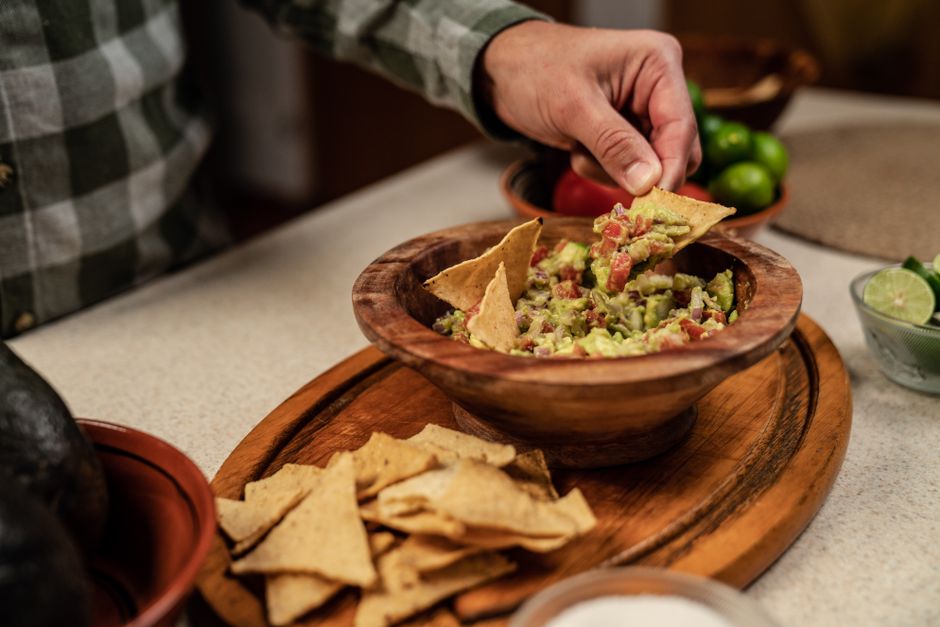
Tortilla chips occupy a strange spot in the snack aisle. They are made from corn, which sounds wholesome, yet they are fried, salted, and usually eaten by the handful with something else. The honest answer is that tortilla chips are not a health food, but they are also not the worst snack you could pick. Whether they fit into a healthy diet depends almost entirely on how they are made, how many you eat, and what you eat them with.
Are Tortilla Chips Healthy?
No. Tortilla chips are a processed snack food, not a nutritious one. That does not make them dangerous, and it does not mean you have to avoid them. It means they should be understood for what they are: a source of refined carbohydrate, fat, and sodium with modest nutritional value.
A standard serving of plain tortilla chips is about 1 ounce, roughly 28 grams or around 10 to 12 chips. That serving typically delivers around 140 calories, 7 grams of fat, 18 grams of carbohydrate, and 120 to 150 milligrams of sodium, depending on the brand. Those numbers vary widely between products.
The corn itself does provide something. Whole corn contains fiber, and corn is naturally a source of some B vitamins and minerals. But most of the nutritional value of the original corn is diluted once it is processed into a chip. What you are mostly getting is calories from starch and oil.
What Is Actually in a Tortilla Chip?
A basic tortilla chip has three or four ingredients: corn, oil, and salt. Sometimes lime is added. That short list is part of why the snack feels more honest than some alternatives, but the simplicity of the ingredient list does not automatically make the food nutritious.
The corn is usually ground into masa, a dough made from treated corn flour. The dough is pressed flat, cut into triangles or rounds, and then either fried or baked. Frying adds a substantial amount of oil. Baking uses far less.
The oil matters. Restaurants and some brands fry in oils that are high in saturated fat, while others use oils higher in unsaturated fat. The type of oil changes the fat profile of the finished chip, but it does not change the fact that the chip is still a calorie-dense, low-fiber snack.
Salt is the other major addition. Sodium is added for flavor, and it adds up quickly. A single ounce of chips can provide a meaningful share of the sodium many adults are advised to limit over a day.
Are Baked Tortilla Chips Healthier Than Fried?
Baked tortilla chips generally contain less fat and fewer calories than fried ones, because they are not cooked in a vat of oil. That is a real difference, and for someone trying to reduce calorie intake, it is a reasonable swap.
But baked does not mean low-calorie. Baked chips are still made from refined corn flour, still salted, and still easy to overeat. The calorie savings per serving are modest, typically in the range of a few dozen calories. If you eat twice as many baked chips because they feel lighter, you can easily cancel out the benefit.
Some baked versions also carry added starches or flavorings that fried versions do not. Reading the ingredient list is more useful than trusting the word “baked” on the front of the bag.





Are Tortilla Chips Better Than Potato Chips?
They are broadly similar. Both are fried or baked starch snacks with added salt and oil. Neither is a meaningful source of protein, fiber, or micronutrients in the amounts people typically eat.
There are small differences. Corn provides a bit of fiber and some minerals that potatoes lose during processing, though the amounts in a single serving are minor. Potato chips are often sliced thinner and can absorb more oil during frying, which can push the fat content higher. These differences are real but small. Choosing tortilla chips over potato chips is not a major health upgrade.
The bigger variable is what you dip them in. A chip eaten plain is one thing. A chip loaded with a heavy cheese dip, a creamy ranch, or a sodium-rich salsa from a jar is a different nutritional picture. The dip often contributes more calories, fat, and sodium than the chip itself.
What About Salsa and Guacamole?
Salsa is the better partner. Tomato-based salsa is low in calories and provides some vitamin C and lycopene from the tomatoes. It is also relatively low in fat. The main concern with store-bought salsa is sodium, which can be high.
Guacamole is more calorie-dense because avocado is a high-fat food. That fat is mostly unsaturated, which is a favorable type, but the calories still count. A few tablespoons of guacamole can add more calories than the chips underneath it. This is not a reason to avoid guacamole. It is a reason to be aware of how much you are eating.
One useful point that often gets lost: the tomato in salsa and the avocado in guacamole are genuinely nutritious foods. The problem is rarely the dip. It is the volume of chips people eat while dipping.
How Do Tortilla Chips Fit Into a Healthy Diet?
They can fit, in the same way most snack foods can fit, if the portion is controlled and the rest of the diet is built on more nutritious foods. The issue is not that a tortilla chip is toxic. The issue is that it displaces foods that would do more for you.
If chips are a regular part of your snacking, a few practical points help:
- Measure out a serving instead of eating from the bag. Portion size is the single biggest factor in how many calories you take in.
- Check the sodium on the label. Brands vary a lot, and some are much saltier than others.
- Pair chips with salsa rather than a heavy cheese or cream dip when you can.
- Treat them as a snack, not a staple. They should not crowd out vegetables, fruit, beans, or whole grains.
None of this is complicated. The trouble with chips is not any single ingredient. It is that they are engineered to be easy to eat in large amounts, and most people eat far more than one serving without noticing.
Are There Healthier Alternatives?
If you want a crunchy snack with more nutritional value, several options do better than tortilla chips on most measures. None of them are perfect, and some carry their own trade-offs.
Plain popcorn, air-popped without added butter or salt, is a whole grain snack that is high in fiber and low in calories for the volume. It is one of the few snack foods that genuinely delivers fiber. Nuts and seeds provide protein, fiber, and unsaturated fat, though they are calorie-dense. Roasted chickpeas offer fiber and protein. Vegetable sticks with hummus add fiber and some protein.
Baked whole-grain crackers can be a middle ground, though many are still high in sodium and refined flour. The label matters more than the category.
If you simply enjoy tortilla chips, there is no strong reason to give them up entirely. The goal is to eat them as part of a diet that is mostly built on whole foods, not to treat a snack as either a health food or a forbidden one.
Frequently Asked Questions
Are tortilla chips healthy?
No, tortilla chips are a processed snack food and not a nutritious choice. They are high in calories, refined carbohydrate, and sodium, with little fiber or protein per serving.
Are baked tortilla chips better for you than fried ones?
Baked chips generally have less fat and fewer calories than fried chips, so they are a reasonable swap. They are still a salty, refined-flour snack and are easy to overeat.
Are tortilla chips healthier than potato chips?
They are broadly similar, since both are salty starch snacks with added oil. Any nutritional differences between them are small.
How many tortilla chips is a serving?
A standard serving is about 1 ounce, which is roughly 10 to 12 chips. Most people eat well beyond that amount without measuring.
