
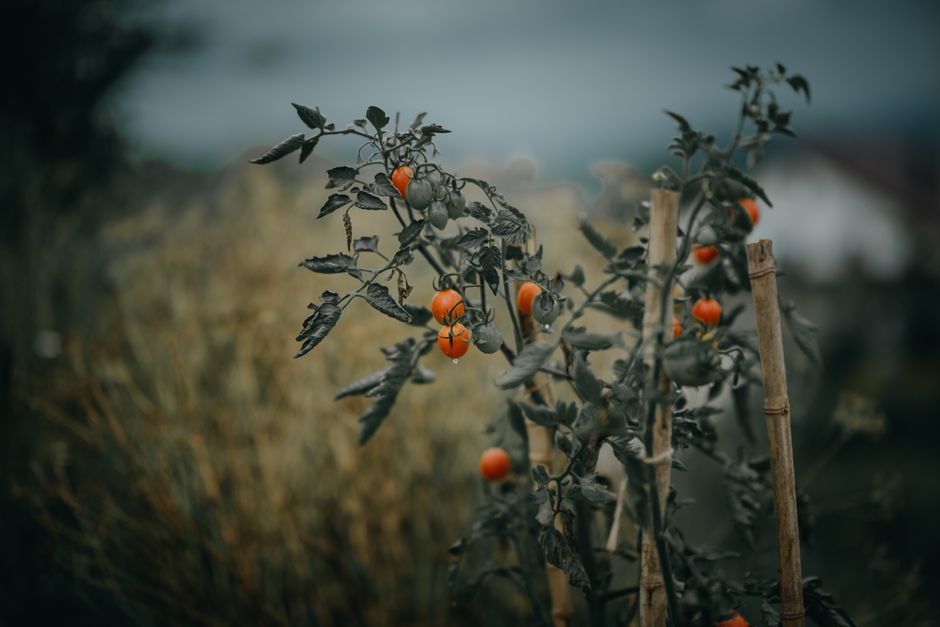
Few garden debates are settled by a single cold night, but the tomato is one of them. Botanically, the tomato is a perennial plant. In its native tropical and subtropical regions, it lives for more than two years, growing into a sprawling vine that keeps producing fruit season after season. Gardeners in temperate climates treat it as an annual because frost kills it before winter, so it completes its life cycle in one growing season. Both labels are correct — they just describe different things: what the plant is versus how we grow it.
Why Is the Tomato Botanically a Perennial?
A perennial is a plant that lives for more than two years. By that definition, the tomato qualifies. Its tissues do not have a built-in expiration date the way an annual like corn or wheat does.
In its center of origin — the Andean region of South America, and later Mexico where it was domesticated — the tomato grows as a long-lived vine. It has no genetic program that tells it to die after setting seed. Left in warm conditions with no frost, it simply keeps growing.
The reason it survives is that its growing points, called meristems, remain active indefinitely. Annual plants eventually trigger a process called senescence, a programmed shutdown that ends the plant’s life after reproduction. Tomatoes do not run that program on a seasonal timer. They keep producing new stems, leaves, and flowers as long as conditions allow.
This is why a tomato plant overwintered indoors or in a greenhouse can live for years. Some cultivated tomato vines have been maintained for well over a year in controlled conditions, continuing to flower and fruit.
Why Do Gardeners Treat Tomatoes as Annuals?
Because frost ends the conversation. The tomato is tropical in origin and has no tolerance for freezing temperatures. A single frost will kill the above-ground plant.
In most of the United States, winters bring freezing nights. That means the plant dies at the end of the growing season whether or not it “wanted” to keep living. Growers then replant from seed or transplants the following spring.
This is a practical decision, not a botanical fact. The plant is a perennial being grown as an annual. Horticulturists sometimes call this being grown as a tender perennial — a plant that is truly perennial but cannot survive the cold in a given climate.
The same logic applies to peppers, eggplants, and many other warmth-loving garden plants. They are all perennials in their native range, grown as annuals where winters freeze.
What Actually Kills a Tomato Plant in Winter?
Cold, mostly. But the details matter because they explain why some plants survive longer than others.
Tomatoes are damaged by temperatures at or below freezing. Ice forms inside plant cells, and the expanding crystals rupture cell walls. Once that happens, the tissue cannot recover. Leaves and stems turn dark and soft within hours.
Even temperatures that stay just above freezing can harm a tomato. Chilling injury can occur at low but non-freezing temperatures, stunting growth and damaging fruit. The exact threshold varies by variety and growing conditions, so gardeners generally protect plants well before the first frost warning.
Soil temperature matters too. Roots are less cold-hardy than many people assume. A plant can look fine above ground while its root system is already failing.
None of this changes the botanical classification. It only explains why the perennial tomato rarely gets the chance to prove it in a temperate garden.
Can You Keep a Tomato Plant Alive for More Than One Year?
Yes. People do it, and it is not especially difficult if you control the temperature.
Overwintering a tomato means moving it somewhere that stays warm, or starting a new plant from a cutting before frost arrives. Indoors, on a sunny windowsill or under grow lights, a tomato can survive the winter and be set back outside in spring.
There are trade-offs. An overwintered plant is often larger and woodier than a fresh seedling, and older plants can become more prone to certain pests and diseases. Some growers find that a fresh plant each year is more productive than a carried-over one. Others keep favorite varieties going indefinitely by rooting cuttings.
This is a case where the perennial nature of the tomato is not just trivia. It is the reason overwintering is possible at all. An annual simply cannot be kept alive past its life cycle, no matter how well you care for it.
Is the Tomato a Fruit, a Vegetable, or Both?
Botanically, the tomato is a fruit. Specifically, it is a berry — a fleshy fruit that develops from a single flower’s ovary and contains seeds.
Legally and culinarily, it is often called a vegetable. In the United States, a Supreme Court ruling in the late 1800s classified the tomato as a vegetable for tariff purposes, based on how it is used in meals rather than its botanical structure.
This is not a contradiction so much as two different systems answering two different questions. Botany asks what the plant part is. Cooking and trade ask how people use it. Both answers can be right at the same time.
The same pattern shows up with the annual-versus-perennial question. Science and gardening use different lenses, and each one is internally consistent.
How Does This Compare Across Common Garden Plants?
Seeing tomatoes next to other plants makes the pattern clearer. The table below shows how several familiar garden crops are classified botanically versus how they are typically grown in temperate climates.
| Plant | Botanical Life Cycle | Typical Garden Treatment |
|---|---|---|
| Tomato | Perennial | Grown as annual (frost kills it) |
| Pepper | Perennial | Grown as annual |
| Eggplant | Perennial | Grown as annual |
| Corn | Annual | Grown as annual |
| Wheat | Annual | Grown as annual |
| Basil | Perennial (tropical) | Grown as annual |
The pattern is hard to miss. Many of the plants we treat as one-season crops are true perennials that simply cannot handle cold. The annual label describes our climate and our habits, not the plant’s biology.
Does the Answer Change by Climate or Variety?
Climate changes the outcome, not the classification. In USDA hardiness zones where winters stay warm and frost-free, tomatoes can survive outdoors year-round and behave exactly like the perennials they are.
Variety matters less than most people think. All tomatoes belong to the same species group, Solanum lycopersicum, and all share the perennial life cycle. Some varieties are described as more cold-tolerant or more vigorous, but none is a true annual.
There are wild tomato relatives that grow in more challenging conditions, and plant breeders have used them to improve cultivated tomatoes. That breeding has not turned the tomato into an annual. It has only adjusted how well certain varieties cope with cold, disease, or drought.
So the answer holds across varieties. If you live somewhere without frost, your tomato plants may live for years. If you live somewhere with hard winters, they will not — but that is about your weather, not the plant’s nature.
Why Does the Confusion Exist at All?
Because two valid systems use the same words differently. Botany classifies plants by their natural life cycle. Horticulture classifies them by how they behave in a particular garden.
When a gardener says “tomatoes are annuals,” they mean “I plant them every spring.” When a botanist says “tomatoes are perennials,” they mean “the plant’s biology supports a multi-year life.” Neither is wrong.
The confusion is not unique to tomatoes. It shows up with many tropical plants grown in temperate gardens. Understanding the difference helps you make better decisions — like whether it is worth overwintering a plant, or whether you should expect it to come back on its own.
For most home gardeners, the practical takeaway is simple. Expect to replant each year if you get frost. But know that the plant itself is capable of much more, and that a little protection can extend its life well beyond a single season.
Frequently Asked Questions
Are tomatoes annual or perennial plants?
Botanically, tomatoes are perennials that can live for more than two years in warm, frost-free conditions. In temperate climates they are grown as annuals because freezing temperatures kill them at the end of the growing season.
Can a tomato plant survive the winter?
Yes, if it is kept warm and protected from frost, such as indoors or in a heated greenhouse. Outdoors in a climate with freezing winters, an unprotected tomato plant will not survive.
Why do gardeners replant tomatoes every year?
Because frost kills the plant in most temperate climates, ending its life before it can continue into a second year. Replanting each spring is a response to cold weather, not to the plant’s natural life cycle.
Is a tomato a fruit or a vegetable?
Botanically, a tomato is a fruit — specifically a berry — because it develops from a flower and contains seeds. In cooking and trade, it is usually treated as a vegetable based on how it is used.
