
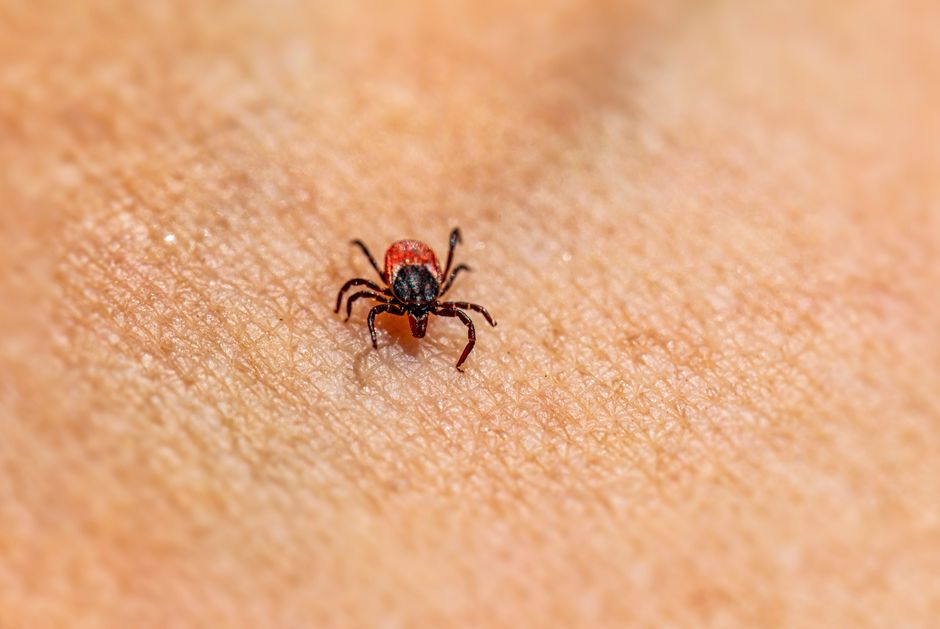
Tick bites are often not itchy at all, which is part of what makes them so easy to miss. Unlike mosquito bites that trigger an almost immediate urge to scratch, a tick bite typically causes no pain and no itching during the actual feeding process. The real confusion happens later, because the bite site can become itchy for a variety of reasons that have nothing to do with the tick itself.
Why Do Tick Bites Usually Not Itch?
Ticks are built to go unnoticed. Their mouthparts are designed to pierce the skin and anchor in place without triggering the pain receptors that other insect bites activate. They also secrete a cement-like substance to hold themselves in place during feeding.
More importantly, tick saliva contains compounds that suppress the local immune response. This includes substances that dampen histamine release, which is the primary chemical that makes bites feel itchy. Without that histamine response, the skin around the bite stays calm and quiet. This is an evolutionary advantage for the tick — an animal that feels a tick feeding will likely remove it before it gets a full blood meal.
When a Tick Bite Site Becomes Itchy
Itching can develop after the tick has been removed. The most common reason is simple wound healing. Once the tick is gone, the body finally mounts a normal inflammatory response to the puncture wound. This can cause redness, mild swelling, and some itching that lasts a few days.
Another cause is a retained mouthpart. If the tick was pulled out incorrectly or broken off during removal, a small piece of the mouthpart can remain embedded in the skin. The body treats this like a splinter, producing localized inflammation and itching until the fragment works its way out or is removed.
Some people also develop a localized allergic reaction to the tick’s saliva even after the tick is gone. This looks similar to a mosquito bite reaction — a raised, red, itchy bump that fades within a week. This is not dangerous on its own, but it can be confusing because it appears after the tick is already off.
Itchy Rash After a Tick Bite: What to Watch For
An itchy rash that appears days after a tick bite deserves attention, but not every rash means the same thing. The classic Lyme disease rash, called erythema migrans, is often described as a bull’s-eye pattern. However, many people with Lyme disease never develop that pattern, and the rash is frequently not itchy at all. In fact, the absence of itching is one of the clinical features that helps doctors distinguish a Lyme rash from other skin conditions.
If the area around the bite becomes intensely itchy, warm, painful, or starts oozing, that points toward a bacterial skin infection rather than a tick-borne disease. This can happen if the bite site was scratched excessively or if the tick was not removed cleanly. A spreading red area with increasing pain or fever requires medical attention.
Some tick-borne illnesses produce a rash as part of the illness. Rocky Mountain spotted fever causes a distinctive spotted rash that usually starts on the wrists and ankles. This rash is typically not itchy either. The key point is this: itching is not a reliable indicator of whether a tick-borne disease was transmitted.


How Long Does Itching Last After a Tick Bite?
For an uncomplicated tick bite, any mild itching or redness typically resolves within 3 to 7 days. The small puncture wound closes quickly, and the local inflammation fades as the skin repairs itself.
If itching persists beyond a week, or if the redness expands rather than shrinks, that is a reason to see a doctor. Expanding redness is a hallmark sign of Lyme disease, even if there is no itching. A bite that remains itchy for weeks without other symptoms is more likely related to a retained mouthpart or a persistent localized reaction, but it should still be evaluated if it does not improve.
Scratching prolongs the problem. Each scratch reopens the microscopic wound and introduces bacteria from the fingernails, which can turn a harmless bite into a secondary infection. Keeping the area clean and covered is more effective than any anti-itch cream.
Are Tick Bites Itchy Compared to Other Insect Bites?
Mosquito bites itch intensely within minutes of the bite. Flea bites itch immediately and often appear in clusters. Bed bug bites typically itch within a few hours. Tick bites are the outlier — they are designed to produce no sensation at all while the tick is attached.
This difference matters for practical reasons. People often assume that if a bite does not itch, it cannot be a tick bite. That assumption is wrong. Many people discover a tick only when they feel it crawling or when they find it during a full-body check after spending time outdoors.
It is also possible to be bitten by a tick and never find the tick at all. The tick feeds, detaches, and falls off — leaving behind nothing but a small red mark that may or may not itch. This is why any unexplained bite mark after outdoor activity in tick-prone areas deserves attention, regardless of whether it itches.
What to Do If You Find a Tick Attached
Removal should be done with fine-tipped tweezers. Grasp the tick as close to the skin surface as possible and pull upward with steady, even pressure. Do not twist, jerk, or squeeze the body. Twisting can break off the mouthparts, and squeezing can force tick fluids into the wound.
After removal, clean the area with rubbing alcohol or soap and water. Then wash your hands. Save the tick in a sealed bag or container if you want to have it identified later, though testing the tick for pathogens is not routinely recommended by most public health authorities. Testing the tick can produce false reassurance or false alarm, and the results do not change the standard recommendation to monitor for symptoms.
Do not use petroleum jelly, nail polish, heat, or alcohol to try to make the tick detach on its own. These methods are ineffective and can cause the tick to regurgitate saliva into the wound, which may increase the risk of disease transmission.
When to See a Doctor After a Tick Bite
Most tick bites do not require medical care. The decision to seek care depends on the type of tick, how long it was attached, and the symptoms that follow.
See a doctor if any of the following occur within a few weeks of a tick bite:
- A red rash develops, especially one that expands outward
- Fever, chills, headache, or muscle aches develop
- The bite site becomes increasingly red, warm, painful, or starts draining
- Joint pain or swelling appears
- Facial weakness or numbness develops
These symptoms can indicate a tick-borne illness and should not be dismissed as a cold or flu. Early treatment for most tick-borne diseases is highly effective, and delaying care makes treatment less straightforward.
It is worth noting that a tick generally needs to be attached for a certain period before it can transmit disease. For Lyme disease, this is typically considered to be around 24 to 48 hours of attachment. For other diseases like anaplasmosis or babesiosis, transmission can occur more quickly. If the tick was attached for less than 24 hours and was removed cleanly, the risk of disease transmission is low, though not zero.
How to Prevent Tick Bites
Prevention is more reliable than any post-bite treatment. Ticks are most active in warm months, but some species remain active whenever temperatures are above freezing.
When spending time in grassy, brushy, or wooded areas, treat clothing and gear with permethrin, which kills ticks on contact. Apply insect repellent containing DEET, picaridin, or oil of lemon eucalyptus to exposed skin. After returning indoors, check your entire body for ticks, paying special attention to the scalp, behind the ears, under the arms, inside the belly button, behind the knees, and between the legs.
Showering within two hours of coming indoors has been shown to reduce the risk of Lyme disease. It also provides a good opportunity to do a thorough tick check. Tumble drying clothes on high heat for at least 10 minutes will kill ticks on clothing.
If you live in a high-risk area, consider treating your yard by keeping grass short, removing leaf litter, and creating a barrier of wood chips or gravel between lawn and wooded areas. This reduces the habitat that ticks need to survive.
Frequently Asked Questions
Do tick bites itch right away?
No, tick bites typically do not itch while the tick is attached because tick saliva suppresses the immune response. Itching usually only develops after the tick is removed, if it develops at all.
Can a tick bite itch and still be normal?
Yes, mild itching at the bite site after removal is a normal healing response. The itching should fade within a week and should not be accompanied by spreading redness or fever.
What does a tick bite look like when it is not itchy?
A non-itchy tick bite often appears as a small red dot or slightly raised bump, similar to a tiny pimple. The classic expanding bull’s-eye rash of Lyme disease is also usually not itchy.
How long after a tick bite does a rash appear?
If a rash develops, it typically appears within 3 to 30 days after the bite. The most common window is 7 to 14 days, and the rash gradually expands outward over several days.
