
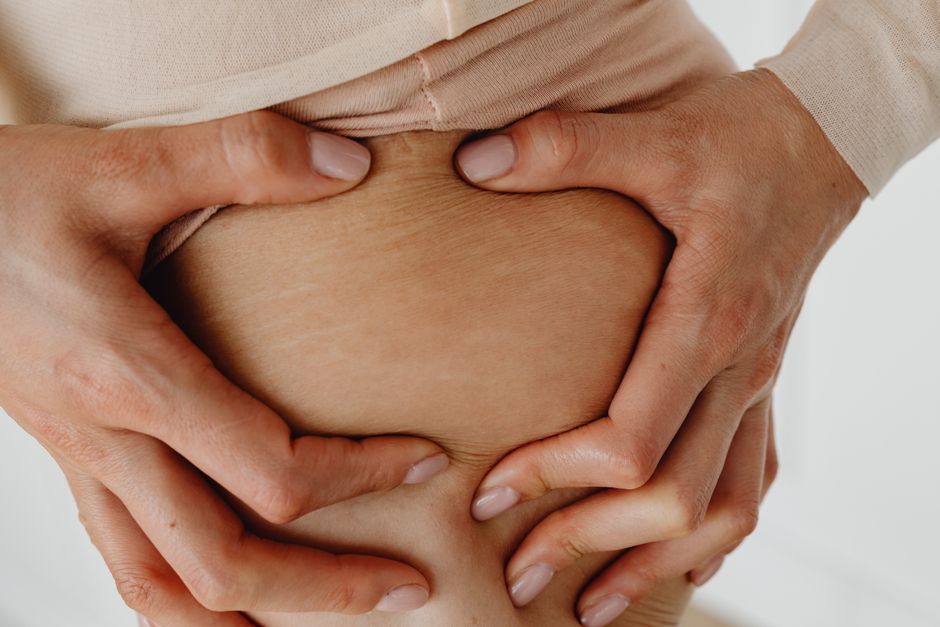
Stretch marks are not bad for your physical health, but they are a real cosmetic concern for many people. They are a common and harmless skin change that happens when the skin stretches or shrinks quickly. The medical term is striae distensae, and they affect people of all ages, genders, and skin types.
What Exactly Are Stretch Marks?
Stretch marks are a form of scarring on the skin’s middle layer, called the dermis. When the skin stretches faster than it can grow, the collagen and elastin fibers in the dermis tear. These tears show through the outer layer of skin as lines or streaks.
Think of it like fabric that is pulled too hard. The threads inside break even if the outer surface looks intact. The body then tries to repair those broken fibers, which creates the visible marks you see.
They are not a sign of injury that needs medical care. They are a normal response to rapid physical change.
Are Stretch Marks Bad for Your Health?
No. Stretch marks are not a medical disease and they do not harm your body. They do not affect your internal organs, your muscles, or your overall physical function.
The only true downside is appearance. Some people feel self-conscious about them, especially in areas that are often visible like the abdomen, thighs, hips, breasts, or upper arms.
In rare cases, stretch marks can be a symptom of an underlying condition like Cushing’s syndrome or Marfan syndrome. But for the vast majority of people, stretch marks appear for ordinary reasons and carry no health risk.
Why Do Stretch Marks Appear?
The most common cause is rapid weight gain or loss. Pregnancy is a leading trigger because the belly grows quickly over several months. Puberty also causes stretch marks in many teenagers as their bodies grow faster than their skin can adapt.
Muscle gain from bodybuilding can cause them too. Even a rapid growth spurt in height can lead to stretch marks on the back or thighs.
Genetics play a large role. If your parents had stretch marks, you are more likely to develop them. Hormones also matter. Cortisol, a stress hormone, can weaken the skin’s elastic fibers, making tears more likely.





Do Stretch Marks Go Away on Their Own?
Stretch marks do not fully disappear without treatment. They do, however, fade significantly over time on their own.
A new stretch mark often appears red, purple, or pink. This color comes from blood vessels showing through the thin, stretched skin. Over months or years, those blood vessels constrict and the mark fades to a lighter, silvery-white color.
The texture remains. Even faded stretch marks are slightly depressed or raised compared to the surrounding skin. They become less noticeable but rarely vanish completely.
What Treatments Actually Work?
Evidence for stretch mark treatments is mixed. No cream, oil, or procedure has been proven to erase stretch marks completely. Some treatments can improve their appearance, but results vary from person to person.
Topical treatments like creams containing tretinoin, a form of vitamin A, have shown some benefit in studies. Tretinoin may help rebuild collagen and improve the color of newer stretch marks. It is not recommended during pregnancy. Other over-the-counter creams and oils are widely sold, but clinical evidence for most is weak.
Laser therapy is one of the more studied options. Some research suggests that pulsed dye laser treatment can reduce redness in newer stretch marks. Fractional laser treatments may help improve texture. These procedures require multiple sessions and can be costly.
Microneedling is a newer approach. It uses tiny needles to create micro-injuries in the skin, prompting collagen production. Some small studies show modest improvement, but larger trials are needed.
Can You Prevent Stretch Marks?
Complete prevention is not possible for everyone. Genetics and hormonal factors are largely out of your control. That said, maintaining a steady weight may reduce your risk.
Rapid weight gain is the most common trigger. Slow, gradual changes in body size give the skin more time to produce new collagen and adapt. This applies to weight gain, weight loss, and muscle building.
Moisturizing the skin keeps it supple, but no cream has been proven to prevent stretch marks. Staying hydrated and eating a balanced diet supports skin health overall, but these habits do not guarantee you will avoid stretch marks.
During pregnancy, many women apply cocoa butter or almond oil hoping to prevent marks. Research has not confirmed that these products work. A 2023 review of multiple studies found no strong evidence that any topical cream prevents pregnancy-related stretch marks.
Are Stretch Marks Bad for Your Skin’s Health?
Stretch marks are not a sign of damaged or unhealthy skin. They are a cosmetic change. The skin around a stretch mark is still functional and protective.
One thing to watch is the skin’s elasticity. Stretch marks indicate that the skin has lost some of its ability to stretch and snap back. This does not make the skin weaker in a dangerous way, but it does mean future stretching may create more marks.
Sun exposure can make stretch marks more noticeable over time. Faded marks are already lighter than surrounding skin. Sunlight can darken normal skin while stretch marks stay light, increasing the contrast. Using sunscreen on affected areas can keep the contrast lower.
When Should You See a Doctor?
Stretch marks alone do not require a doctor visit. But there are situations where a check-up is reasonable.
If stretch marks appear suddenly without a clear cause like weight gain or pregnancy, mention it to your doctor. The same applies if they cover a large portion of your body or look unusual. These patterns can occasionally point to hormonal conditions.
Stretch marks that are very red, itchy, or painful should also be evaluated. Normal stretch marks are not painful. Persistent itching or discomfort is not typical.
If you are considering treatment, a dermatologist is the right specialist to consult. They can assess your skin type and discuss which options, if any, are realistic for your situation.
Are Stretch Marks Bad for Your Self-Image?
This is the most honest answer to give. Stretch marks are not medically bad, but they can feel bad emotionally. That is a valid experience.
Social media and advertising often present smooth, unmarked skin as the standard. This creates pressure that does not reflect reality. Most people have stretch marks. They are a normal part of human skin.
If stretch marks cause you significant distress, that is worth addressing. Some people find that simply knowing how common they are reduces the stigma. Others prefer to seek treatment to reduce their visibility. Both approaches are reasonable.
There is no medical reason to hide stretch marks. They are not a sign of poor health, poor hygiene, or poor lifestyle choices.
Frequently Asked Questions
Do stretch marks mean I am unhealthy?
No. Stretch marks are a normal skin change caused by rapid growth, weight change, or hormonal shifts. They are not linked to poor health or lifestyle choices.
Can stretch marks be removed completely?
No treatment fully removes stretch marks. Some treatments like lasers or prescription creams can make them less visible, but the mark remains.
Are stretch marks permanent?
Yes, in the sense that they do not fully disappear. They fade and become less noticeable over time, but the texture change is usually permanent.
Do stretch marks mean my skin is damaged?
Stretch marks are a type of scar in the skin’s middle layer. The skin still functions normally, but the collagen fibers in that specific area have been torn.
