
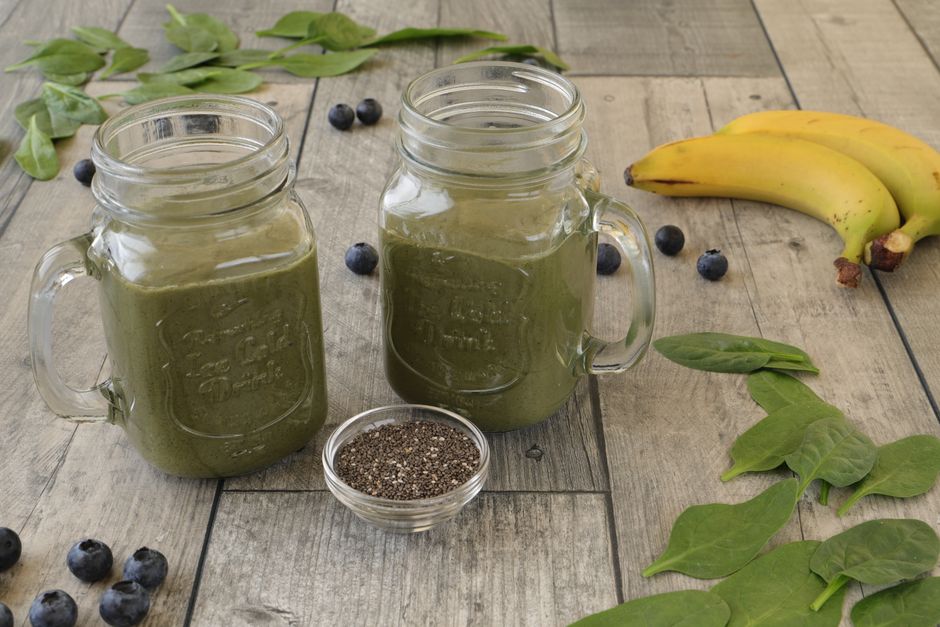
Smoothies can be a helpful tool for weight loss, or they can be a fast path to weight gain. The difference comes down to what you put in the blender and how you drink it. A smoothie made mostly of vegetables, a small amount of fruit, and a protein source can keep you full for hours. A smoothie loaded with fruit juice, sweetened yogurt, nut butter, and granola can easily contain more calories than a fast-food meal.
What Makes a Smoothie a Calorie Trap?
Liquid calories do not satisfy hunger the way solid food does. When you chew food, your body gets signals that you are eating. Drinking the same ingredients bypasses some of those signals. Research consistently shows that people feel less full after drinking calories than after eating the same calories in solid form.
Portion size is the biggest problem. A typical restaurant smoothie is 16 to 24 ounces. Many contain over 500 calories. Some fruit-heavy smoothies from popular chains exceed 700 calories. That is a meal replacement, not a snack. If you drink that alongside your normal meals, you will gain weight.
Common add-ins make the problem worse. A single tablespoon of nut butter adds about 100 calories. A scoop of protein powder adds 100 to 150 calories. A cup of fruit juice adds 100 to 120 calories. These seem small individually, but they stack quickly. Before you know it, your “healthy” smoothie has 800 calories.
Can Smoothies Actually Help You Lose Weight?
Yes, but only if the smoothie replaces a meal rather than adds to one. A smoothie that contains protein, fiber, and healthy fat can be a legitimate meal replacement. The key is that it must stand in for breakfast or lunch, not accompany it.
Protein is the most important ingredient for weight loss in a smoothie. Studies have found that protein reduces hunger hormones and increases fullness. Greek yogurt, plain kefir, or unsweetened protein powder are solid choices. Aim for at least 20 grams of protein in a meal-replacement smoothie.
Fiber matters just as much. Fiber slows digestion and stabilizes blood sugar. Vegetables like spinach, kale, or cucumber add fiber with very few calories. Whole fruits like berries and apples provide fiber too. Fruit juice removes the fiber and concentrates the sugar, so it has no place in a weight-loss smoothie.
The evidence for meal replacement shakes in general is well established. Clinical trials have shown that replacing one or two meals per day with a controlled-calorie shake leads to greater short-term weight loss than standard dieting. A homemade smoothie can work the same way if you control the ingredients and portion.
What Is the Right Formula for a Weight-Loss Smoothie?
Use a simple structure. Start with a liquid base, add a protein source, add vegetables, add a small amount of fruit for taste, and include a healthy fat only if you need it.
- Liquid base: Unsweetened almond milk, plain water, or plain unsweetened coconut water. Avoid dairy milk if you are watching calories, but note that cow’s milk adds protein.
- Protein: Plain Greek yogurt, cottage cheese, silken tofu, or unsweetened protein powder.
- Vegetables: Spinach, kale, cucumber, zucchini, or celery. These add volume and fiber for almost no calories.
- Fruit: A half cup of berries, a small banana, or a half apple. Whole fruit only, never juice.
- Healthy fat: Optional. A teaspoon of chia seeds, flaxseed, or a small piece of avocado. Skip nut butter unless you are using the smoothie as a full meal replacement.
A well-built smoothie should land between 250 and 400 calories. If it exceeds that, you are likely adding too many calorie-dense ingredients. Weigh or measure your ingredients at least once to learn what a real portion looks like. Most people underestimate how much they pour.





How Does Blending Change the Food?
Blending breaks down plant cell walls. This makes some nutrients easier to absorb. For example, the lycopene in tomatoes and the beta-carotene in carrots are better absorbed from blended or cooked forms than from raw whole pieces. That is a genuine benefit of smoothies.
But blending also changes how quickly sugar enters your bloodstream. When fruit is whole, the fiber slows sugar absorption. Blending breaks the fiber into smaller pieces, which speeds up digestion. Your blood sugar rises faster after a smoothie than after eating the same fruit whole. For most people this is not a major problem, but it matters for anyone with diabetes or insulin resistance.
The bigger issue is that blended food leaves your stomach faster than solid food. A whole apple takes time to chew and digest. The same apple blended into a drink passes through more quickly. This is why you may feel hungry an hour after a smoothie even when you ate a full meal’s worth of calories.
Are Green Smoothies Healthier Than Fruit Smoothies?
Green smoothies are usually lower in sugar and calories than fruit-heavy smoothies. Spinach, kale, and cucumber add bulk with very few calories. A green smoothie with one cup of spinach, a half cup of berries, and Greek yogurt will typically be around 200 to 300 calories and contain 15 to 20 grams of protein.
Fruit smoothies are where people get into trouble. A smoothie made with two cups of mango, a banana, and orange juice can easily contain 60 to 80 grams of sugar. That is more sugar than a can of soda. The sugar in fruit is natural, but your body processes it similarly to added sugar when the fiber is destroyed.
That does not mean fruit smoothies are toxic. It means they are dessert, not a health food. If you want a fruit smoothie, treat it as a treat. Use a small amount of fruit, skip the juice, and add protein and vegetables to balance it.
Should You Drink a Smoothie Before or After a Workout?
Both can work, but they serve different purposes. A smoothie before a workout provides quick energy. A smoothie after a workout helps with recovery and rebuilding muscle. The evidence supports both, but the details matter.
For a pre-workout smoothie, keep it lighter. A small smoothie with a half banana, a handful of berries, and water or unsweetened almond milk is enough. You want carbohydrates for energy, but you do not want a heavy drink sitting in your stomach while you exercise. Drink it 30 to 60 minutes before you start.
For a post-workout smoothie, prioritize protein. Research shows that consuming protein within a few hours after exercise supports muscle repair. A smoothie with Greek yogurt or protein powder, a small amount of fruit, and water or milk is a solid choice. You do not need a massive shake unless you did intense or prolonged exercise.
The post-workout smoothie should not be an excuse to add extra calories. If weight loss is your goal, count the smoothie as part of your daily calorie intake. Drinking 500 calories after a 30-minute walk will cancel out the calories you burned.
What About Store-Bought Smoothies and Smoothie Bowls?
Store-bought smoothies are almost always higher in calories and sugar than homemade versions. Commercial smoothie chains use fruit juice as a base, add sweetened yogurt, and often include sherbet or sorbet for texture. These drinks are closer to milkshakes than to health food.
Check the nutrition information before you buy. A small smoothie from a chain can still contain 300 to 400 calories. A large one can exceed 700 calories. If you are going to buy a smoothie, choose the smallest size, ask for no added sugar, and request they use water or unsweetened milk instead of juice.
Smoothie bowls are a separate category. They are often marketed as healthy, but the toppings can be a problem. Granola, coconut flakes, honey, and nut butter add hundreds of calories. A smoothie bowl with toppings can easily reach 600 to 800 calories. If you order one, ask for the toppings on the side so you can control the portion.
Do Smoothies Keep You Full as Long as Regular Food?
No. Solid food keeps you full longer than the same food blended into a drink. This is a consistent finding across research studies. Chewing triggers hormones that signal fullness. The physical presence of food in the stomach also slows emptying and prolongs fullness.
That said, the right ingredients can narrow the gap. Protein and fiber in a smoothie will keep you fuller than a sugary drink with no protein. A smoothie with 25 grams of protein and 10 grams of fiber will satisfy hunger for several hours. It just will not last as long as a solid meal with the same nutrients.
If you know you get hungry quickly after smoothies, add a solid food on the side. A handful of almonds, a hard-boiled egg, or a piece of cheese alongside your smoothie can extend fullness. This turns your smoothie into part of a balanced meal rather than the whole meal.
Frequently Asked Questions
Are smoothies good for weight loss every day?
Yes, if they replace a meal and stay within your calorie target. A daily meal-replacement smoothie with protein, vegetables, and a small amount of fruit can support weight loss.
How many calories should a weight-loss smoothie have?
Aim for 250 to 400 calories for a meal replacement. Snack-sized smoothies should be closer to 150 to 200 calories.
Is fruit juice in a smoothie bad for weight loss?
Fruit juice adds concentrated sugar without fiber and makes weight loss harder. Use whole fruit or water instead.
Can I lose weight by only drinking smoothies?
No. A smoothie-only diet is not sustainable and lacks essential nutrients. Use smoothies as meal replacements for one or two meals, not all of them.
