
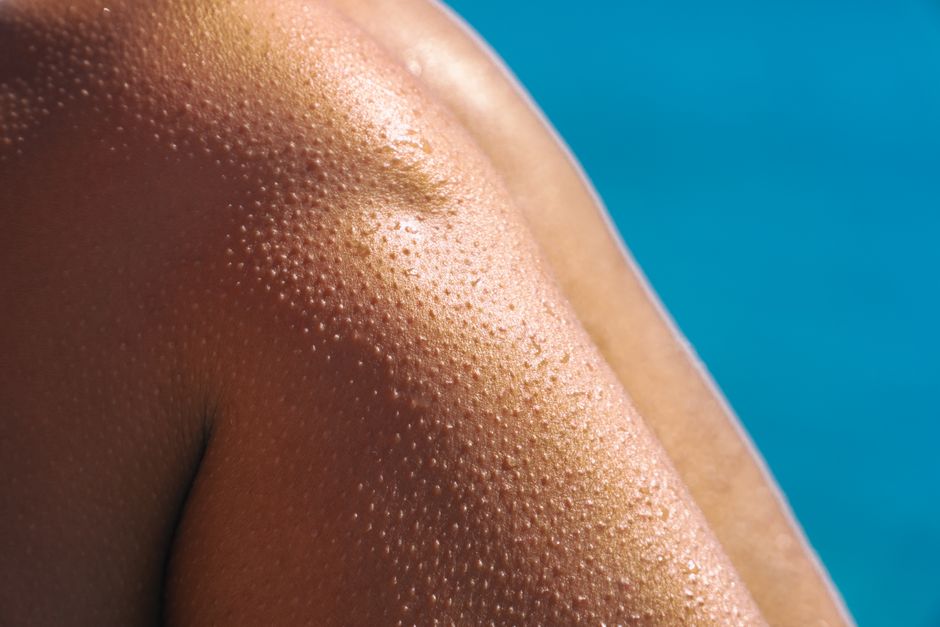
The outer layer of your skin is made of dead cells. That surprises most people. Your skin as a whole organ is very much alive, but the thin surface you touch, wash, and moisturize is a sheet of cells that have finished their job and shut down. The living part sits underneath, constantly building replacements.
The answer depends on which layer you mean. The epidermis, your skin’s outer layer, is a stack of cells in different stages of life and death. At its base, cells divide actively. As they move toward the surface, they flatten, lose their nucleus and internal structures, and die in a controlled way. What reaches the surface is a tough, waterproof layer of dead cell remnants called the stratum corneum. So both answers are right, just for different depths of skin.
Which Layers of Skin Are Alive and Which Are Dead?
Skin has two main layers, and they have very different biology. The dermis, the thicker layer underneath, is fully alive. It holds blood vessels, nerves, hair follicles, sweat glands, and collagen-producing cells called fibroblasts. The epidermis sits on top of it and is where the life-to-death transition happens.
The epidermis itself has layers. The deepest layer, the stratum basale, is where new skin cells are born through cell division. Cells above it, in the stratum spinosum and stratum granulosum, are still living but are changing. They are flattening and beginning to produce keratin, a tough structural protein. By the time cells reach the stratum corneum, the outermost layer, they have lost their nuclei and most of their internal machinery. They are dead in the biological sense: they no longer carry out metabolism, divide, or repair themselves.
The stratum corneum is not waste, though. It is a carefully built barrier. Those dead cells are packed with keratin and surrounded by lipids that keep water in and irritants out. The layer renews itself constantly as cells from below push upward and the oldest surface cells flake off.
How Does a Skin Cell Go From Living to Dead?
The process is called keratinization, or cornification. It is a programmed, orderly transition, not a random collapse. Cells leave the basal layer, move upward, and gradually change their internal chemistry.
As they rise, they build up keratin and other structural proteins. They also form a tough envelope around themselves and begin to lose their nucleus and organelles. Eventually the cell’s internal self-destruction machinery dismantles what is left. What remains is a flattened, protein-filled sac that still does a job: it forms part of the barrier.
This is different from ordinary cell death after injury. The skin’s surface cells are meant to end this way. The whole system is designed so that the outermost layer is replaceable and disposable.
How Fast Does Skin Renew Itself?
Skin constantly replaces itself. New cells form at the base of the epidermis and move upward over time. The full journey from the deepest layer to shedding at the surface is often described as taking roughly a month, though estimates vary and the rate differs by body site, age, and other factors.
This turnover is why superficial scrapes heal and why the surface of your skin is never the same cells for long. The rate slows with age, which is one reason older skin can look duller and heal more slowly. The general direction of that change is well established, though exact timelines vary a lot between people.
Are Dead Skin Cells Actually Useless?
No. The dead cells on your surface are a working barrier, not debris. The stratum corneum is one of the most important protective structures in the body.
- It limits water loss, helping keep your body from drying out.
- It blocks many chemicals, microbes, and allergens from getting in.
- It provides mechanical protection against friction and minor injury.
- It helps shield deeper living cells from ultraviolet radiation.
When this layer is damaged, as in a burn or a scrape that removes it, the body loses much of that protection. That is why a serious burn is a medical emergency: the barrier is gone, and with it the ability to hold in fluid and keep out infection.
What Happens When Dead Skin Cells Build Up?
Normally dead cells shed gradually. When shedding is uneven or cells build up, you can see it. Flaking, scaling, and roughness are signs that the surface layer is not turning over smoothly.
Some buildup is harmless, like dry patches or calluses from friction. Calluses are actually a protective response: repeated pressure makes the skin thicken its outer layer. Other patterns of scaling can be a sign of a skin condition, and the appearance alone does not identify which one. Conditions like eczema, psoriasis, and simple dryness can look similar to an untrained eye.
This is where a lot of skincare marketing goes wrong. Scrubs and exfoliants remove surface cells, but the evidence that aggressive exfoliation improves skin health is limited. Over-exfoliating can damage the barrier and cause irritation. Some clinicians advise gentler, less frequent exfoliation, but this is general practice rather than a strongly established recommendation. The honest position: the barrier does important work, and stripping it too hard works against you.
Do Dead Skin Cells Play a Role in Skin Health and Disease?
They do, in ways that are easy to miss. The outer layer is not just a passive shield. It is part of an active system that signals and responds.
Research has shown that cells in the outer epidermis can release signaling molecules that affect deeper layers, including immune responses and pigment-producing cells. The barrier also hosts a community of microbes, and how the skin manages that community matters for health. Some studies suggest that disruptions in the skin barrier and its microbial balance are linked to inflammatory skin conditions, though the exact relationships are still being worked out.
One clarification worth knowing: the idea that dead skin cells are “toxins” the body needs to flush out is not supported by physiology. The skin is not a major route for eliminating waste. The liver and kidneys handle that. Surface cells shed because they are at the end of a programmed life cycle, not because they are toxic.
Does Skin Cell Turnover Change With Age?
Yes. Turnover slows as people get older. The epidermis thins, the barrier becomes less efficient at holding water, and healing takes longer. These changes are well documented, though the pace differs widely between individuals.
Sun exposure accelerates some of these changes. Ultraviolet radiation damages DNA in living skin cells and can disrupt normal turnover. This is one reason daily sun protection is widely recommended by dermatology organizations: it protects the living layers that produce new cells.
What Does This Mean for How You Care for Your Skin?
The practical takeaway is simple. Your living skin is underneath, and the dead layer on top protects it. Skincare that respects the barrier tends to make more sense than skincare that fights it.
Gentle cleansing, moisturizing to support the barrier, and sun protection are the basics with the most consistent support. Aggressive scrubbing, harsh peels, and products promising to “remove dead skin” are often oversold. Removing some dead cells is normal and fine; removing too much can leave the living layers exposed and irritated.
If you have persistent scaling, redness, or skin that does not improve with basic care, that is a reason to see a clinician. The surface can look similar across several conditions, and identifying the cause matters more than guessing from a photo or a product label.
Frequently Asked Questions
Are skin cells alive or dead?
Both, depending on the layer. Cells at the base of the epidermis are alive and dividing, while the outermost surface cells are dead and form a protective barrier.
Is the top layer of skin made of dead cells?
Yes. The stratum corneum, the outermost layer of the epidermis, is made of dead, keratin-filled cells that shield the living layers beneath.
Do dead skin cells fall off on their own?
Yes, they shed gradually as part of normal turnover. The process can be uneven, which is why some people see flaking or roughness.
Can dead skin cells cause skin problems?
Buildup of dead cells can contribute to flaking and scaling, and barrier disruption is linked to some inflammatory skin conditions. The appearance alone does not identify the cause, so persistent changes should be checked by a clinician.
