
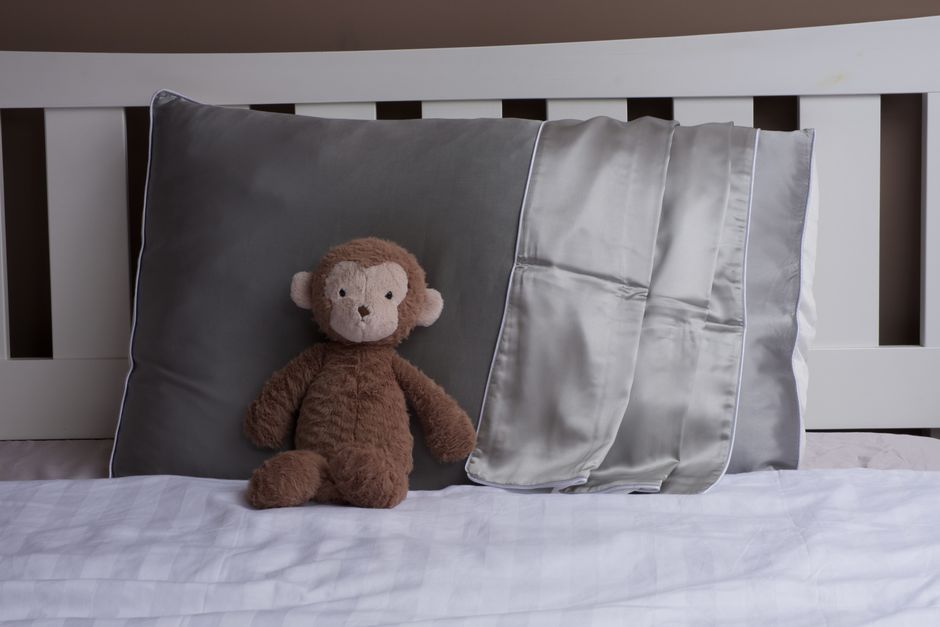
A silk pillowcase is not a treatment for acne, wrinkles, or hair loss. It is a smooth, low-friction fabric that may reduce mechanical irritation and moisture loss overnight, and that is roughly the full extent of what the evidence supports. If you are buying one hoping it will clear your skin, that expectation is not backed by clinical research.
What silk can reasonably do is create less friction and absorb less moisture than cotton. Those are physical properties, not medical claims. Whether that translates into visibly better skin depends on why your skin is irritated in the first place.
Are Silk Pillowcases Good For Skin?
Silk pillowcases may help skin that is being mechanically irritated by fabric friction or dried out by a moisture-wicking weave. They will not change sebum production, clear pores, fade pigmentation, or reverse sun damage.
The case for silk rests on three physical traits:
- Silk fibers are smoother than woven cotton, so there is less drag as your face moves across the surface during sleep.
- Silk is a protein fiber and absorbs less water than cotton, so it pulls less moisture from skin and hair.
- Silk does not hold onto oils and residue the way some fabrics do, though this depends heavily on weave and finish.
None of these traits has been tested in controlled trials measuring acne lesion counts, wrinkle depth, or skin barrier function. The reasoning is sound. The clinical proof is not there.
That distinction matters. A fabric can be gentler on skin without being a skin treatment. People who sleep on silk and report improvement are usually describing less morning redness, less creasing on the cheek, or less hair breakage. Those are plausible outcomes of reduced friction and moisture loss. They are not evidence that silk changes skin biology.
What Does Silk Actually Do Differently Than Cotton?
Silk creates less friction and holds less moisture than standard cotton percale. Those two differences explain almost every claim made about silk pillowcases.
Friction matters more than most people realize. When you sleep, your face presses into and drags across the pillow surface for hours. Cotton fibers have a rougher texture at the microscopic level. For someone with sensitive skin, eczema, or active acne, that repeated drag can contribute to irritation and to the cycle of touching and scratching that makes breakouts worse.
Moisture matters too. Cotton is absorbent by design. It wicks water away from whatever it touches, including your face and hair. Silk absorbs far less. For people who wake with dry, tight-feeling skin or frizzy hair, that difference is often noticeable.
What silk does not do is regulate temperature better than cotton in any consistent way. Marketing often claims silk is cooler. The reality is more complicated. Silk is a poor conductor of heat, which is why it feels cool to the touch initially. But it also traps heat against the body. Whether silk feels cooler or warmer than cotton overnight depends on the weave, the weight, and the person. There is no reliable evidence that silk pillowcases reduce night sweats or improve sleep temperature regulation.
Can A Silk Pillowcase Help With Acne?
There is no clinical evidence that silk pillowcases reduce acne. The reasoning behind the claim is indirect at best.
Acne is driven by four main factors: excess sebum production, clogged hair follicles, the bacterium Cutibacterium acnes, and inflammation. None of those is caused by your pillowcase fabric. A pillowcase can contribute to irritation if it traps oil, sweat, and skincare residue against your skin night after night, and a rough surface can add mechanical irritation on top of existing breakouts.
So the honest position is this: switching to silk will not treat acne. It may reduce one source of irritation for people whose breakouts are worsened by friction or by lying in residue. That is a small piece of a much larger picture.
If you have acne, the interventions with real evidence behind them are topical retinoids, benzoyl peroxide, salicylic acid, and prescription treatments from a dermatologist. Changing your pillowcase fabric is not in that category. Washing your pillowcase regularly matters more than what it is made of.





Do Silk Pillowcases Prevent Wrinkles?
Silk pillowcases do not prevent wrinkles. The claim comes from the idea that pressing your face into a rough fabric for eight hours creates creases, and that smoother fabric means fewer creases.
Sleep creases are real. You can see them in the morning as temporary lines on the cheek or forehead. They usually fade within an hour. Whether those temporary creases contribute meaningfully to permanent wrinkles over decades is not established. Facial aging is driven primarily by sun exposure, genetics, and the natural loss of collagen and elastin over time. Sleep position may play a minor role, but it is not a primary driver.
If wrinkles are your concern, sun protection and proven topical treatments like retinoids will do far more than any pillowcase. Silk may feel nicer against your face. It will not stop the aging process.
Is Silk Better For Hair Than Cotton?
Silk is genuinely gentler on hair than cotton for most people. This is the claim with the strongest physical basis.
Cotton fibers grip and pull at hair strands as you move during sleep. That friction contributes to breakage, split ends, and frizz, especially for people with fine, curly, or chemically treated hair. Silk’s smoother surface lets hair slide rather than catch. Silk also absorbs less moisture, so it does not strip the natural oils that keep hair conditioned overnight.
People with textured or curly hair often notice the biggest difference, because their hair is more prone to tangling and breakage. Straight, resilient hair may show less change. This is a mechanical effect, not a treatment, and it is about preventing damage rather than repairing it.
Are There Downsides Or Things To Watch For?
Silk pillowcases are expensive, require careful washing, and are not for everyone. Those are practical drawbacks, not safety concerns.
Most silk pillowcases need hand washing or a delicate cycle with a gentle detergent. Hot water and harsh detergents can damage the fibers. Many people find the upkeep more trouble than it is worth.
There is also the question of what you are actually buying. “Silk” and “satin” are not the same thing. Satin describes a weave, not a fiber. A satin pillowcase can be made from polyester, which is smooth but does not share silk’s moisture properties. If moisture retention is what you want, check that the label says mulberry silk or 100 percent silk, not just satin.
For people with a genuine silk allergy, which is uncommon but documented, silk bedding can trigger reactions. And if your skin irritation is caused by a detergent residue or a dust mite allergy rather than fabric friction, changing to silk will not fix it. Washing your bedding more often and using fragrance-free detergent would be the more useful step.
Frequently Asked Questions
Are silk pillowcases good for skin?
They may reduce friction and moisture loss, which can mean less morning irritation for some people. There is no clinical evidence that they treat acne, wrinkles, or any skin condition.
Do silk pillowcases actually prevent wrinkles?
No. Facial aging is driven mainly by sun exposure, genetics, and collagen loss over time, not by pillowcase fabric. Silk may reduce temporary sleep creases, but that is not the same as preventing wrinkles.
Is satin the same as silk for a pillowcase?
No. Satin is a type of weave and can be made from polyester or other fibers, while silk is the fiber itself. If you want silk’s moisture properties, look for a label that says 100 percent silk or mulberry silk.
How often should I wash a silk pillowcase?
Once a week is a reasonable routine, similar to other bedding, and more often if you have oily or acne-prone skin. Follow the care instructions, since most silk requires gentle washing to avoid damage.
