
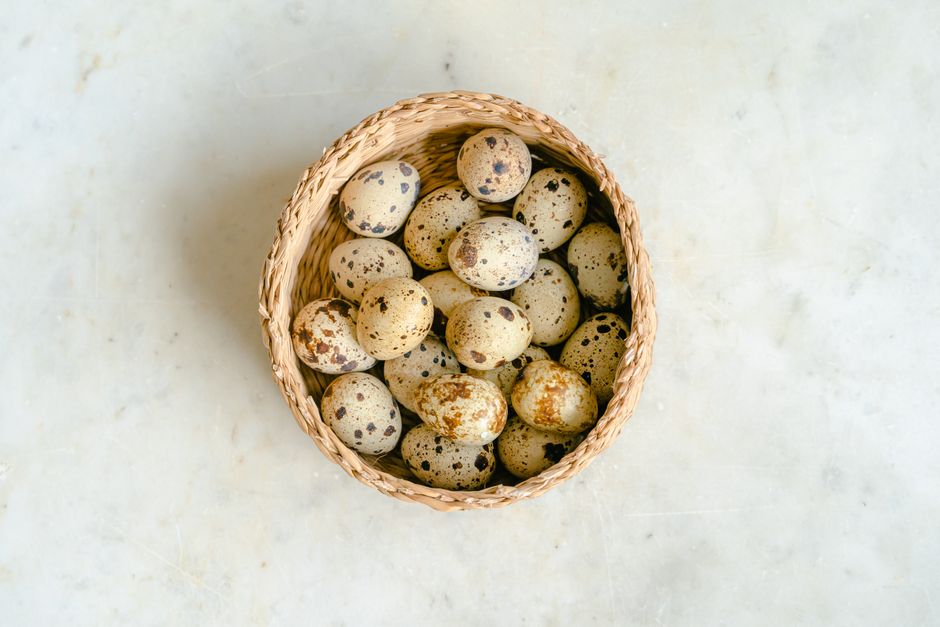
Quail eggs are small, speckled eggs about the size of a large grape, and they are a legitimate food. They contain complete protein, B vitamins, and minerals, and for most healthy adults they fit into a balanced diet the same way chicken eggs do. The catch is that they are often sold with health claims that go far beyond what the evidence supports. They are not a medicine, and eating them will not treat allergies, asthma, or any other condition.
If you want the short version: quail eggs are nutritious, they are safe for most people when handled and cooked properly, and they are not a cure for anything. The health claims attached to them are the part worth examining closely.
What Nutrients Do Quail Eggs Actually Contain?
Quail eggs are nutrient-dense for their size, but the key word is size. One quail egg weighs roughly 9 to 10 grams, compared with about 50 grams for a large chicken egg. That means you need several quail eggs to match the nutrition of a single chicken egg.
Per gram of egg, the nutrient profile is broadly similar to a chicken egg. Both are complete protein sources, meaning they supply all nine essential amino acids the human body cannot make on its own. Both contain vitamin B12, riboflavin, folate, choline, selenium, and phosphorus, mostly concentrated in the yolk.
The table below compares a typical quail egg with a typical large chicken egg. Values are approximate and drawn from standard food composition databases.
| Nutrient | 1 quail egg (~9 g) | 1 large chicken egg (~50 g) |
|---|---|---|
| Calories | ~14 | ~72 |
| Protein | ~1.2 g | ~6.3 g |
| Fat | ~1 g | ~4.8 g |
| Cholesterol | ~76 mg | ~186 mg |
| Vitamin B12 | ~0.08 mcg | ~0.45 mcg |
| Selenium | ~2.7 mcg | ~15 mcg |
Notice the pattern. A quail egg is not a concentrated superfood. It is a small egg. The reason it looks impressive in some articles is that the numbers are sometimes quoted per 100 grams, which is roughly ten quail eggs. Nobody eats ten quail eggs in one sitting without noticing.
One quail egg does contain a higher proportion of cholesterol relative to its weight than a chicken egg. That fact gets repeated a lot. Whether it matters is a separate question, and the answer is more complicated than the headline suggests.
Are Quail Eggs Healthier Than Chicken Eggs?
No. Gram for gram, quail eggs and chicken eggs are nutritionally close enough that the difference is not meaningful for most people. Chicken eggs are generally cheaper, larger, and easier to buy, which makes them the more practical choice for everyday eating.
Some sources point to slightly higher levels of certain vitamins and minerals in quail eggs. Others point to differences in fatty acid composition. These differences exist in the data, but they are small, and no clinical trial has shown that eating quail eggs instead of chicken eggs produces better health outcomes in people.
There is one area where quail eggs do have a real advantage for some households. Because they are smaller, they cook faster and work well for certain dishes. That is a culinary point, not a health one.
If you enjoy quail eggs, eat them. If you are choosing between the two purely for nutrition, the difference is not worth the price gap for most people.
Do Quail Eggs Help With Allergies or Asthma?
No. The claim that quail eggs relieve allergies or asthma is one of the most persistent myths about them, and the evidence does not support it.
The idea likely comes from a compound called ovomucoid, a protein found in egg whites. Some laboratory research has looked at whether a modified form of ovomucoid might have effects on allergic pathways. That research is early, it is not the same as eating a quail egg, and it has not translated into clinical benefit in people.
What is more concerning is the safety side. People with an egg allergy can react to quail eggs. The proteins that trigger egg allergy are not unique to chicken eggs. Someone with a diagnosed egg allergy should treat quail eggs as a potential allergen and talk to their doctor before trying them, not as a treatment.
If you have asthma or seasonal allergies, quail eggs are not a substitute for proven management. Following your prescribed treatment plan is what actually controls those conditions.




How Much Cholesterol Is in Quail Eggs?
A single quail egg contains roughly 76 milligrams of cholesterol. A large chicken egg contains about 186 milligrams. So per egg, quail eggs have less. Per gram, they have more.
Here is the part that matters more than the number. For most people, dietary cholesterol has a modest effect on blood cholesterol levels. The bigger drivers of blood cholesterol are saturated fat intake, genetics, body weight, and physical activity. This is why major dietary guidelines have moved away from strict daily cholesterol limits for the general population and toward limits on saturated fat instead.
That said, “most people” is doing real work in that sentence. Some people are cholesterol hyper-responders, meaning their blood cholesterol rises more than average when they eat cholesterol-rich foods. If you have high LDL cholesterol, diabetes, or a history of heart disease, how many eggs you eat is a conversation to have with your doctor, not a decision to make from a food blog.
Quail eggs are not a low-cholesterol food. They are a small food with a moderate cholesterol content per egg.
Are Quail Eggs Safe to Eat Raw?
No. Raw or undercooked quail eggs carry the same risk of Salmonella infection as raw chicken eggs. Cooking them until both the white and yolk are firm is the reliable way to reduce that risk.
Some people eat raw quail eggs because of a belief that they are more nutritious or easier to digest that way. Neither claim holds up. Cooking does not meaningfully destroy the protein content of an egg, and raw eggs are actually less digestible because the proteins are harder for the body to break down.
Raw quail eggs are also sometimes served in dishes like sushi or certain traditional preparations. If you are pregnant, over 65, very young, or immunocompromised, the guidance for raw eggs is to avoid them. That guidance applies to quail eggs too.
Handle them like any raw animal product. Wash your hands, keep them refrigerated, and do not leave them sitting out.
Who Should Be Careful With Quail Eggs?
Most healthy adults can eat quail eggs without issue. A few groups should be more cautious.
- People with egg allergy. Quail eggs can trigger reactions in people allergic to chicken eggs. Talk to your doctor first.
- Pregnant women and people with weakened immune systems. Avoid raw or runny quail eggs because of the Salmonella risk.
- People with high LDL cholesterol or heart disease. Discuss egg intake with your doctor rather than following general advice.
- Infants and young children. Whole eggs can be a choking risk and an allergen. Introduce them the way your pediatrician advises, not on your own timeline.
None of this makes quail eggs dangerous. It makes them a food that deserves the same basic caution as any other egg.
Are Quail Eggs Healthy? The Honest Answer
Quail eggs are a real food with real nutrition. They provide complete protein, B vitamins, choline, and minerals. For most people, they are a fine addition to a varied diet.
What they are not is a functional food with special powers. The evidence for allergy relief, asthma improvement, or any other therapeutic effect is not there. The nutritional edge over chicken eggs is small. The cholesterol content is moderate per egg and higher per gram than chicken eggs.
If you like them, eat them cooked, in reasonable amounts, as part of a diet that includes a range of protein sources. If you are choosing them for a specific health reason, that reason is probably not supported by the evidence.
Frequently Asked Questions
Are quail eggs healthier than chicken eggs?
No. Gram for gram, quail eggs and chicken eggs are nutritionally very similar, and no clinical trial has shown that eating quail eggs instead of chicken eggs improves health outcomes. Chicken eggs are larger and generally cheaper, which makes them more practical for most people.
Can quail eggs help with allergies or asthma?
No. The claim that quail eggs relieve allergies or asthma is not supported by clinical evidence. People with an egg allergy should be cautious, because quail eggs can trigger reactions similar to chicken eggs.
Is it safe to eat raw quail eggs?
No. Raw or undercooked quail eggs carry the same Salmonella risk as raw chicken eggs. Cooking them until the white and yolk are firm is the reliable way to reduce that risk.
How much cholesterol is in one quail egg?
One quail egg contains roughly 76 milligrams of cholesterol, compared with about 186 milligrams in a large chicken egg. Per gram, quail eggs contain more cholesterol than chicken eggs, though dietary cholesterol affects blood cholesterol less than saturated fat and genetics for most people.
