
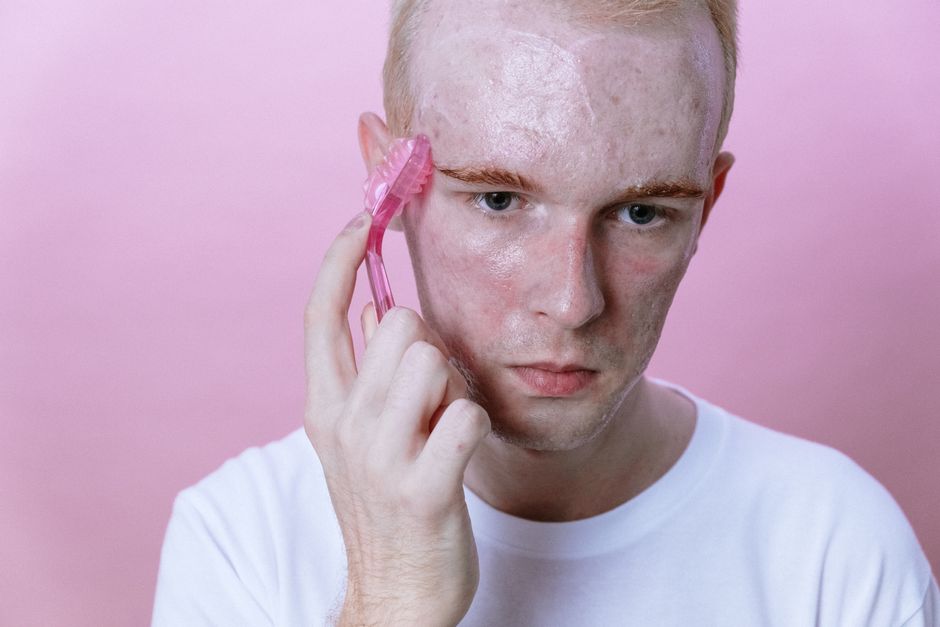
Probiotics are live microorganisms that may help some skin conditions by influencing the gut-skin relationship, but the evidence is uneven across conditions. For eczema, some studies suggest certain strains may reduce severity in children. For acne, the evidence is early and mixed. For skin aging, there is no convincing evidence that probiotics reverse wrinkles or restore elasticity. The strongest findings so far are strain-specific and modest — not the broad anti-aging solution that marketing often suggests.
How Are Gut Bacteria and Skin Health Connected?
The gut and skin communicate through what researchers call the gut-skin axis. This is a real, documented relationship — not a marketing invention. The gut microbiome influences systemic inflammation, immune signaling, and even the skin’s own microbial community.
When the gut microbiome is unbalanced — a state called dysbiosis — it can trigger inflammatory responses that show up on the skin. This is one reason why some people with inflammatory bowel conditions also have skin symptoms. The relationship runs in both directions, and it is complex.
Probiotics are live bacteria and yeasts that, when consumed in adequate amounts, may shift the balance of gut bacteria. The theory is straightforward. Whether that shift produces measurable skin improvement depends heavily on which strain is used, at what dose, and for which condition.
That last point matters more than most articles admit. “Probiotics” is not one thing. It is a category that includes hundreds of different strains with different effects. A study showing benefit from one strain tells you almost nothing about a different strain in a different product.
Are Probiotics Good For Your Skin Acne Eczema Aging?
The answer depends entirely on which condition you are asking about. Acne, eczema, and skin aging are three different problems with three different bodies of evidence.
For eczema, the evidence is the most developed. For acne, it is promising but preliminary. For aging, it is weak. Treating these as one question is the main reason the internet gives confusing answers.
Acne
Some studies suggest that certain probiotic strains may reduce inflammatory acne lesions, possibly by lowering systemic inflammation or by influencing sebum production. But study sizes are generally small, strains vary between studies, and results have not been consistent.
Topical probiotics — applied directly to the skin — are a newer area of research. Early work has looked at whether beneficial bacteria can crowd out Cutibacterium acnes, the bacterium involved in acne. This is scientifically plausible but not yet established as an effective treatment.
What is clear: no probiotic has been shown to replace standard acne treatments in head-to-head trials. If you have moderate to severe acne, probiotics are not a substitute for dermatologist-guided care.
Eczema
This is where the evidence is strongest, though still limited. Some randomized controlled trials have found that certain probiotic strains — particularly Lactobacillus rhamnosus — may reduce the severity of atopic dermatitis in infants and young children.
Results in adults are much less consistent. And even in children, effects are modest and strain-specific. A 2018 review published in the Cochrane Database of Systematic Reviews found that probiotics may slightly reduce eczema symptoms, but the quality of evidence was low to moderate and the clinical importance of the effect was uncertain.
One important distinction: preventing eczema is not the same as treating it. Some research has looked at whether giving probiotics during pregnancy and infancy reduces the risk of a child developing eczema. Findings here are mixed, and no health organization currently recommends routine probiotic use for eczema prevention.
Aging
There is no convincing evidence that oral probiotics reverse wrinkles, improve skin elasticity, or slow skin aging in any meaningful way. Some small studies have reported improvements in skin hydration or barrier function, but these are short-term, often industry-funded, and have not been replicated at scale.
Skin aging is driven mainly by UV exposure, genetics, and time. No probiotic has been shown to change those fundamentals. Claims that a supplement can “turn back the clock” on skin are not supported by clinical evidence.
What Does the Research Actually Show?
The honest summary is that probiotic research in dermatology is real but early. Most studies are small. Many are funded by companies that make probiotic products. And results often fail to replicate across studies.
Strain specificity is the single biggest issue. When a study shows benefit, it is showing benefit for one specific strain at one specific dose. That finding does not transfer to a different product on a store shelf.
Dose is another unresolved question. There is no established optimal dose of probiotics for any skin condition. Products vary widely in strain composition and colony-forming units, and labels are not always accurate.
This is why you will see dermatologists and researchers disagree. Some see enough signal to recommend trying probiotics as an add-on. Others see too much noise to recommend them at all. Both positions are defensible given the current evidence.
Can Probiotics Help With Acne Treatment?
Probiotics are not an established acne treatment. That is the honest position. The research is exploratory, and no major dermatology guideline currently recommends probiotics as a primary or standalone therapy for acne.
Some clinicians do suggest probiotics alongside antibiotics. The reasoning is that oral antibiotics for acne can disrupt gut bacteria, and probiotics may help offset that disruption. This is a reasonable clinical practice, but it is not strongly supported by large trials showing better acne outcomes.
If you are considering probiotics for acne, treat them as a possible adjunct — not a replacement. Standard treatments like topical retinoids, benzoyl peroxide, and prescription medications have far more evidence behind them.
Which Probiotic Strains Are Studied for Skin?
A few strains appear repeatedly in skin research. This does not mean they are proven — it means they have been studied more than others.
- Lactobacillus rhamnosus — the most studied strain for eczema, particularly in children
- Lactobacillus paracasei — studied for skin barrier function and hydration
- Bifidobacterium lactis — studied for immune modulation and some eczema outcomes
- Lactobacillus plantarum — studied in small trials for acne and skin inflammation
Even within a single strain, different products may not be equivalent. Manufacturing, storage, and viability all affect whether the bacteria are alive when you consume them. A strain name on a label does not guarantee a live, effective dose.
If you decide to try a probiotic, look for a product that names the specific strain — not just the genus — and states the CFU count. Be aware that supplement regulation in the US does not require proof of effectiveness before sale.
Are There Risks to Taking Probiotics for Skin?
For most healthy adults, probiotics are generally well tolerated. The most common side effects are mild digestive changes like gas or bloating, which usually fade.
But “generally well tolerated” is not the same as “risk-free.” People with weakened immune systems, central venous lines, or serious underlying illness have developed infections from probiotic organisms. These cases are rare but documented.
If you are immunocompromised, critically ill, or recovering from surgery, talk to your doctor before starting probiotics. This is not a theoretical caution — it reflects real reported cases.
Probiotic supplements are also not tightly regulated as drugs. What is on the label may not match what is in the capsule. Independent testing has found discrepancies between labeled and actual contents in some products.
Should You Take Probiotics for Your Skin?
There is no universal answer, and anyone who gives you one is oversimplifying. The decision depends on your specific skin condition, your overall health, and what you are hoping to achieve.
If you have eczema, especially in a young child, there is enough evidence to have a conversation with your dermatologist or pediatrician about whether a trial of a specific strain is reasonable. If you have acne, the evidence is weaker, and probiotics should not replace proven treatments. If your goal is anti-aging, the evidence does not support it.
Probiotics are not harmful for most people, but “not harmful” and “effective” are very different claims. The most honest thing that can be said is this: the science is real, the findings are modest, and the marketing has run far ahead of the evidence.
Frequently Asked Questions
Do probiotics actually help with acne?
Some small studies suggest certain strains may reduce inflammatory acne, but the evidence is early and mixed. No major guideline recommends probiotics as a standalone acne treatment.
Which probiotic is best for eczema?
Lactobacillus rhamnosus has the most research support for eczema, particularly in infants and young children. Effects are modest and strain-specific, and adult evidence is weaker.
Can probiotics get rid of wrinkles?
No convincing evidence shows that probiotics reduce wrinkles or reverse skin aging. Skin aging is driven mainly by UV exposure, genetics, and time.
Are probiotics safe to take every day?
For most healthy adults, daily probiotic use is generally well tolerated. People who are immunocompromised or seriously ill should talk to a doctor first, because rare infections have been reported.
